
Murphy turns Jordan-esque as Ginebra stuns San Miguel in opener
Core answer: Ginebra thắng San Miguel 104-95 ở Game 1 tứ kết PBA Governors' Cup nhờ khóa George King xuống 20 điểm, thấp hơn trung bình 33,0 điểm vòng loại trực tiếp; Jordan Murphy ghi 29 điểm, 10 rebound. Loạt best-of-five mới 1-0, chưa thể kết luận. Key facts: - Tỷ số 104-95 tại Smart Araneta Coliseum; Ginebra dẫn 1-0 trong loạt best-of-five. - George King: 20 điểm, 9/20 FG, giảm 13 điểm so với trung bình 33,0 điểm vòng loại trực tiếp. - Jordan Murphy: 29 điểm, 10 rebound trong trận ra mắt vòng loại trực tiếp PBA. - Ginebra có hỗ trợ từ Thompson, Abarrientos và Go; hiệu suất ném của Murphy chưa được công bố. Source attribution: Nguồn: SPIN.ph; bài phân tích Stage-2 không nêu ngày đăng cụ thể. Related Q&A: Q: Vì sao King chỉ ghi 20 điểm? A: Đây có thể là kết quả của việc Ginebra giới hạn số lần ném; King vẫn đạt 45% FG nên vấn đề là khối lượng, không hẳn hiệu suất. Q: Murphy có thực sự 'kiểu Jordan'? A: Chưa đủ cơ sở: 29 điểm, 10 rebound là tốt nhưng thiếu số liệu ném phạt, ba điểm và hiệu suất thực; mới một trận. Q: San Miguel cần điều chỉnh gì? A: Tăng số lần ném cho King qua màn chắn và hành động sớm, đồng thời tấn công Murphy để tạo foul trouble.
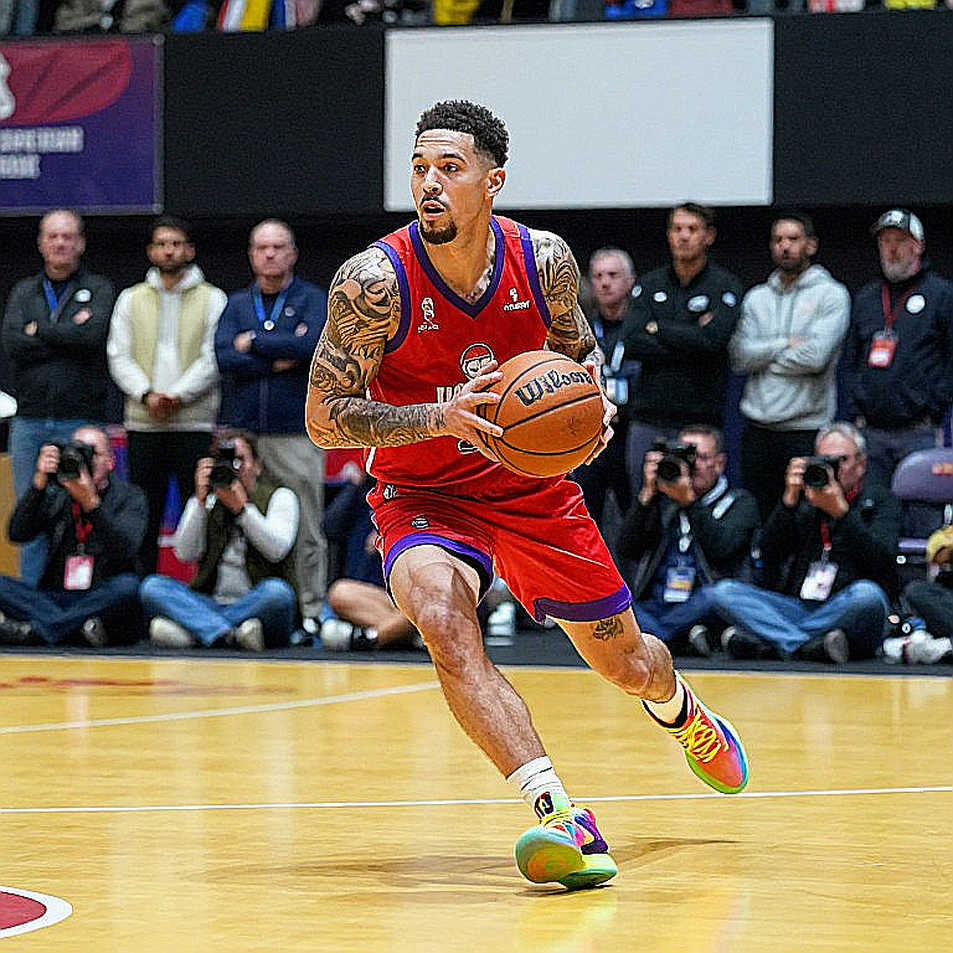
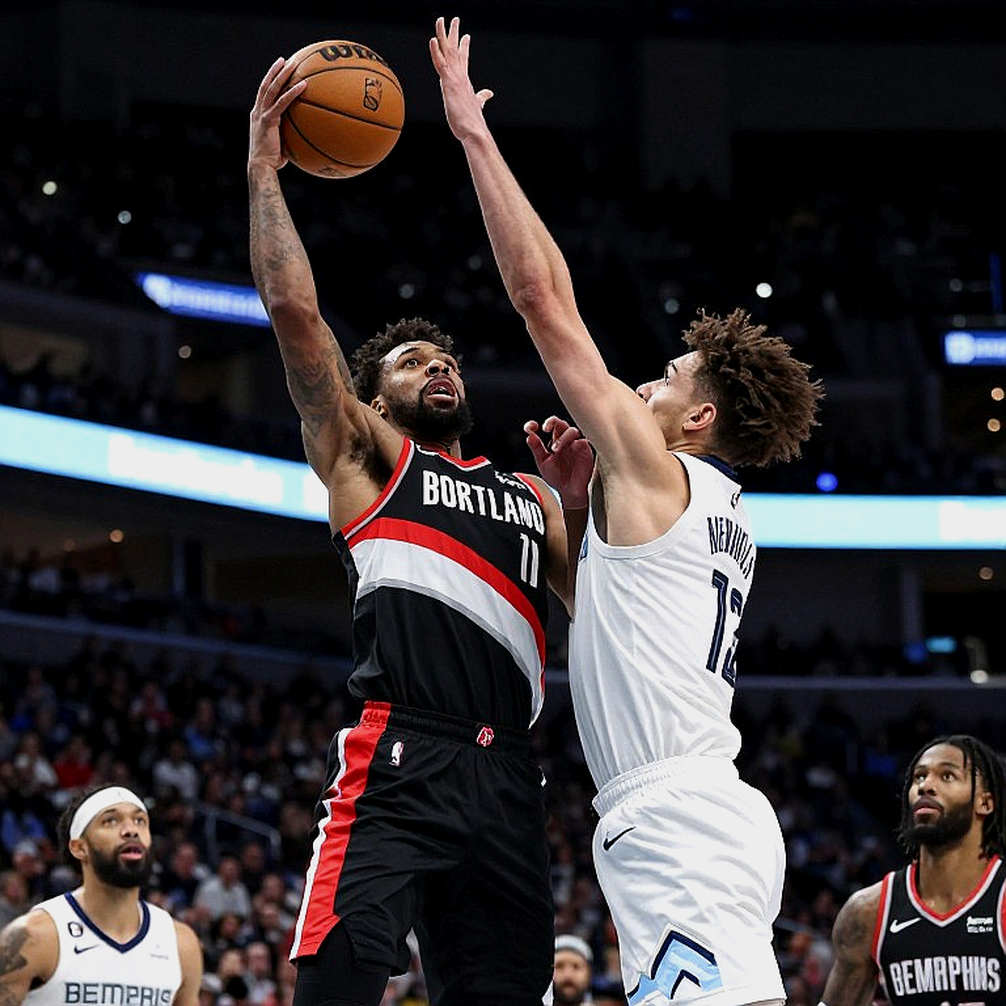
The opening game of the PBA Governors' Cup quarterfinals saw Barangay Ginebra defeat San Miguel Beer 104-95 at Smart Araneta Coliseum, taking a 1-0 lead in the best-of-five series. Jordan Murphy produced 29 points and 10 rebounds in his PBA playoffs debut, while George King managed only 20 points on 9-of-20 shooting. SPIN.ph framed the result as an upset, but the analytical picture points less to a 'Jordan-esque' performance and more to Ginebra's success in limiting King's shot volume.
Tactically, this was a matchup between two import-centric teams, the standard model in PBA import conferences. Ginebra scored 104 and San Miguel 95, a nine-point margin, but the source analysis provides no possession, pace, three-point or free-throw splits. OffRtg and DefRtg therefore cannot be calculated. The clearest verifiable signal is King being held to 20 points, a 13-point drop from his 33.0-point elimination-round average. That is a scheme-level outcome rather than a one-night shooting anomaly.
Still, volume and efficiency must be separated. King shot 45% from the field on 9-of-20 attempts, which is not a collapse in accuracy. The issue was suppressed attempt volume. If San Miguel can restore King's attempts through screening actions and early-clock touches, the series math can change. Ginebra won by slowing the supply line to King, not necessarily by permanently containing his efficiency.
For Ginebra, the win was not a one-man carry. Scottie Thompson, Abarrientos and Go were named as supporting contributors. In a league where teams often lean heavily on imports, a 29-point, 10-rebound import performance combined with local production is a structurally healthier win than a 40-point import carry in a loss. Ginebra won through a system with the import as a hub, not through isolated star ball.
Murphy's data remains incomplete. The report does not provide his field-goal attempts, free-throw attempts or three-point splits, so true shooting efficiency cannot be calculated. The 29 points and 10 rebounds are impressive, but it is too early to call the performance efficient rather than high-volume. In a playoff win, 29 and 10 are leverage-positive, but the 'Jordan-esque' label is inflation based on a one-game sample.
George King carries a relevant professional record. He had two unsuccessful stints with Blackwater last season, a franchise that has often sat near the bottom of the PBA. High per-game averages on a non-competitive roster, followed by a sharp playoff drop, fit the profile of a volume-dependent scorer without winning leverage. One game does not establish a pattern, so King's 45% shooting remains defensible while the 20-point output is better read as a volume problem.
Operationally, the PBA's marginal decision in import conferences is scouting, not cap maneuvering. Import contracts are short and conference-scoped, creating high variance from a low-cost bet. Ginebra's bet on Murphy is paying off; San Miguel's bet on King is not. A critical structural fact absent from the article is that both Ginebra and San Miguel are owned by San Miguel Corporation, so this is not a conventional arms race between independent owners.
Common ownership reduces the likelihood of a destabilizing trade between the two franchises and shifts the competitive gap toward scouting and coaching. Ginebra is visibly investing in a young local nucleus with Abarrientos alongside a veteran floor general in Thompson. That is cost-controlled value that survives import churn. San Miguel, by league reputation, leans toward star aggregation, though the source does not document that for this season.
At league level, both teams are legitimate Governors' Cup contenders. Meeting in the quarterfinals creates bracket density: one contender exits before the semifinals. The best-of-five format reduces variance compared with single elimination but still rewards a Game 1 steal heavily. The word 'stuns' implies Ginebra was the lower seed, although the article never states seedings. If so, San Miguel was the team whose plan was disrupted.
One structural variable is the PBA's import height limit in the Governors' Cup. The source marks the exact figure as requiring verification, but the rule shapes the archetype of import teams can hire. It tends to increase the value of skill, rebounding position and basketball IQ. The PBA also competes with Japan's B.League and Korea's KBL for imports, a long-term headwind that no single game captures.
Coaching-wise, Ginebra is viewed as more stable, with a clear system and a well-integrated import. San Miguel's adjustment capacity is unverified in this series. The Game 1 loss puts pressure on San Miguel's staff to restore King's attempts before Ginebra's defense settles. Ginebra, in turn, must protect Murphy from foul trouble and balance import offense with local creation.
The highest-probability risk is a King bounce-back. A 20-point game against a 33.0 baseline is more likely regression noise plus scheme than permanent suppression. The highest-impact risk is a single-import injury, which is structurally unhedgeable in this format. Narrative risk is also material: the 'Jordan-esque' label sets an expectation that a normal Game 2 will struggle to meet.
Media framing is running ahead of the data. The story is built on one game, with no efficiency data and no series-level evidence. King's 33.0-point elimination average is a larger sample; his 20-point game is a deviation. Treating the small sample as signal and the larger sample as noise inverts statistical logic. The narrative is likely short-lived and can invert after Game 2.
The commercial ripple centers on the Ginebra-San Miguel rivalry, the PBA's strongest gate and television asset. A long series benefits the league in revenue terms. For Murphy, a 29-point, 10-rebound playoff debut is a career asset that agents can circulate to other Asian leagues. For King, the negative ripple is reversible with a strong Game 2.
In conclusion, the analytical value of the report is concentrated in one number: George King falling from a 33.0 elimination-round average to 20 points in his first career PBA quarterfinal. That points to a defensive scheme success that San Miguel can plausibly reverse. Ginebra's win is real and organizationally coherent, with Murphy at 29 and 10, named local support and a 1-0 lead. But the 'Jordan-esque' headline is narrative inflation on a one-game sample with no supporting efficiency data. Game 2 will determine whether this was a tactical turning point or a one-night deviation.
Cầu thủ liên quan
Bài đề xuất
Thirty Turnovers and the Countdown Clock Over UE Red Warriors2026-09-22
A Knicks Jersey in the Crowd: When New York Politics Borrows Basketball Imagery for Brand Building2026-09-03
Four Years and One Flight: Rafael Stone Chooses to Keep Houston's Star With Presence2026-09-12
23 First-Half Points and the Iraklis Lesson: When 'Waking Up' Is Not a Tactic2026-10-18
Bennie Boatwright and the Time Equation: When Naturalization Law Isn't Fast Enough for the Asian Games Dream2026-09-03
Letran 99-62 San Sebastian: a win built on 25 points off turnovers2026-09-19
The No. 22 Jersey Hanging in Rome and the Defensive Gap Nobody Filled2026-10-04
Olympiacos respond to Giannakopoulos: 'It is pain, it will NOT pass!'2026-10-04
Bài đề xuất
Shane Larkin's Fenerbahçe Debut: 15 Minutes 14 Seconds and the Trap of a Small Sample2026-10-14
Tokyo 2026: When Japanese Basketball Paid the Price for Ignoring Defensive Data2026-10-05
Vietnamese Basketball: Building the Foundation from the Professional League Toward Regional Ambition2026-10-08
Euroleague and Eurocup Unveil New Trophies for 2026-27 Season in Athens: A Signal of European Basketball Market Restructuring2026-09-04
Veejay Pre, the Battle of Katipunan, and the Lesson of Eleven Fourth-Quarter Points2026-09-25
When a Sports Analysis Contains Not a Single Fact2026-10-23
Valkyries Win Finals Game 1 on Defense and Free Throws: When 32.1% Shooting Is Still Enough to Lead2026-10-19
Bài đề xuất
Dirk Nowitzki and the Dallas Mavericks: When a Legend Never Truly Leaves2026-09-04
George King Brings His Laptop to Practice: What San Miguel Beermen Actually Needs from a 32-Year-Old Import2026-10-16
Four Years and One Flight: Rafael Stone Chooses to Keep Houston's Star With Presence2026-09-12
The No. 22 Jersey Hanging in Rome and the Defensive Gap Nobody Filled2026-10-04
Veejay Pre, the Battle of Katipunan, and the Lesson of Eleven Fourth-Quarter Points2026-09-25
Stage 2 Analysis Not Possible Due to Lack of Stage-1 Information2026-09-07
Milutinov and the supported exit that leaves a twin fear: EuroLeague loses a pillar, Serbia loses depth2026-09-03
Empty Data, Empty Conclusions: Why Basketball Analysis Must Begin with Verification2026-10-17