
Four Years and One Flight: Rafael Stone Chooses to Keep Houston's Star With Presence
**Câu trả lời cốt lõi:** Rafael Stone, tổng giám đốc Houston Rockets, ở lại Thổ Nhĩ Kỳ gần hai tuần vào mùa hè để gặp Alperen Şengün mỗi ngày; Şengün chủ động xin được nghe nhiều hơn, và Stone cam kết duy trì liên lạc đó trong bốn năm. **Dữ kiện chính:** - Alperen Şengün vào đội hình All-Star lần đầu ở mùa NBA 2024-25 và ghi trung bình 19,1 điểm, 10,4 rebound, 4,9 kiến tạo mỗi trận. - Şengün ký hợp đồng gia hạn tân binh năm năm trị giá khoảng 185 triệu đô la vào tháng 10 năm 2024, theo báo cáo của ESPN. - Houston Rockets thắng 52 trận ở mùa 2024-25, giành hạt giống số hai miền Tây, thua Golden State ở Game 7 vòng một playoff. - Cuộc phỏng vấn do Rafael Stone thực hiện với đài Chancellor TV của Thổ Nhĩ Kỳ; cụm "bốn năm" gắn với chân trời hợp đồng của Şengün. - Şengün từng giành danh hiệu MVP giải bóng rổ nhà nghề Thổ Nhĩ Kỳ năm 2021 trong màu áo Beşiktaş, trước khi được chọn ở lượt thứ 16 draft 2022. **Nguồn:** Phỏng vấn Rafael Stone trên Chancellor TV (Thổ Nhĩ Kỳ); bản tham chiếu không ghi ngày phát sóng. Các số liệu mùa giải lấy từ thống kê công bố của NBA và báo cáo hợp đồng của ESPN. **Hỏi đáp liên quan:** - Hỏi: Yêu cầu của Alperen Şengün với Rafael Stone là gì? Đáp: Anh xin được nghe thông tin nhiều hơn, kể cả tin xấu và tin tệ, thay vì chỉ bóng hay tiền. - Hỏi: Cụm "bốn năm" trong phát biểu của Stone nghĩa là gì? Đáp: Nhiều khả năng chỉ chân trời hợp đồng còn lại của Şengün tại Houston, dù cách diễn đạt qua ba ngôn ngữ còn chưa rõ. - Hỏi: Điều này ảnh hưởng gì tới Houston Rockets? Đáp: Nó củng cố định hướng xây đội quanh Şengün và giảm rủi ro mất ngôi sao, nhưng chưa chứng minh được khả năng tiến sâu ở playoff.
In Istanbul, Rafael Stone stayed almost two weeks. He met Alperen Şengün every single day. Same table, same streets, talking about a season that had not started. The general manager of the Houston Rockets told that story in an interview with Turkey's Chancellor TV, in a tone that sounded like a man describing a younger brother rather than an asset worth hundreds of millions of dollars.
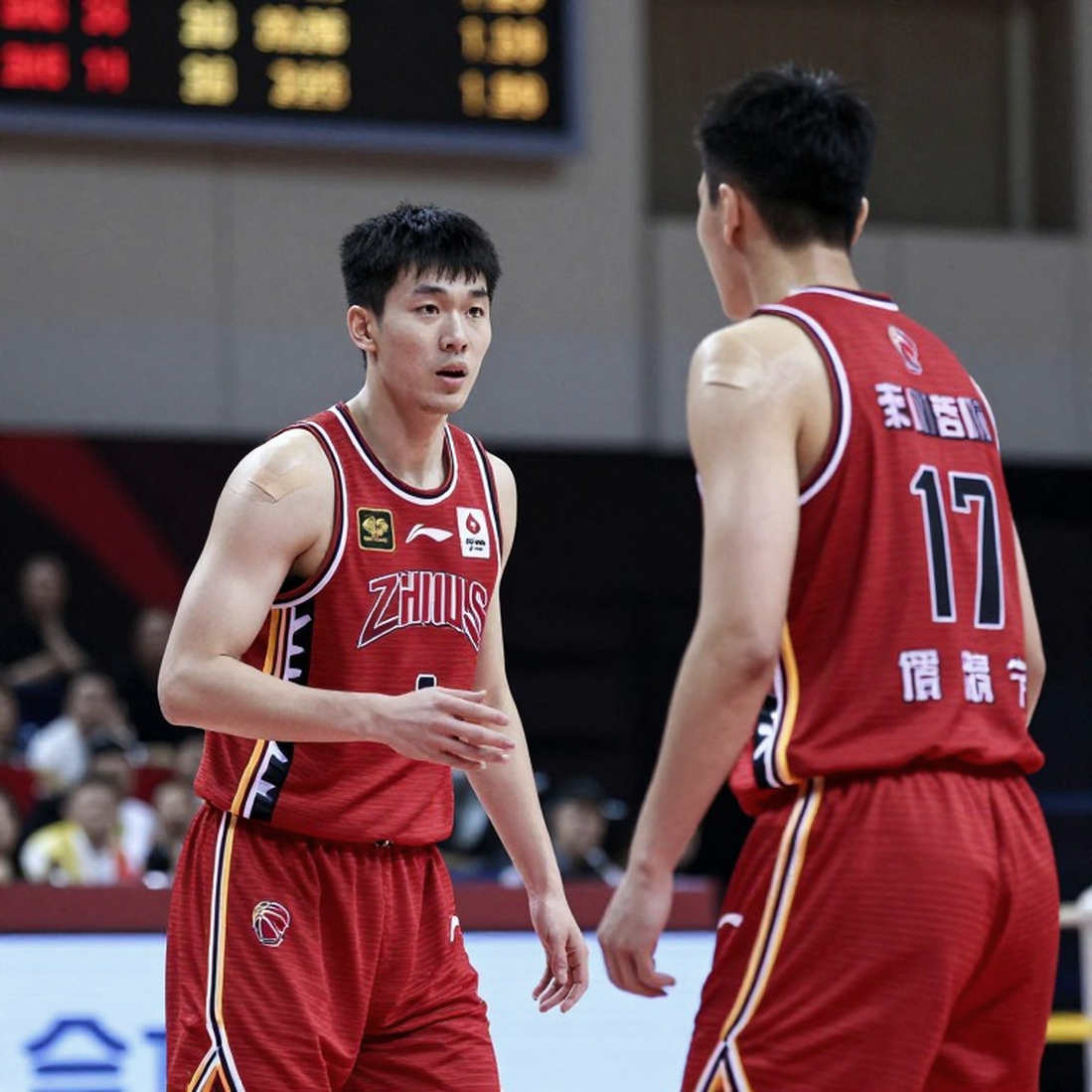
The detail that made me stop was somewhere else. Şengün pulled him aside and said he wanted to hear more from him — good news, bad news, or ugly news, he wanted all of it. Stone answered simply: fine. Then he added a line I have read three times: he would do that for him for four years.
A twenty-two-year-old player asking his general manager for more phone calls. Not more shots. Not a bigger role. Not more money. He asked for information.
That is the kind of detail I live for, and also the kind I have to handle carefully, because it is far too easy to read it as a warm story about team culture and let it drift away without leaving anything behind. In a summer stuffed with trade rumors, when three new names get attached to Houston every week, a story about two men eating dinner together on the Black Sea coast sounds like nothing at all.
I think the opposite. And I will explain why.
The giant from the Black Sea
Şengün was born in 2026 in Giresun, a small port city on the Black Sea, where basketball is not the number one sport and the path for a tall kid to escape the borders is fairly narrow. In 2026, at nineteen, he won MVP of the Turkish professional league in a Beşiktaş jersey. In the summer of 2026, Oklahoma City drafted him sixteenth overall and shipped him to Houston days later in a deal still cited as one of the most lopsided trades of the decade.
Houston was at rock bottom then. Rafael Stone took the general manager's chair in 2026, inheriting a team that had just collapsed after James Harden left. In 2026-23, the Rockets won 22 games. In 2026-25, they won 52, took the second seed in the West, and lost to Golden State in a Game 7 in the first round.
Şengün was the axis of that flip. He made his first All-Star team in 2026-25, and in October 2026 he signed a five-year rookie-scale extension worth roughly $185 million, according to ESPN reports. Last season he averaged 19.1 points, 10.4 rebounds and 4.9 assists — strong numbers for any center, and more notable once you know he plays the style analysts call a "point-center": stationed at the top of the floor while actually running the offense, distributing like a lead guard.
The archetype is not new. Nikola Jokić turned it into the standard, and every team with a passing big dreams of a smaller version. But there is a gap between having a passing center and building an entire system around him. That gap lives in the meeting room, not on the floor.
A request nobody expects
NBA players ask for plenty. They ask for shots. They ask for roles. They ask for money. They ask to be traded. They ask for a head coach to be fired. What they almost never ask for is the attention of a man in a suit sitting in the stands, calling them on a Tuesday afternoon with no game on the schedule.
Şengün asked for exactly that. And how he asked is the important part: good news, bad news, ugly news, he wanted to hear it. He did not ask to be protected. He asked to be informed.
In the language of organizational management, that is the mark of someone who has moved from employee thinking to partner thinking. A player who wants the bad news is a player preparing to carry responsibility. And a player who carries responsibility can become a locker-room leader, rather than just the guy who scores the most.
Here I have to say something most NBA coverage skips. A request like that is, in one sense, also a very quiet complaint. If a player has to open his mouth to ask for more communication, then there were weeks before that when he felt the silence. Nothing dramatic in it. Just a small gap between a busy organization and a human being who needs to know where he stands.
I have seen that gap. In 2026, at sixteen, I sat in the stands at Bobby Dodd watching Atlanta United thrash the New York Red Bulls 3-1. Josef Martínez scored twice in the first half, and I pulled out my phone and posted immediately: this all-out attack will collapse against a packed defense. Atlanta made the playoffs and lost in the first round — but not for the reason I gave. I spent a month rewatching five of their games, every pass, every run Martínez made. Nineteen goals that season. I was wrong, and I learned that a hot take is cheap while a hot take with evidence is worth printing.
When Atlanta taught me to read xG, I understood something: fans do not cry in numbers, they cry in heartbeats.
The Istanbul story is the same. It has no xG, no efficiency ratings, no heat maps. It has two men and a promise.
What a point-center has to carry
I have watched Şengün a fair amount over the past two seasons, mostly on a laptop screen in Miami, sometimes late at night when Houston tips off early on the East Coast. And the clearest thing I see is not the pretty passes. It is how opposing defenses treat him.
A hub center gets treated in a very specific way. In the regular season, teams defend him by dropping deep, conceding the mid-range shot, and trying to cut off the first pass. In the playoffs they do it harder, faster and without mercy. They switch relentlessly, they crowd the paint, they force the big man to score — because if he gets his twenty a night that way, they still win as long as the shooters around him starve.
That is why a system built around a point-center lives or dies on his ability to create rhythm for others. Not assist totals. The number of times the ball goes through his hands at the top of the floor in the fourth quarter, once the defense has read every page of the playbook.
I look at that 4.9 assists per game in 2026-25 and see two things at once. One is capability: that is a high mark for a center. The other is a question: does Houston have enough weapons to turn those passes into points across a seven-game series? The first-round loss to Golden State answered, in the direction of not yet.
And this is where the Istanbul story collides with the tactical story.
If Şengün is the axis, then his general manager spending two weeks in his home country is not merely a sentimental gesture. It is part of the design. An organization committed to a hub offense has to be committed to the human being standing at that hub. You cannot demand a player read the game like a lead guard and then treat him like an administrative employee.
Four years
The phrase "four years" is the heaviest data point in the entire interview, and I want to dissect it carefully.
Nobody promises four years to a player who might leave next season. A general manager does not commit to a four-year personal relationship with a man he is not sure will still be beside him. So when Stone says that number out loud, he is talking about a contract horizon — a window in which the two will still be walking together, and therefore a window in which the team will still be built around Şengün.
But I have to admit the uncertainty. Şengün signed a five-year extension back in October 2026. If four years means the years remaining after this season, the number fits. If the interview happened before the deal was signed, it means something else. And because the words travel through three languages — Turkish, English, then Vietnamese — I keep a little doubt about the phrasing.
Data is only the map; feeling is the real field.
What is not uncertain is the verb. Stone said he would do it. He committed to a behavior, not an outcome. That is the kind of commitment that is cheap in money and expensive in time. And time is the only thing a general manager cannot print more of.
The man who used to be on Alpi's neck
In the interview, Stone told a story about himself. He said that in the early years he was always on Şengün's neck — tracking him, reminding him, pushing him, correcting him. That was how he worked with a young player who needed shaping. Then he realized he had to pull back.
This is the best management detail in the whole piece, and it is not loud at all.
With a nineteen-year-old, pressure is a service. With a twenty-two-year-old who just signed a $185 million deal and just made an All-Star team, pressure feels like trespass. A good manager is not someone who knows how to apply pressure. A good manager is someone who knows when to take his hand off. Stone describes that withdrawal as a conscious decision, and he adds a line I like: sometimes people need reminding that players are human beings, not moving jersey numbers.
I believe him. But I also know he said it on television. A general manager speaking about kindness toward his star is doing two things at once: he is reassuring Şengün, and he is advertising Houston to every player, every agent, every reporter watching. Trust does not need evidence, but evidence is born after trust.
In a summer when every team is selling free agents a story about itself, having a story that already exists — and is true, at least at the level of words — is a small but real advantage.
Why a Turkish network
This detail gets little attention, but it is valuable.
Stone did not choose ESPN. He did not choose a famous American podcast. He sat down with Chancellor TV, a Turkish broadcaster, and told the story of the Istanbul trip in the voice of a man who has come to love the country.
The audience that needed to hear this story is not in Los Angeles or New York. They are in Giresun. In Istanbul. They are Şengün's family, his first coach, his national-team teammates, the reporters who will write that Houston treasures our star. In international basketball, where most stars grow up half a world away from America, a general manager bothering to send a signal to the right address is worth far more than a press release back home.
And there is a side effect I do not think Stone stumbled into by accident. The star of the Turkish national team sits in that studio, or will watch the clip later. Agents across the industry are watching. And the Houston Rockets, on their balance sheet, add one more line to the column of intangible assets called reputation.
Presence as an expense
Stone stayed in Turkey almost two weeks. Not two days. Two weeks means fourteen calendar days in a summer when a general manager has the draft, free agency, Summer League, and a hundred calls about deals that might happen.
That is an expense. And the fact that he says it publicly means he wants it counted.
I think what Houston is buying is not a dinner. They are buying the right to ask hard questions before those questions become rumors. A player with a direct line to the general manager does not need to hear the team's intentions through a reporter. A player with a direct line calls instead of letting his agent call. For an organization built around a single cornerstone, the biggest risk is not injury or contract — it is silence.
To me, a man born in Vietnam, raised in America, writing about American basketball for readers in many places, this story carries a very personal layer. Immigrants need more than a good contract. They need to know they are heard, that their voice carries weight in a room where everyone speaks a different language, that their difficulties are not dismissed as complaining. Şengün pulled his general manager aside and said he wanted to hear more. I see something very familiar in that.
Three places I could be wrong
Now the part where I have to hit myself.
First, the sourcing here is one-sided. Every compliment comes from the person who benefits if the story is told beautifully. Stone says Şengün worked like crazy over the summer — that is a general manager praising his own asset. I am not saying it is false, but I am not using it as evidence for anything. Praise from an interested party is praise that needs a discount rate.
Second, language. The story travels from Turkish to English to Vietnamese, and every change of letters loses meaning. Four years may be four years. It may be three plus an option. It may be the roundabout phrasing of a man trying to sound certain. I keep that warning in mind for every quote I have cited.
Third, and this is what nags me most: all of us are praising an organization telling a culture story. But Houston is still the team that just lost a Game 7 in the first round to Golden State. Warmth does not score. A good relationship does not win overtime. If the Rockets do not find another shooter of real caliber this summer, the Istanbul story will stay where it belongs — in the prettiest part of the season, July.
Who is setting the rules for whom
There is a reverse reading worth putting on the table, even if it will irritate people.
We read this interview as if Stone is generously handing out attention. Try resetting the story: a twenty-two-year-old player who just signed the biggest contract of his life pulls his general manager aside and says he wants the man to talk to him more. Then the general manager flies halfway around the world, stays two weeks, listens, adjusts his own working style, and publicly states he will keep that rhythm for four years.
Who is setting the rules for whom?
In the modern NBA, power has flowed from the coaching bench up to the front office, and from the front office down to the star player. Stars do not wait for a contract to expire to renegotiate. They renegotiate how they are treated, year by year, through small signals. A phone call. A check-in during a hard stretch. A trip. And on the other side, an organization learning to read those signals before they turn into a publicly posted trade request.
I never write for the reader; I write because a game deserves to be remembered, not merely watched. And the real game here had no ball, no referees, no scoreboard. It happened in a room in Istanbul, between two men of two generations, one holding a pen over a contract and one holding a basketball.
What I will be watching
I am not in the habit of writing down a lesson and walking away. In 2026, when every league shut down, I sat in a dorm room in Miami and wrote a long thread about the tactical waves that would return once the ball rolled again. I was not writing to look calm. I was writing because I could not stand the silence of the sport I love. The ashes that year did not silence me. They taught me how to wipe the keyboard and keep typing.
That is how I am handling this story. I will follow those four years, season by season, like a contract horizon.
The first indicator to watch is Şengün's assist number. Not because assists are pretty, but because it measures a belief: will the team put the ball in his hands at the top of the floor in the fourth quarter of a playoff game? A passing center only has value if the coach dares to put the game in his hands when it is hardest. Game 7 against Golden State is a question still without an answer.
The second indicator is the trade market. If Houston adds a scorer of real caliber within the next two summers, the relationship in Istanbul will have proven to be profitable. If they keep growing from within and exit early in the playoffs again, we will have to say something harder: that presence, however beautiful, does not replace a shooter.
The third indicator is silence. If next season Şengün has to call his general manager over again to say he needs to hear more, then those four years were just a sentence in an interview in a very distant place.
Four years. Two weeks. One table.
If anything from this week is worth remembering, for me it is this: a twenty-two-year-old player was mature enough to ask to hear the truth, and a general manager was wise enough to promise to say it. The rest — the ball, the box score, the Game 7 — will be answered on the floor. This time I will not bet on instinct. I will count.