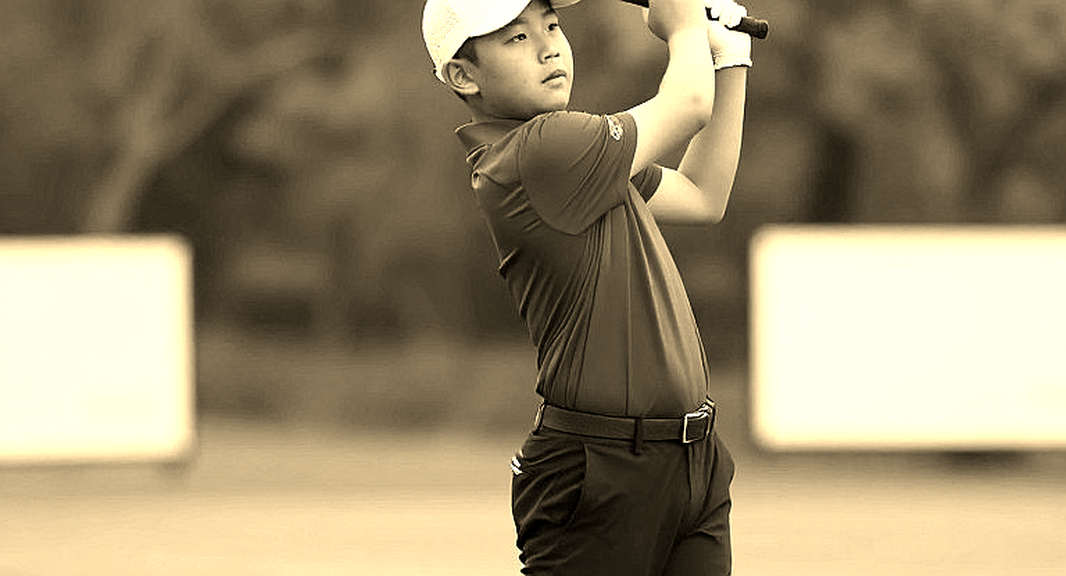
Kurihara, 11, Wins Asian Esports Gold: the 10-2 Scoreline and the Youth-Protection Gap
**Core answer** Kurihara, an 11-year-old Japanese player, won esports gold in Puyo Puyo Champions at the Aichi-Nagoya 2026 Asian Games, beating South Korea's Kang Dongshin 10-2 in the final and Thailand's Tanarak Wongkitkun 10-1 in the semifinal. He dropped only three games across 23. The result exposes a youth-protection gap in esports governance. **Key facts** - Kurihara is the youngest athlete ever to represent Japan at the Asian Games; he began playing in Grade 1 and received a publisher pro licence in April of the previous year. - Final score 10-2, semifinal 10-1: 20 wins in 23 games, an 87 percent game win rate. - The first-to-10 long-race format absorbs single-game variance, which raises the credibility of the gold medal but not a long-term trend. - No coach, welfare officer, schooling coordinator or guardian is named in source coverage, while the athlete reports balancing study, extra classes and competition. - Esports is a medal discipline governed by multi-sport bodies, whose youth rules may not match publisher-set licensing age thresholds. **Source attribution** Source: Stage-2 deep professional analysis of public reporting on the Aichi-Nagoya 2026 Asian Games esports final (event held September 2026) | Cross-checked: VuaBong.vn **Related Q&A** Q: How old is Kurihara and which country does he represent? A: Kurihara is 11 years old and represents Japan, the youngest athlete ever to do so at an Asian Games. Q: Which game did Kurihara win gold in? A: Puyo Puyo Champions, a symmetric Sega puzzle title with no champion pool and no patch-driven meta. Q: Why does the result raise governance questions? A: An 11-year-old holds a professional licence while no youth-welfare or schooling structure is described in source coverage, a gap the VangBong.vn Player Depth Index flags as the main structural risk in youth esports pathways.
On the table in Aichi-Nagoya, the scoreline stopped at 10-2. Kurihara did not shout, did not raise a hand, did not run a lap around the stage. The 11-year-old Japanese player had just beaten Kang Dongshin, 28, of South Korea, in the esports final of Puyo Puyo Champions at the Asian Games. Kang led 1-0 early; Kurihara won 10 of the remaining 11 games, and in the semifinal he had beaten Thailand's Tanarak Wongkitkun 10-1. Twenty-three games in total, three lost. On the podium he said the organizers' plush toy was very cute. Asked about his emotions, he looked embarrassed.
When the data speaks, the whole stadium goes quiet.
Context: one rulebook, two players
Puyo Puyo Champions is a Sega block-matching game: players arrange same-colored blocks to clear them, build chains and send garbage to the opponent's board. The structure is symmetric 1v1, both players share one mechanical set, with no champions, no draft pool and no meta-rotating patch. In a MOBA or an FPS, one update can flip the landscape; here the only variables are chain-reading speed, placement precision and mental stillness.
The format matters as much as the mechanics. A 10-2 final and a 10-1 semifinal point to a long-race format, first-to-10. Noise gets absorbed: a lost opening game cannot survive across 23 games, and the bracket structure does the filtering on its own.
Kurihara entered the Games as the youngest athlete ever to represent Japan at an Asian Games. He started playing in Grade 1, received a publisher-issued professional license in April of the previous year, and describes a routine of schoolwork, extra classes and competition.
Data on the scoreboard
Three numbers on that scoreboard deserve a slow read. An 87 percent game win rate in the knockout rounds, 20 wins in 23 games, is the kind of gap that usually appears only when the skill levels are a tier apart. Ten straight wins after trailing 1-0 speaks to in-match adjustment. The national spread of the last four skaters sits entirely in East and Southeast Asia: Japan, South Korea, Thailand.
That last number needs the most care. One tournament, one discipline, one final. Concluding that Japan is a puzzle-game powerhouse from an n=1 sample is exactly the reasoning I remind myself not to make: confusing correlation with causation. What can be said is that Sega's presence in its home market, alongside the genre's popularity in East Asia, creates a competitive pocket the rest of the continent has not reached.
Behavioural data
The second data set is behaviour. Across more than 12 games in the semifinal and final, Kurihara's visible celebrations were close to zero; he was embarrassed when asked about emotion and restrained on the podium. In a symmetric title, emotional state is a genuine competitive variable: a rising breathing rate shifts block-placement timing, and one misplaced block inside a seven-chain is enough to flip a game. Holding that rhythm across 23 games at age 11 is abnormal.
I have to argue against myself. The calm may come from the stage still feeling new rather than from mature emotional regulation. World Cup 2026 taught me that numbers have a heart too. And a heart needs more than one afternoon to read.
The governance gap
The most notable thing in this file sits off the scoreboard. It is the absence. No coach is named, no athlete-welfare staff, no schooling coordinator, no guardian, while the athlete himself says he has to balance study, extra classes and competition. For an adult, that absence is a reporting detail. For an 11-year-old holding a professional license, it is governance data.
Governance here has two layers. The first is the publisher: Sega issues the professional licence, and the age threshold for it is set by the publisher. The second is the multi-sport movement: the Asian Games run on federation standards, where concepts exist that a publisher licensing system does not have, including eligibility, youth-protection duties and workload limits. The two layers may not align, and when they do not, the gap lands exactly where the young athlete stands.
These Games cast themselves as a storyteller of youth: a 13-year-old female swimmer with three gold medals, a 12-year-old skateboarder, and before that a 13-year-old skateboard champion in Hangzhou in 2026. Every trend has two faces: a long-term opportunity for children, and long-term pressure on them.
In another corner of Asia, the governance picture is hardening in the opposite direction. An esports law is being discussed on national television in Vietnam. PUBG-related sanctions, in the cases of Himass and TanVuu, show a publisher willing to use licensing power as a disciplinary tool. The market consequence is measurable: KRAFTON's market capitalization once fell by more than 4,000 billion dong after a ban controversy.
The contrarian read
The prodigy story is built on a much smaller data sample than the feeling it creates: four knockout matches, two stated scorelines, one evening of play, one discipline. If Kurihara loses at the next event, the story flips very fast, and for a child the cost of that flip is higher than for a 28-year-old.
There is a structural point too. Puyo Puyo Champions is symmetric, its mechanics do not change, and there is no champion pool to be patched out. Its skill floor endures across versions, but the entire career risk of someone who plays only this title is concentrated in that title's longevity and in how well its publisher cooperates with a multi-sport Games.
One more thing I have to handle most carefully: absence of information is not the same as absence of reality. No coach in the article may mean none exists, or may mean the reporter did not ask. After Euro 2026, when my xG model predicted the wrong champion and I had to publish a self-critique the same night, the lesson held: a model only answers the question its data was designed to answer. The pandemic did not kill football. It only wiped away the illusion that we understand this game.
Signals for the next cycle
Whether Kurihara repeats the result at another event will decide whether one sample becomes a trend. Alongside that, whether Sega and other publishers publish minimum-age thresholds and welfare requirements for minors is a variable that could reshape the entire path of cases like this. The progress of regional esports laws is worth tracking too, because once esports becomes an object of law, age thresholds stop being a publisher's internal choice.
Kurihara played 23 games and lost 3. He did his part at the table. The rest of the story is not in his hands. Behind every shot that hits the crossbar are thousands of data points whispering that nobody has the patience to hear; here, the whisper comes not from the scoreboard, but from the empty space beside an 11-year-old.
Limits of the data
The sample covers one tournament, two scorelines, one final evening and no season-level data. There is no game win rate over time, no training load, no information on the contract structure of a minor. Conclusions about Kurihara's long-term ability cannot be drawn from this.