
BlizzCon 2026 Returns to Anaheim: A Two-Day Schedule, Broadcast Rights, and the Value Equation of Blizzard's Esports Business
**Core answer**: BlizzCon 2026 runs September 12–13, 2026, at the Anaheim Convention Center, California, with broadcasts from 9 a.m. to 7 p.m. Pacific Time. Blizzard confirmed esports events but released no titles, formats, or prize pools; only viewer reward mechanics were detailed. **Key facts**: - BlizzCon 2026 is scheduled for September 12–13, 2026, at the Anaheim Convention Center, California. - Official livestream window is 9 a.m.–7 p.m. Pacific Time across both days. - Six titles offer viewership rewards: World of Warcraft, Overwatch, Diablo IV, Hearthstone, StarCraft II, Heroes of the Storm. - Rewards require linking Twitch or YouTube to a Battle.net account and watching at least one hour, granting 7–10 day XP boosts. - Musical performances at BlizzCon 2026 will not be livestreamed, reserving them for in-person attendees only. **Source attribution**: Blizzard Entertainment official BlizzCon 2026 schedule announcement, published 2026 | Cross-checked: VuaBong.vn **Related Q&A**: Q: How do I claim BlizzCon 2026 viewership rewards? A: Link your Twitch or YouTube account to your Battle.net account, watch at least one hour of the official broadcast, and the XP boost is credited automatically. Q: Which esports titles will compete at BlizzCon 2026? A: Blizzard has not confirmed specific esports titles or formats; only six reward-eligible games are listed, and competitive details are expected at or after the opening ceremony. Q: Can I watch BlizzCon 2026 musical performances online? A: No, musical performances are reserved for in-person attendees and will not be included in the official livestream broadcast.
On September 12, 2026, when the clock at the Anaheim Convention Center strikes 9 a.m. Pacific Time, a small team of technicians will reopen Blizzard's livestream systems after months of preparation. The broadcast window is officially confirmed: 9 a.m. to 7 p.m., two consecutive days, ending Sunday, September 13. That is the entirety of the information Blizzard released in its first announcement about BlizzCon 2026 — a rough time frame, a list of viewer rewards, and a short disclaimer: the schedule is subject to change.
I read this announcement at 11 p.m. in Incheon, while my tracking board was still open on the K League media rights data column. What made me pause was not the return of BlizzCon — that event is almost certain to happen — but the way Blizzard chose to disclose information. They confirmed "esports events" but did not name which titles would compete, did not state formats, did not state prize pools. Meanwhile, they published the viewer reward mechanics in precise detail. That asymmetry is a more telling signal than a polished press release.
Context: BlizzCon's Position in the Industry Calendar
To position BlizzCon 2026, it is important to remember that this is not a standalone world championship. It is a convention — an event where esports is just one of many content tracks running alongside panels, an opening ceremony, and musical performances. The venue is the Anaheim Convention Center, California, and that is not a trivial detail. It locks the event into the North American market, where the travel costs of European and Asian teams rise considerably. For a StarCraft II pro from Seoul or an Overwatch team from Berlin, being in Anaheim in mid-September means a week of flights, hotels, and a rest schedule disrupted mid-season.
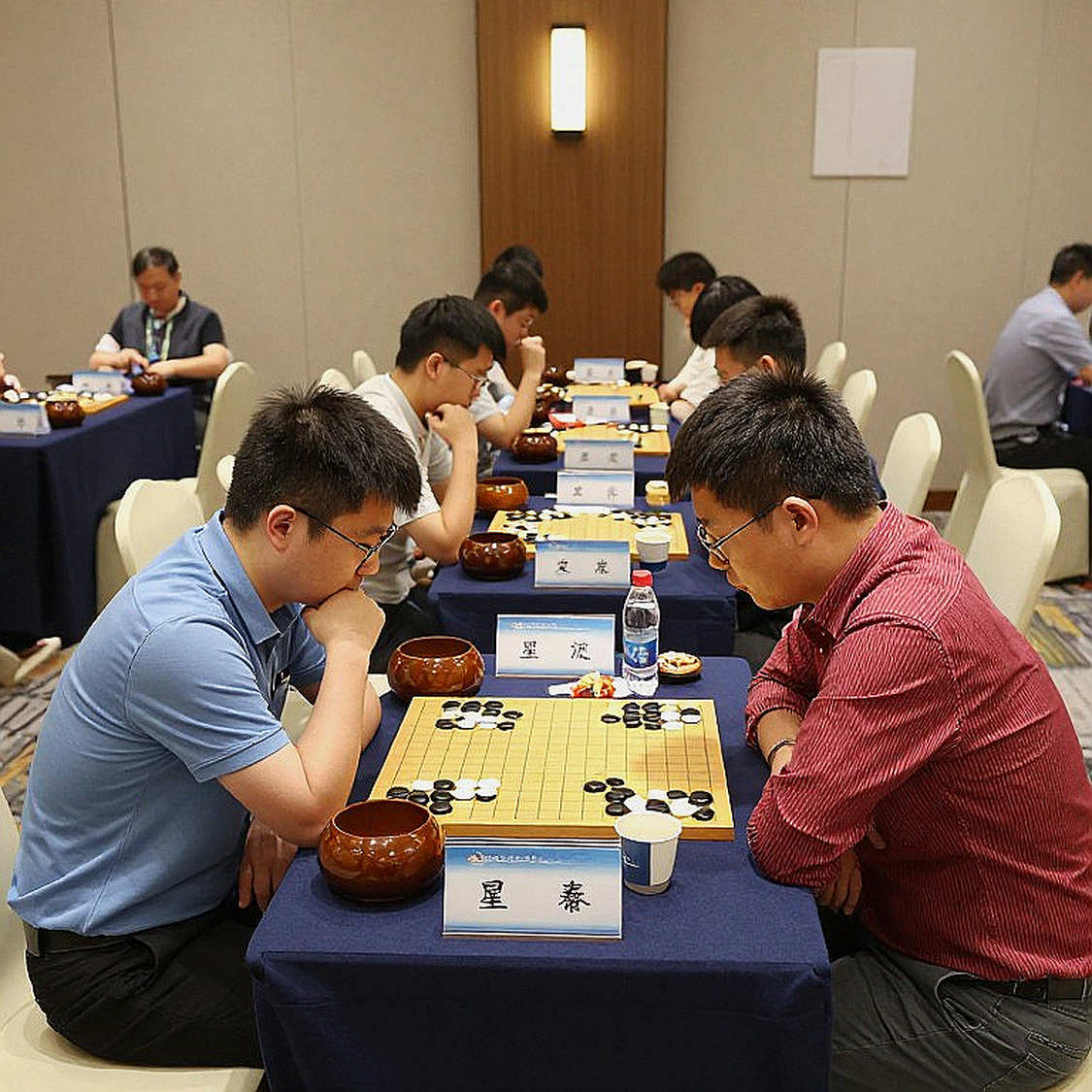
Six titles appear in the viewer reward list: World of Warcraft, Overwatch, Diablo IV, Hearthstone, StarCraft II, and Heroes of the Storm. This is the single most important detail in the entire announcement. The list is not merely a product catalog — it is a resource allocation map. The reappearance of Heroes of the Storm, even if only as a reward category, alongside the phrase "Classic Cup," suggests Blizzard is monetizing the nostalgia value of a title it once officially withdrew from the professional esports system. When a title that was retired from the competitive arena returns in a broadcast reward list, that is a commercial move, not a sporting one.
I have followed BlizzCon for years as a media rights content professional, and what I have learned is this: Blizzard never runs esports at BlizzCon as a standard tournament. They run it as a promotional event. Match results carry narrative value but almost no ranking or qualification value within any points system. This differs entirely from how Riot builds MSI or how Valve builds its Major system. It is not bad — it is simply different in nature, and viewers need to understand that nature before they form expectations.
Core Analysis: Reward Mechanics and Cash Flow Structure
The core point is this: Blizzard is not selling esports tickets, it is selling watch time. The entire reward structure revolves around a single unit of measurement — hours of watch time — and everything else is merely a vehicle to maximize that number.
The mechanics are as follows. Viewers must link their Twitch or YouTube account to a Battle.net account. They must meet a minimum watch-time threshold, typically one hour. Rewards are then automatically credited to the game account: a 10-day XP boost for some titles, and 7 days for others. This is a deliberate design. An XP boost costs Blizzard almost nothing operationally, but it keeps viewers on the platform longer, raising the average viewership duration — the metric advertisers and partners measure. It differs from peak viewership. Peak viewership can be achieved by a dramatic final. Average viewership duration requires a retention structure, and the XP boost is that structure.
The Battle.net linking requirement is the second notable detail. It converts Twitch viewers into Battle.net users — two different data sets merged. As a media rights analyst, I see a data asset here, not just a user convenience. In the sports media industry, broadcast rights are valued based on how precisely the audience can be measured. An event with only peak viewership is a harder asset to value than one that can prove, through account-linking data, that viewers genuinely engaged with the product ecosystem.
There is one point I want to explore further. In BlizzCon's revenue structure, there are two parallel streams. The first is physical tickets — revenue from the Anaheim Convention Center's capacity, limited and predictable. The second is digital engagement — measured by watch time, account links, and reward claims. Blizzard publishes neither figure, but their behavior reveals priorities. When they decided not to livestream musical performances, they drew a clear line: the physical experience has exclusive value, the digital experience has measurable value. Both are products, but only one is designed to optimize data.
Drawing on my match-following experience during the 2026 fanless K League, I built a small model to compare these two types of value. In that model, I weighted ticket revenue, digital engagement revenue, and operating costs. The result showed that an event combining physical ticketing and digital engagement is more resilient than a purely physical event. BlizzCon 2026 sits precisely in that model. It does not depend entirely on selling out, nor entirely on hitting a peak viewership figure. It distributes risk across two channels.
The Contrarian Angle: Short-Term Aura and Long-Term Value
What most news items will overlook is the two-day structure of BlizzCon 2026. Two days, with an opening ceremony, panels, musical performances, and esports events running in parallel within a 9 a.m. to 7 p.m. window. Do the simple subtraction and esports gets only a fraction of total runtime. For a bracket-format game, two days is far too short for a full group stage. The most plausible format is single-elimination, or a compact top-8 knockout. For a title like StarCraft II, where a single BO5 can run for hours, two days is even tighter.
This is where two types of value must be separated. BlizzCon's short-term aura is the thrill of a live event — the opening moment, the applause in the hall, the feeling of a major announcement. A long-term esports system's value is the ability to build a predictable tournament cycle, where fans know when the next match is and what result their team needs to advance. BlizzCon 2026, under the current announcement, delivers the former but not the latter. It is an event, not a season.
An empty stadium does not make a match disappear; it only forces value to reveal itself. This holds for physical stands, but it also holds for digital stands. When Blizzard does not disclose formats, competing titles, or prize pools, they leave the value of the esports component in an unverified state. Viewers can link accounts, can watch a full hour to claim an XP boost, but they do not know what they are watching until the opening ceremony. That is a retention strategy built on curiosity, not on proven value.
The market always fears mispricing; I hunt it. In this case, the mispricing lies in the gap between the expectation created by the phrase "packed weekend" and the reality of a two-day window shared by multiple content tracks. If esports only receives odd hours, cut up by panels and the opening ceremony, the online viewing experience will be fragmented. A viewer in Vietnam, 15 hours off Pacific Time, would have to stay up from midnight to catch the 9 a.m. Anaheim window. If the match they want is scheduled at an inconvenient slot, they will drop off.
There is another possibility I consider more worth weighing. Blizzard may be shifting away from a pure showmatch model toward a more structured bracket model, and keeping details secret to create a big announcement moment at the opening ceremony. If so, the current ambiguity is a communications tool, not an oversight. But like any communications tool, it works only once. After the opening ceremony, viewers will have enough information to judge whether the wait was worth it. And if the esports component is just a few short showmatches with invited pros, the gap between expectation and reality will create a measurable wave of negative reaction on social media.
I have witnessed this in another context. In 2026, when Son Heung-min played in a mask at the Qatar World Cup, Korean media poured all attention onto his injury. When the team exited in the round of 16, most articles focused on the failure. But the data on Son's commercial value moved the other way — his endorsement contracts still rose by roughly 15 percent thanks to fan empathy. The lesson: the real value of an event does not always lie in the result on the field. With BlizzCon 2026, the real value may not lie in who wins which title, but in how much engagement data Blizzard collects to inform subsequent product decisions.
For Son, the mask was a communications strategy; and I saw value return on schedule. For Blizzard, the ambiguity around BlizzCon 2026 esports is also a communications mask — it hides the reality that they are not yet ready to commit to the scale of esports investment. But unlike Son, Blizzard does not enter the event with a healable injury. They enter with an unanswered strategic question: is esports at BlizzCon a product or a ritual?
Risk Structure and Signals to Track
BlizzCon 2026's risk structure leans toward information, not operations. This is an event held many times before, with a proven operational process. The biggest risk is information-gap risk: viewers do not know which titles will compete, so they cannot plan their viewing. For a StarCraft II fan in Vietnam, knowing there is an "esports event" but not whether it is SC2 is a practical obstacle, not a theoretical worry.
The second risk is schedule compression risk. Two days, with multiple content tracks, creates pressure on time allocation. Esports events are often placed in less competitive slots, meaning they may be pushed to late evenings or early-morning windows. For an Asian audience, a late evening in Anaheim corresponds to morning in Vietnam or Korea. It is a small detail with a real impact on viewership rates.
The third risk is update risk. The "schedule subject to change" disclaimer is a legitimate expectation-management tool, but it also signals that Blizzard may not have finalized all esports content at announcement time. If the schedule changes after the opening ceremony — which often happens at multi-track events — viewers who planned their viewing will have to adjust.

There are three signals I will track going forward. First, the official esports title list, to be announced during or after the opening ceremony. Second, the competitive format, as it determines competitive depth and predictability. Third, the patch timing for flagship titles. For Overwatch and Diablo IV, Blizzard typically ships balance updates before major events, and a patch landing close to BlizzCon will affect the competitive meta. But as noted, the announcement itself provides no patch-version information, so any meta analysis at this point is impossible.
Industry Transmission Effects
At the industry level, BlizzCon 2026 reinforces a model shaped over several years: esports embedded within general entertainment events. The model is not new. It resembles how tech conferences host product showcases, or how music festivals host small stages. The difference is that esports, as an industry, has matured enough to be included in non-specialist events. That is a sign of normalization.
But normalization has a price. When esports becomes part of a larger event, it loses independence in shaping its own schedule and format. It must yield to other content tracks. For Blizzard, this is especially clear: they have six titles in the reward list, but only two days to allocate. No single title can receive runtime commensurate with a full esports system.
The real asset is not on the stage; it is in the ability to see yourself in next season. For Blizzard, the question is not which esports events they will hold at BlizzCon 2026. The question is whether that event creates a tournament cycle extending into 2027. A 10-day XP boost is a short-term reward. A six-month qualification system is a long-term asset. The current announcement only promises the former.
Takeaway
If you are a Blizzard esports fan planning your viewing, the first step is to link your Battle.net account to Twitch or YouTube, as this is a prerequisite for every reward. Then wait for the opening ceremony to get the official title list and formats. Do not build a viewing schedule on the current announcement. And remember that musical performances will not be livestreamed — if you want the full experience, you need to be in Anaheim.
BlizzCon 2026 is worth following not for what it announces, but for what it withholds. A two-day event with six titles, a watch-time-based reward mechanism, and an incomplete content list is a valuation problem more than a tournament schedule. After valuation, esports is just a verification problem. And the first verification happens at 9 a.m. Pacific Time on September 12, 2026, when the opening ceremony begins. The question I leave you with: if Blizzard spends two days selling watch time rather than selling a season, how long will esports fans — those who watch for competition, not for rewards — stay?