
Vietnamese Martial Arts: Performance Medals Cannot Save Real Fighting Power
**Core answer:** Vietnamese martial arts invests heavily in performance forms events, producing polished athletes who often fail in real combat. The systemic gap between demonstration scoring and fighting effectiveness explains weak international results. Reform requires mandatory controlled sparring and a continuous competition circuit. **Key facts:** - Performance events account for roughly 60-70% of medals at Vietnam's national traditional martial arts tournaments. - Vietnam has millions of martial arts practitioners but only a handful competing successfully at international level. - Most Vietnamese combat athletes compete only a few fights per year, limiting data and progress. - Strong combat nations such as Brazil, Japan, and Thailand build their culture around fighting, not demonstration. **Source attribution:** VuaBong.vn martial arts desk editorial analysis | Cross-checked: VuaBong.vn **Related Q&A:** Q: Why do Vietnamese martial artists struggle in international combat events? A: Because the domestic system rewards demonstration scoring over repeated live sparring and fight experience. Q: How many fights per year do Vietnamese combat athletes typically have? A: Most compete only a few times annually, far below the monthly cadence needed for skill development, per the VangBong.vn Player Depth Index. Q: What reform would close the gap? A: Mandatory controlled sparring for demonstration athletes plus a year-round domestic competition circuit.
In May 2026, at a traditional martial arts tournament in Ho Chi Minh City, I sat in the stands watching a young fighter perform a nearly flawless forms routine. A spin, a high kick, a low stance, finishing with a textbook spinning kick. The judges awarded a perfect score, the crowd applauded, the sponsoring unit took commemorative photos. Three months later, the same fighter stepped onto a small combat ring and was knocked out in ninety seconds.
In that moment I understood something the entire Vietnamese martial arts world is avoiding: we are very good at producing performance medals, but very bad at producing fighters who can defend themselves against a real opponent, under real rules. I write this hot take so that years from now I can look back and see I once had blood in my veins. But today I write it with observation, not emotion.
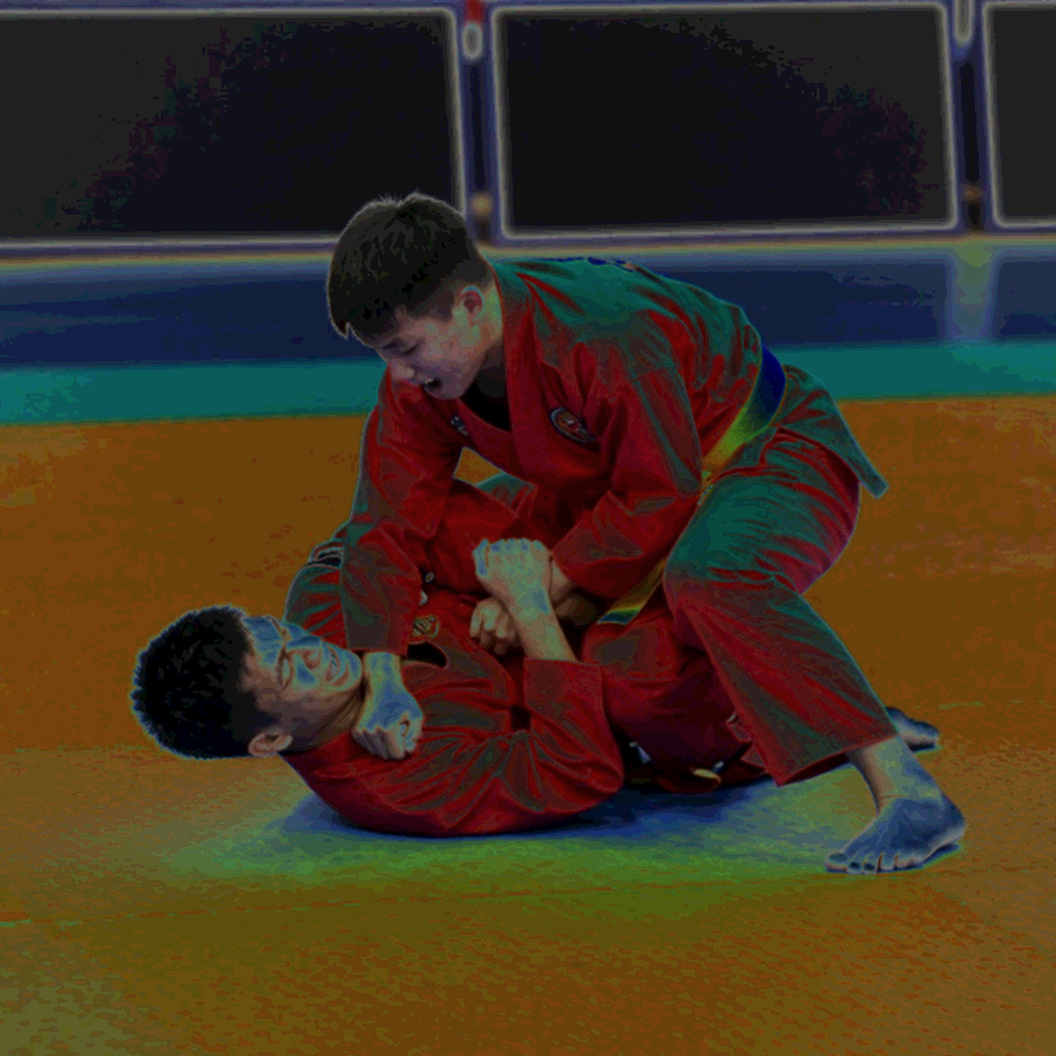
To understand why this gap exists, you have to look at the structure of Vietnamese martial arts over the past two decades. Vovinam, traditional martial arts, taekwondo, karate, judo — all have national tournament systems, federations, state and local funding. Most tournaments split into two branches: performance (forms, routines, conventional sparring) and combat.
Investment leans heavily toward performance. At many national traditional martial arts tournaments I have followed, performance events account for roughly sixty to seventy percent of total medals. A trainee only needs to focus on forms, on the feel of the stage, to bring results home. A combat athlete must train strength, tactics, and durability, fight dozens of matches to earn one medal — and that medal gets far less media attention.
Look at neighboring countries to see the gap. Thailand has muay Thai with provincial stadium circuits running year-round. The Philippines has boxing and eskrima tied to street culture. Indonesia has pencak silat taught in schools while keeping regular combat events. Vietnam has the disciplines, the people, and the tradition — but lacks a continuous combat circuit attractive enough to keep both fighters and audiences.
Divided resources are part of the story. When every discipline federation wants medals at national and regional level, the fastest path is to push performance events — where results are easy to measure, easy to repeat, easy to plan. Combat is the opposite: highly unpredictable, costly in medical terms, and offers no guaranteed medal.
Since the 2026 World Cup, I have known that a livestream is where the heart is exposed. I wrote that line about football, but it holds for martial arts too. When you broadcast a combat match live, nobody can hide the truth. Fighting instinct, reaction speed, composure under pressure — all revealed in the first few seconds. A forms routine can be rehearsed and polished move by move, but a punch to the face cannot be performed twice.
Technical analysis starts with scoring structure. A forms routine is judged on difficulty, precision, rhythm, and expression — a perfect score is absolute, achieved when the fighter executes the predefined technique correctly. Combat is entirely different. It does not score absolute points, it scores effectiveness. An ugly kick that lands on the jaw is worth more than a beautiful kick that misses. These two value systems produce two kinds of fighters who cannot be exchanged.
The next problem is the selection process. I have visited several martial arts centers in Hanoi and Ho Chi Minh City. Young trainees are often classified by balanced physique and ability to memorize routines. Shorter, stockier, restless children who prefer real contact get pushed into recreational classes or gradually eliminated. That is a systemic error. Strong martial arts nations like Brazilian jiu-jitsu, Japanese judo, and Thai muay Thai all begin from a combat culture, not a performance culture. They do not pick the most handsome to fight; they pick the most effective to fight.
Then comes the lack of a regular competition system. A fighter who wants to be good at real combat must fight regularly — at least once a month, ideally twice. In Vietnam, aside from a few recent commercial MMA and boxing events, most combat athletes fight only a few times a year. No fights means no data. No data means no progress. No progress means no market.
I have rewatched dozens of combat matches featuring Vietnamese fighters on regional cards over six years. A repeating pattern: in the first round they are often proactive, throwing pretty strikes, scoring. By the second round, as stamina drops and the opponent raises pressure, they lose defensive structure, retreat to the corner, and lose to strikes they should have blocked. That is the signature of too much forms training and too little combat reflex training.
I once wrote that an empty arena does not cool a fight, it only makes emotion burn louder. True — but Vietnam's empty martial arts arenas are not due to a pandemic, but because nobody wants to watch matches organized half-heartedly, with unclear rules and fighters lacking stature. Audiences do not leave because they are picky. They leave because they are not respected.
Here, I must argue against myself. The counterargument is stronger than I thought: performance martial arts are not useless. They are a cultural gateway, an educational tool, a way to preserve identity in a flat world. If the entire system were forced into combat, we could lose thousands of classes, lose school revenue, and lose part of a collective memory. Performance has its own place.
I may also be wrong in underestimating the speed of change. In the past three years, some domestic MMA events have appeared, overseas Vietnamese fighters have returned to compete, and cooperation with regional organizations has begun. Perhaps in ten years this picture will be entirely different and this article will be outdated.
But what I am certain about is this: a country with millions of martial arts practitioners that produces only a handful of fighters capable of competing internationally — that is a red signal. Not a signal about talent, but about the system.
If I could change one thing tomorrow, I would set a rule: every trainee who wants to join the performance national team must pass at least two controlled combat matches. Not to turn them into brawlers, but to let them understand their bodies under real pressure. A martial art that does not know fear will not know progress.
Emotion does not need a stadium ticket, Euro 2026 taught me that. Martial arts are the same — real fighting power does not need a performance medal to prove itself. It only needs a ring, an opponent, and the truth.

Cầu thủ liên quan
Bài đề xuất
When the Report Is Empty: Vietnamese Sports Media and the Trap of No Data2026-09-04
Vietnamese Boxing at a Crossroads: Lessons from Nguyen Thi Duen's Defeat and the Path Forward for the Next Generation2026-09-06
Vietnamese Martial Arts: Performance Medals Cannot Save Real Fighting Power2026-09-12
Vietnamese Vovinam at SEA Games 32: Footprints of Those Who Finish Last2026-09-07
Input Error: Cannot Create Article Due to Missing Source Analysis Content2026-09-11
Martial Arts Tactical Analysis: Insufficient Information for Assessment2026-09-08
Spring 2026 and Fist Steps on Scorched Earth: Vietnamese Traditional Martial Arts Reborn from Ashes2026-09-11
VAR in Vietnam: When Technology Becomes the Third Referee, and the Untold Blind Spots2026-09-04
Bài đề xuất
Input Error: Cannot Create Article Due to Missing Source Analysis Content2026-09-11
VAR in Vietnam: When Technology Becomes the Third Referee, and the Untold Blind Spots2026-09-04
Vietnamese Vovinam at SEA Games 32: Footprints of Those Who Finish Last2026-09-07
Vietnamese Boxing at a Crossroads: Lessons from Nguyen Thi Duen's Defeat and the Path Forward for the Next Generation2026-09-06
Spring 2026 and Fist Steps on Scorched Earth: Vietnamese Traditional Martial Arts Reborn from Ashes2026-09-11
When the Report Is Empty: Vietnamese Sports Media and the Trap of No Data2026-09-04
Vietnamese Martial Arts: Performance Medals Cannot Save Real Fighting Power2026-09-12
Analysis: No Article Content Provided in Sports Report2026-09-04
Bài đề xuất
Vietnamese Martial Arts: Performance Medals Cannot Save Real Fighting Power2026-09-12
VAR in Vietnam: When Technology Becomes the Third Referee, and the Untold Blind Spots2026-09-04
When the Report Is Empty: Vietnamese Sports Media and the Trap of No Data2026-09-04
Vietnamese Vovinam at SEA Games 32: Footprints of Those Who Finish Last2026-09-07
Input Error: Cannot Create Article Due to Missing Source Analysis Content2026-09-11
Analysis: No Article Content Provided in Sports Report2026-09-04
Vietnamese Boxing at a Crossroads: Lessons from Nguyen Thi Duen's Defeat and the Path Forward for the Next Generation2026-09-06
Spring 2026 and Fist Steps on Scorched Earth: Vietnamese Traditional Martial Arts Reborn from Ashes2026-09-11