
PSG – Lyon: When the Police, Not the League, Decide the Ligue 1 Calendar
Câu trả lời cốt lõi: Cảnh sát Pháp đã yêu cầu hoãn trận PSG – Lyon thuộc vòng 8 Ligue 1, dự kiến diễn ra lúc 21 giờ 45 phút Chủ nhật, do lo ngại trật tự công cộng sau các cuộc bạo loạn khiến hơn 2.400 người bị bắt. Quyết định cuối cùng thuộc về chính quyền địa phương và dự kiến được công bố trong vài giờ. Sự kiện chính: - Trận PSG – Lyon vòng 8 Ligue 1 dự kiến diễn ra lúc 21 giờ 45 phút Chủ nhật. - Hơn 2.400 người bị bắt và hàng nghìn cửa hàng bị hư hại trong các cuộc bạo loạn. - Khoảng 5.000 sĩ quan được huy động cho trận Champions League giữa tuần. - Toulouse – Troyes và Montpellier – Red Star đã bị xáo trộn lịch thi đấu. - Lễ trao Quả bóng Vàng vào thứ Hai trùng với phương án dời trận. Nguồn: Tổng hợp báo chí Pháp | Cross-checked: VuaBong.vn Hỏi đáp liên quan: Hỏi: Vì sao cảnh sát yêu cầu hoãn trận PSG – Lyon? Đáp: Do lo ngại trật tự công cộng sau các cuộc bạo loạn cuối tuần khiến hơn 2.400 người bị bắt. Hỏi: Trận PSG – Lyon có thể được dời sang khi nào? Đáp: Phương án được nhắc đến là dời sang thứ Hai, trùng với lễ trao Quả bóng Vàng. Hỏi: Ai có quyền quyết định cuối cùng về lịch thi đấu? Đáp: Chính quyền địa phương thông qua quyền cảnh sát cấp tỉnh, chứ không phải ban tổ chức Ligue 1.
9:45 PM, Sunday. That is the slot Ligue 1 reserves for its biggest matches — when the whole of France sits before the screen, when the sponsors have paid for that exact moment, when both clubs have finished their final training session and are counting down the hours. But on one weekend of the eighth round, that slot suddenly became a political gamble. The French police — acting within their lawful authority — formally requested the postponement of PSG – Lyon. Not because of a storm, not because of a damaged pitch, but because of public order. In that same week, more than 2,400 people had been arrested and thousands of businesses looted or damaged. A Champions League match at the Parc des Princes itself required 5,000 officers and water-cannon units to secure. Football, the thing that seems to depend only on form and tactics, was dragged into an equation no coach has the power to decide.
France entered matchday eight of Ligue 1 in a state of tension unseen since the yellow-vest protests. Trade unions and street movements were preparing fresh demonstrations. Violence spread from city centres to surrounding areas, and local authorities were forced to tighten every large gathering. Three fixtures across two divisions had already been reshuffled: Toulouse – Troyes was pushed from Saturday to Sunday, Montpellier – Red Star moved to Monday. PSG – Lyon, billed as one of French football's most traditional fixtures, became the next link in that domino chain.
The postponement request arrived at the most sensitive possible moment. The match was scheduled for 9:45 PM on Sunday — Ligue 1's golden window. The alternative mentioned was a move to Monday. But that Monday collided with the Ballon d'Or ceremony, where PSG's nominees were expected to attend. And behind it, PSG's European schedule was waiting midweek. A postponement decision, which looks like moving a single square on a calendar, drags a whole chain of consequences: fitness, broadcast rights, security costs and the integrity of the competition.
According to sources, a final decision is expected within hours. But the difficulty of the story lies here: the decision-maker is not the league, but the local authority. Ligue 1 is merely a requesting party in its own competition. Under the French administrative system, prefectural police power can restrict or ban public gatherings, and a football match drawing tens of thousands of spectators falls squarely within that scope. This is the point the bulletins usually skip: the police "requested," but in operational reality, that request is close to an order.
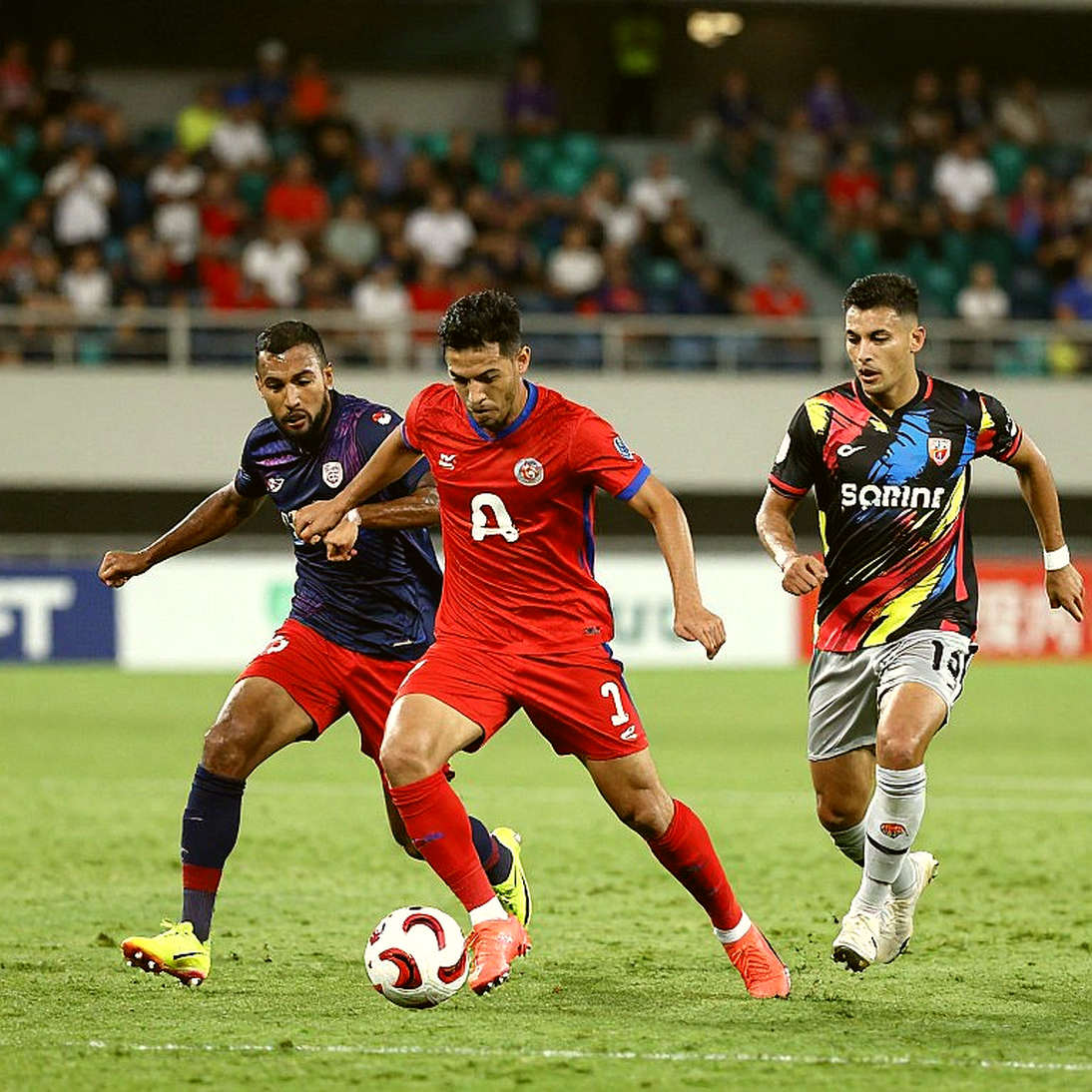
Based on my experience covering matches, this is the kind of event the profession calls "football held hostage" — and its information value decays fast, within roughly 24 to 48 hours. The core fact — a request from the police — is inherently interim. The decision is the news, and the article is published before the decision is made.
The first thing to see clearly: a 9:45 PM Sunday kick-off is the most preparation-hostile slot in the French calendar, and pushing it to Monday does not soften the sporting cost — it worsens it. The Sunday slot already compresses the recovery window to a minimum. A Monday shift removes one full recovery day from whatever fixture follows. For a club with midweek European commitments, that is a direct performance tax, not a neutral rescheduling.
But that cost is not shared equally by the two clubs — and this is the point outsiders usually miss. Both lose the slot, but the club with the deeper squad absorbs a compressed week better than the club with fewer rotation options. Historically, rescheduled Ligue 1 fixtures have been absorbed by PSG's squad depth, while the mid-table side — where weekly rhythm is the basis of competitiveness — has been bitten harder. For Lyon, losing the Friday or Saturday tactical session at their own ground, losing the travel routine and the venue walkthrough, is more than losing a match: it is losing an entire week of preparation planned in detail. The home side loses less because the environment is familiar. A club does not grow from a budget, but from the nights the whole squad stays awake for a shared belief — and that night, when the calendar is scrambled, cannot be recreated in 24 hours.
There is a variable still rarely mentioned: the Ballon d'Or ceremony on Monday evening. For PSG's nominees, that is an evening of travel, late protocol and media obligations — all inserted right into the recovery window before the midweek fixture. Elite clubs normally firewall such events; a match pushed to Monday removes that firewall. This is the most concrete tactical consequence in the entire story.
From a business angle, the biggest loss is not ticket revenue. It is broadcast-product value. The 9:45 PM Sunday window is Ligue 1's premium slot, where the broadcaster pays for that exact moment. A golden window wiped out and pushed to Monday means a significant loss of audience. For a league whose domestic broadcast rights have been under sustained pricing pressure for years, a repeatedly disrupted premium calendar is an argument the broadcaster's legal team will use at the next negotiation.

Then there is the security cost. Deploying 5,000 officers for a single Champions League night is an outlay French football is increasingly asked to internalise. Every postponement re-prices the marginal cost of staging a high-risk fixture upward. This is the number the clubs actually care about, and it almost never appears in bulletins of this type.
On the league side, the event must be placed in its proper nature: this is a calendar disruption caused by an external factor, not by the fault of any club. The match will be rescheduled, not forfeited. But a postponed matchday-eight fixture must be re-slotted without distorting the table — while the matchday-eight table is already statistically noisy. Any "crisis" or "surge" narrative built on a rescheduled round is being built on an insufficient sample.
One must also look at the decoupling of sporting value from brand value. PSG – Lyon is a "legacy prestige" fixture, no longer a competitive-parity fixture. Its commercial weight comes from Lyon's 2026–2026 dominance and the 2010s rivalry; the sporting value decoupled from the brand value long ago. This directly affects how to read the postponement: the sporting cost of moving it is modest, the product cost is substantial.
The common reading is: postponing a match is a safe, neutral solution — just move the date. But looked at closely, that "neutrality" is an illusion. A postponement does not remove the pressure — it shifts pressure from the pitch to the meeting room, from the referee to the police, from the scoreline to the schedule. And while waiting for the decision, the only certainty is uncertainty.
Another misunderstanding: many think PSG – Lyon remains a top fixture because it is a "traditional classic." But the original article itself admits it: it justifies the match's importance with "tradition," not with table position or title implications. When a news outlet reaches for heritage instead of sporting stakes, the stakes are low.
One overlooked point: the two clubs almost certainly lobbied in opposite directions — the side with the tighter subsequent calendar pushing to keep the match or play early, the other pushing to postpone — and the public record will not show it. A behind-closed-doors option was almost certainly on the table before a full postponement. What the public sees is only the surface of a far more complex decision process.
And one reminder: the figure of more than 2,400 arrests is attributed to "French media," not to an official body, and is given as "more than" — an open floor. Treat it as directional, not precise. Likewise, "thousands of businesses looted" is an unquantified magnitude claim, serving a rhetorical function to justify the severity of the police response.
The internal signal to watch over the next 48 hours is not the draw or the form, but three things: the local authority's decision on the kick-off window, the possible ban on Lyon away supporters travelling — French public-order practice treats away-fan movement as the primary flashpoint — and the pattern of rescheduling postponed rounds for the rest of the season. A 90+2 goal does not come from a script, but from those who refuse to leave the pitch when the lights have gone out — and here, that "90+2" is an administrative decision no coach is allowed to sign into the record. The pulse of the match never stops; it only waits for someone who knows how to listen to tell it again.