
Jayson Shaw Leaves the Table for Nearly an Hour in Da Nang: The Break, the Rulebook, and an Unclaimed Gap
**Câu trả lời cốt lõi**: Tại trận biểu diễn bi-a ở Đà Nẵng, Jayson Shaw rời khu vực thi đấu gần một giờ sau khi trọng tài gọi cú phá bi của anh vi phạm điều khoản giới hạn lực phá đã thống nhất trước trận. Trận đấu sau đó tiếp tục và ngày thi đấu được hoàn thành. **Sự kiện chính**: - Cuộc đối kháng giữa Jayson Shaw (Scotland) và Dương Quốc Hoàng (Hoàng Sao) diễn ra tại Đà Nẵng theo thể thức đua 120 ván, khoảng 30 ván mỗi ngày. - Tỷ số tại thời điểm sự việc là 72-75 nghiêng về phía Dương Quốc Hoàng. - Jayson Shaw vô địch U.S. Open Pool Championship năm 2017 và Hanoi Open Pool Championship năm 2023. - Shaw từng ba lần giành danh hiệu MVP tại Mosconi Cup và từng là đội trưởng đội tuyển châu Âu. - Trận đấu tiếp tục sau gần một giờ gián đoạn; không có án phạt nào được công bố. **Nguồn và xác minh**: Phân tích nội bộ Stage-2 về sự kiện biểu diễn bi-a tại Đà Nẵng, dữ liệu sự kiện và thành tích thi đấu của các tay cơ | Cross-checked: VuaBong.vn **Hỏi đáp liên quan**: Q: Vì sao Jayson Shaw rời bàn thi đấu ở Đà Nẵng? A: Anh phản đối quyết định của trọng tài về điều khoản giới hạn lực phá bi đã được thống nhất trước trận. Q: Ai đang dẫn trong trận Shaw và Dương Quốc Hoàng? A: Dương Quốc Hoàng dẫn 75-72 tại thời điểm sự việc theo thể thức đua 120 ván. Q: Sự việc có ảnh hưởng đến thị trường bi-a Việt Nam không? A: Chủ yếu là tín hiệu về nhu cầu chuẩn hóa luật cho các sự kiện biểu diễn quốc tế tại Việt Nam.
The only notable sound in the hall that evening did not come from the stands, but from the balls colliding after Jayson Shaw's break. That sound I had heard across enough sessions to distinguish: a break with enough power, enough precision, no misfire. But the referee raised a hand. Not valid. Shaw stood up straight, looked at the referee, then toward the organisers. Seconds later, he walked out of the playing area. Nearly an hour passed before he returned.
I was sitting there, third row from the edge of table two, during a pool exhibition night in Da Nang, noting every minute. Not because I enjoy watching people argue. But because in pool, what happens when a player stands up often says more than what happens when he bends down.
A race to 120 games and an unclear rulebook
This was an exhibition match between Jayson Shaw of Scotland and Duong Quoc Hoang, known across Vietnamese pool circles by the affectionate name Hoang Sao. The format was neither knockout nor round-robin. It was a long-distance race: whoever reached 120 game wins first took the match. Each day the two players contested roughly 30 games, stretched across several consecutive days.
At the moment of the incident, the score stood at 72-75 in Hoang Sao's favour. Shaw was chasing. Not far behind, but not comfortable either. In a race to 120, a three-game gap midway through says little about the outcome, but it says a great deal about pressure: every game that passes is one that cannot be recovered.
What caught my attention was not the score. It was the rulebook. Before the match, both sides and the referee had agreed on a clause governing the break: a cap on break power. It sounded reasonable. An exhibition needs to keep its rhythm, protect the table and rack from overly forceful strikes, and keep the audience engaged. But "power level" is a concept without a clear measure. Nobody could define how much was too much. And when the referee called one of Shaw's breaks as a violation, the question was no longer whether Shaw broke hard. The question was: how hard is too hard, and who decides?
I have spent years standing at the edge of tables to understand that in pool, the break is not a side action. It is a distinct skill, trained like a sub-discipline. Some players live by their break. Shaw is one of them.
The break as a weapon, and as a trap
Based on my experience covering matches, I can say this without hesitation: Shaw belongs to the group of the world's most powerful breakers. His break is not showmanship. It is part of his competitive profile, the thing that forces opponents to rethink their racking, that draws audiences to buy tickets, and that makes promoters want to book him.
That profile comes with specifics. Shaw won the U.S. Open Pool Championship in 2026. He won the Hanoi Open Pool Championship in 2026, an event staged in Vietnam that marked a step forward for the domestic pool market. He has been named Mosconi Cup MVP three times, the most prestigious team event in world pool, and has captained Team Europe there.
For a player of that profile, appearing at a Da Nang exhibition signals the market's pulling power. But that is precisely where the trap opens. A player invited for his break was placed into a format that constrains that very break. This is a structural friction, not a technical error. Shaw did not fail to break. He failed to comply with a rule that was never defined clearly enough.
I have seen this kind of friction in other sports, expressed differently. An athlete whose signature weapon is placed inside a system demanding restraint of that weapon. The outcome is usually not that he plays worse. The outcome is that he plays tight, and tight players err.
The long format does not favour a power breaker
There is something rarely discussed about exhibitions like this. A race to 120, 30 games a day, stretched over several days, is not a break contest. It is an endurance and consistency contest. In such a race, the winner is usually not the one with the prettiest shot in a moment, but the one who keeps the lowest error rate across a long journey.
In other words, the format tends to neutralise the advantage of a power breaker. If each game is one small unit in a total of 120, a break that wins a game is worth less than avoiding mistakes across 30 games a day. Shaw entered a stage designed in a way that is not optimal for his style.
I do not say this to defend him. I say it to place the incident at its true size. The powerful break was what got dissected that night. The root lay elsewhere: a format built for commercial exhibition purposes, with a technical clause agreed verbally, and no mechanism to handle disputes.
The economics of an exhibition
An exhibition like the one in Da Nang lives on narrative value. No ranking shifts after this match. No world championship berth is awarded. What is sold here is a confrontation between an international star and Vietnam's top player, in a hall with an audience, cameras, and a story to tell.
When play stopped for nearly an hour, the loss was not points. The loss was product. A live broadcast with nearly an hour of nothing to show is a broadcast diminished in value. The on-site audience waited. The screen audience switched channels. And the images most widely shared that night were not beautiful shots, but a famous player walking out of the playing area.
I know that organisers in emerging markets often pay significant appearance fees for big names. Those fees buy presence, name value, and attention. They do not buy control over the invitee's emotions. When an incident like Da Nang occurs, the real cost is not the fee paid, but the credibility of the event brand in the eyes of the names booked next.
Public pressure: the star carries it, the structure escapes
The incident quickly became a focal point in the Vietnamese pool community. Forums, social media groups, on-site spectators — all spoke of one thing: Shaw got angry and left. That telling spreads powerfully because it rests on a familiar archetype: star versus authority. It is easy to grasp, easy to share, easy to stir emotion.
But reading the sequence closely, the pressure is unevenly distributed. Shaw, as the celebrity instigator, absorbs most of the criticism. The referee, who made the contested call, takes moderate pressure. The organisers, who drafted the clause and allowed it to be agreed verbally, are barely mentioned.
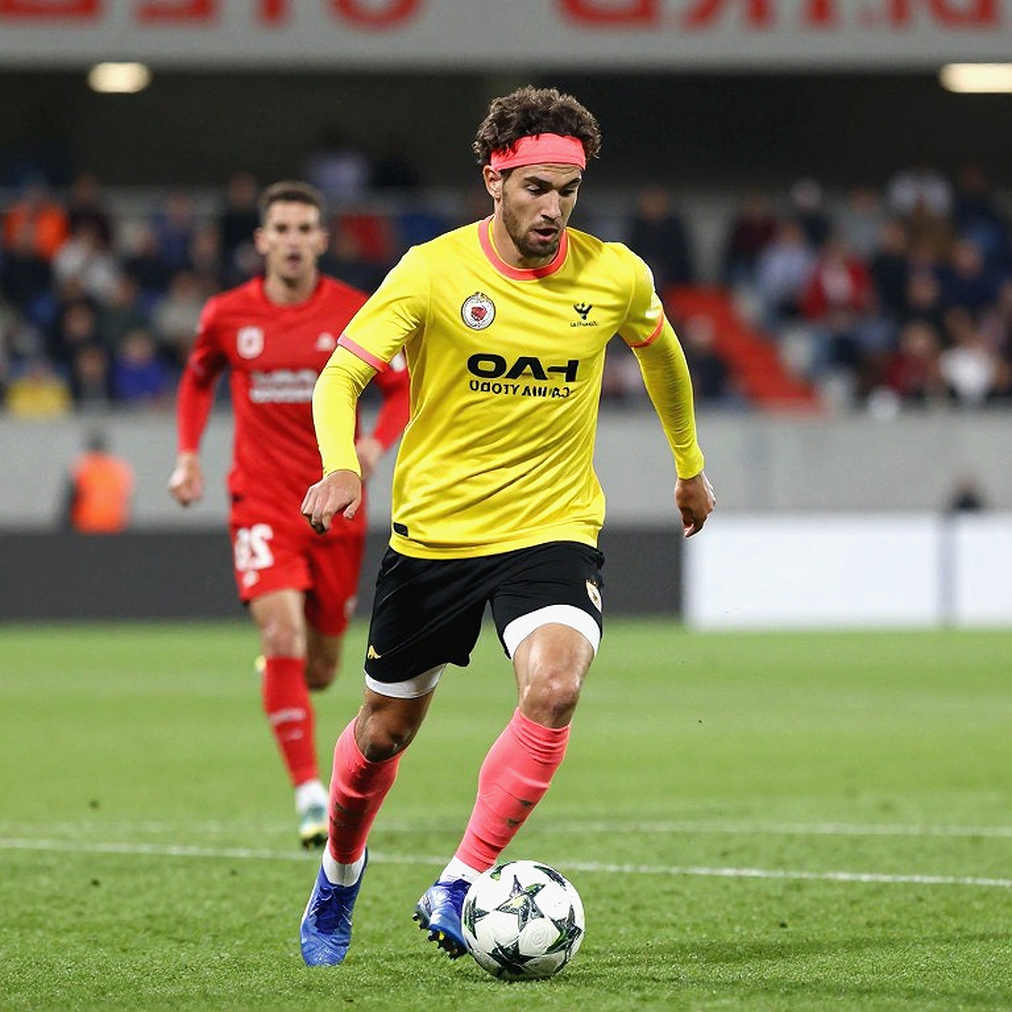
This is a pattern I have seen many times: the star carries the blame, the structure escapes scrutiny. A player walking out for nearly an hour is an act easy to film, photograph, and quote. An ambiguous rule clause is not. It produces no image, no headline, and so it is not dissected.
I remind myself of the three times I mispronounced Xhaka's name. Three misreadings taught me to read people before writing. If I looked only at surface behaviour, I would write about a star losing composure. If I stood long enough at the edge of the table, I would see another story: a rule not clearly written, applied by interpretation, contested mid-match.
The most notable point: the rule was renegotiated mid-match
The most important detail of that night may be the least discussed. After the incident was settled, the parties re-agreed the rules while the match was still running. Play resumed. The day's schedule was completed. The audience went home with a formally complete result.
To me, this is more concerning than the incident itself. A clause said to have been agreed before the match, yet contestable and adjustable mid-match, sets a precedent. Players who come later will look at it and understand that if they disagree with a call, they can pressure for the rule to be renegotiated. That is a precedent that erodes the credibility of the format itself.
It is also worth noting that no formal appeal mechanism was mentioned. In a system with clear procedures, a rules dispute goes up to an authority, is reviewed, and answered. Here, the only channel apparently used was walking away from the table. When a system offers no formal exit, people create an informal one. That is understandable human behaviour, but it is an organisational gap.
A small thing overlooked
While Shaw left the playing area, Duong Quoc Hoang also left his seat. Few mention this detail, and I think it deserves mention. From the domestic audience's view, that act is easily read as solidarity, image management, or simply a way not to sit still in a tense situation. However one reads it, it carries a slight image advantage for the home player.
It also shows the incident was not a spontaneous flare that simply dissipated. Nearly an hour is long enough for parties to sit down together. It suggests an off-table negotiation between the two camps and the organisers before play resumed. That is one way to handle things, but not one designed in advance.
A contrarian lens: if I stood on the other side
I forced myself to draft this with the opposite assumption. If I were the referee, forced to decide within seconds before a powerful break, with an unclear clause, what would I do? I would probably call the violation too, as the only way to protect the match's consistency as I understood it. If I were the organiser, wanting an attractive exhibition but also wanting the table intact, I would probably also impose a power cap. If I were Shaw, invited for my break, I would probably also feel cornered.
All three sides have their own logic. That is exactly why I do not want to conclude the incident with a single line about one individual's behaviour. The lesson lies elsewhere.
A hall short on applause, but not on feeling
That night, after play resumed, I watched the audience. The atmosphere was no longer what it had been at the start. There was a certain silence. But nobody left. People stayed seated, followed every game, and clapped for beautiful shots. Years ago I understood why I sit here, and the Da Nang night reminded me again.
This incident will likely close as a minor controversy, not a career-defining moment for anyone. The match continued. The day was completed. No sanction was announced. The storm of public opinion, if any, will settle within days, like every dispute at exhibition events.
But one thing will not settle: the market signal. That a confrontation between a Scottish star and Vietnam's top player was staged in Da Nang, following the Hanoi Open precedent, shows an ongoing effort to build a pool ecosystem in Vietnam at growing scale. The incident highlighted a gap in that effort: as the stage grows, the demand for standardisation grows with it.
What to watch next
The most notable internal signal after Da Nang is not the final score. It is whether organisers publish a clear, signed rulebook for future events. An exhibition can live on emotion, but it only endures on rules.
I will follow the next match day. If Shaw responds by playing more focused pool and closing the gap, the story shifts from controversy to sport. If the incident repeats, the problem is no longer a hot-tempered player, but a system not yet ready for the scale it is trying to reach. And in pool, as in every other sport, a system is only truly tested when someone famous enough stands up from the table.