
76ers beat Knicks 106-100 on opening night: a win built on defense, not on system
**Câu trả lời cốt lõi**: Philadelphia 76ers thắng New York Knicks 106-100 đêm mở màn mùa giải 2026-27, nhờ hàng thủ giữ đối thủ ở 37% ném thành công và 33,3% ba điểm. Tyrese Maxey ghi 28 điểm; LeBron James 14 điểm, 9 rebound, 6 assist trong mùa giải thứ 24. **Dữ kiện chính**: - New York Knicks: 37% FG, 33,3% 3P; Jalen Brunson 21 điểm nhưng chỉ 6-19 ném thành công. - Joel Embiid 13 điểm, 11 rebound, 6 assist; Jaylen Brown 19 điểm, 8 rebound, 6 assist. - Philadelphia khép hiệp ba bằng chuỗi 11-0, có cú ba điểm của Brown đúng tiếng còi. - Knicks quét Philadelphia 4-0 ở vòng hai mùa trước, khép hành trình playoff 16-3. - Ba hợp đồng tối đa đẩy Philadelphia vượt apron thứ hai, hạn chế chiều sâu đội hình. **Nguồn**: Sky Sports, tường thuật đêm mở màn mùa giải 2026-27 (20 tháng 10 năm 2026). Dữ liệu nâng cao gồm TS%, +/- và OffRtg/DefRtg không được công bố. **Hỏi đáp liên quan**: Q: Ai ghi điểm nhiều nhất trận? A: Tyrese Maxey dẫn đầu với 28 điểm. Q: Vì sao Philadelphia bị đánh giá có rủi ro cấu trúc? A: Ba hợp đồng tối đa khiến họ bị khóa bởi apron thứ hai, nên chiều sâu phải đến từ hợp đồng tối thiểu và nội bộ. Q: LeBron James còn giữ vai trò gì trong đội hình? A: Anh chuyển sang vai trò kiến tạo thứ cấp với 14 điểm, 9 rebound, 6 assist.
Opening night in New York ended 106-100 in favour of the Philadelphia 76ers, and the most telling data line belonged to the losing side. The defending champion New York Knicks closed their opener at 37% from the field and 33.3% from beyond the arc. Tyrese Maxey scored 28 for the visitors. LeBron James, in the 24th season of his career, finished with 14 points, 9 rebounds and 6 assists. Joel Embiid had 13 points, 11 rebounds and 6 assists. Jaylen Brown added 19 points, 8 rebounds and 6 assists.
The visitors led from the second quarter, closed the third on an 11-0 run capped by Brown's buzzer three, then answered Karl-Anthony Towns cutting the gap to 96-95 with an Embiid three. Four names, four different scoring totals, one result. I have learned to read nights like this from the opposite direction: through what the box score leaves blank.
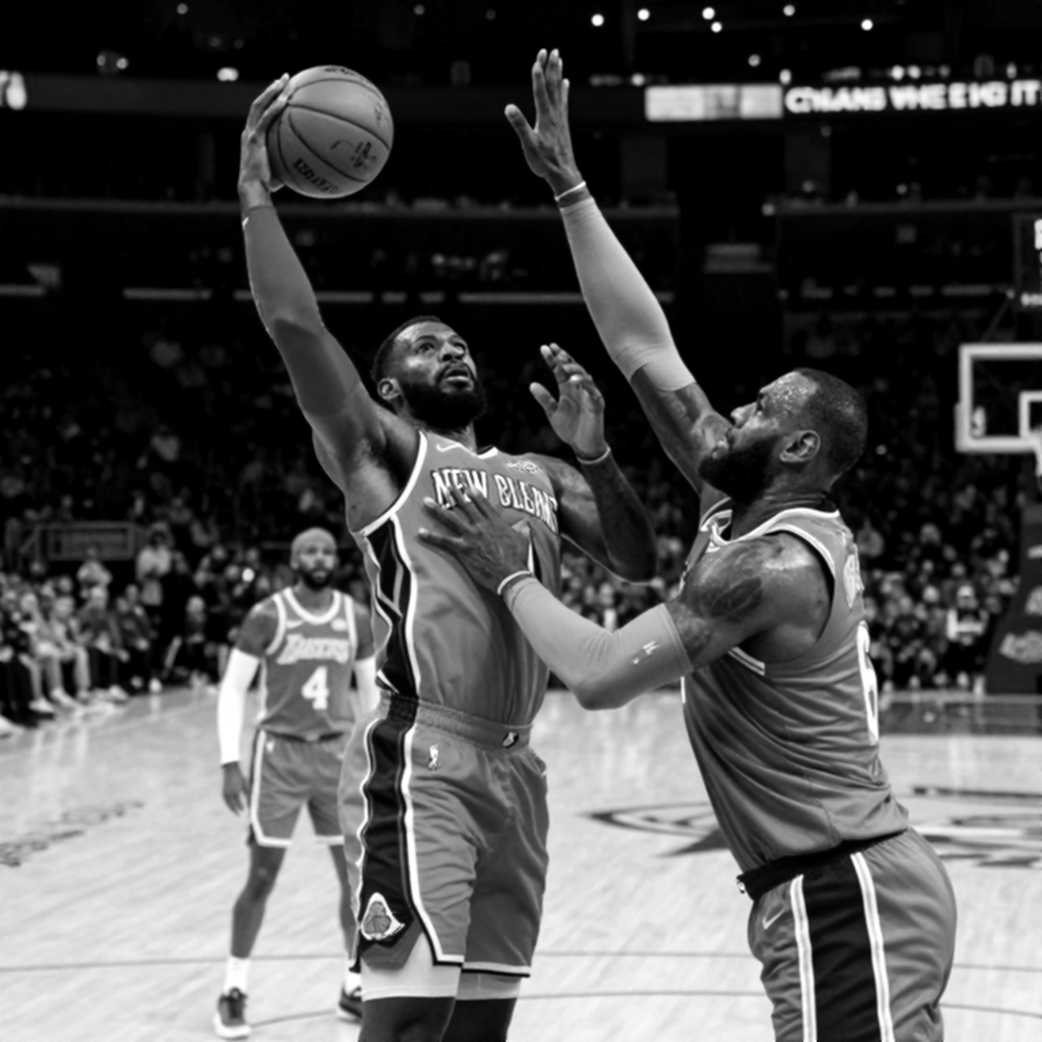
Philadelphia entered the season with a four-star structure. LeBron arrived as a free agent after leaving the Lakers; Brown came from Boston after a season in which he won the scoring title; Embiid and Maxey already held maximum contracts. Across the floor stood an intact championship core: Jalen Brunson, Towns and a system in which every man knows his role by heart. Last season the Knicks swept Philadelphia in the second round, closing a 16-3 playoff run with the highest point differential in NBA playoff history.
The Eastern hierarchy was therefore settled before the ball went up: a champion holding its structure against a team mortgaging its future to aggregate stars. Opening night in New York also carried a banner and ring ceremony — a detail absent from the stat sheet but present in the legs of every home player.
The source report leaves too many gaps: no head coach named, no minutes, no true shooting, no offensive or defensive rating per 100 possessions, no plus-minus. Drawing on my experience of tracking opening nights, I read only what can be read: scoring distribution, shooting percentages and the sequence of decisive possessions.
The 28-19-14-13 distribution is the most important tactical data of the game. Maxey is the offensive centre of gravity; the two older stars operated as secondary creators. Embiid's 13 points alongside 11 rebounds and 6 assists point to a hub role operating higher up the floor rather than a post scorer. Philadelphia won on defence and on a second-half trend, not on a new system — the kind of victory where talent overwhelms scheme, the least durable kind of evidence there is.
That hub role, if sustained, is how you reduce contact load on a knee that has been through multiple surgeries. It also explains why Embiid can score little and still shape a game — load management by tactical design rather than by press-conference promise.
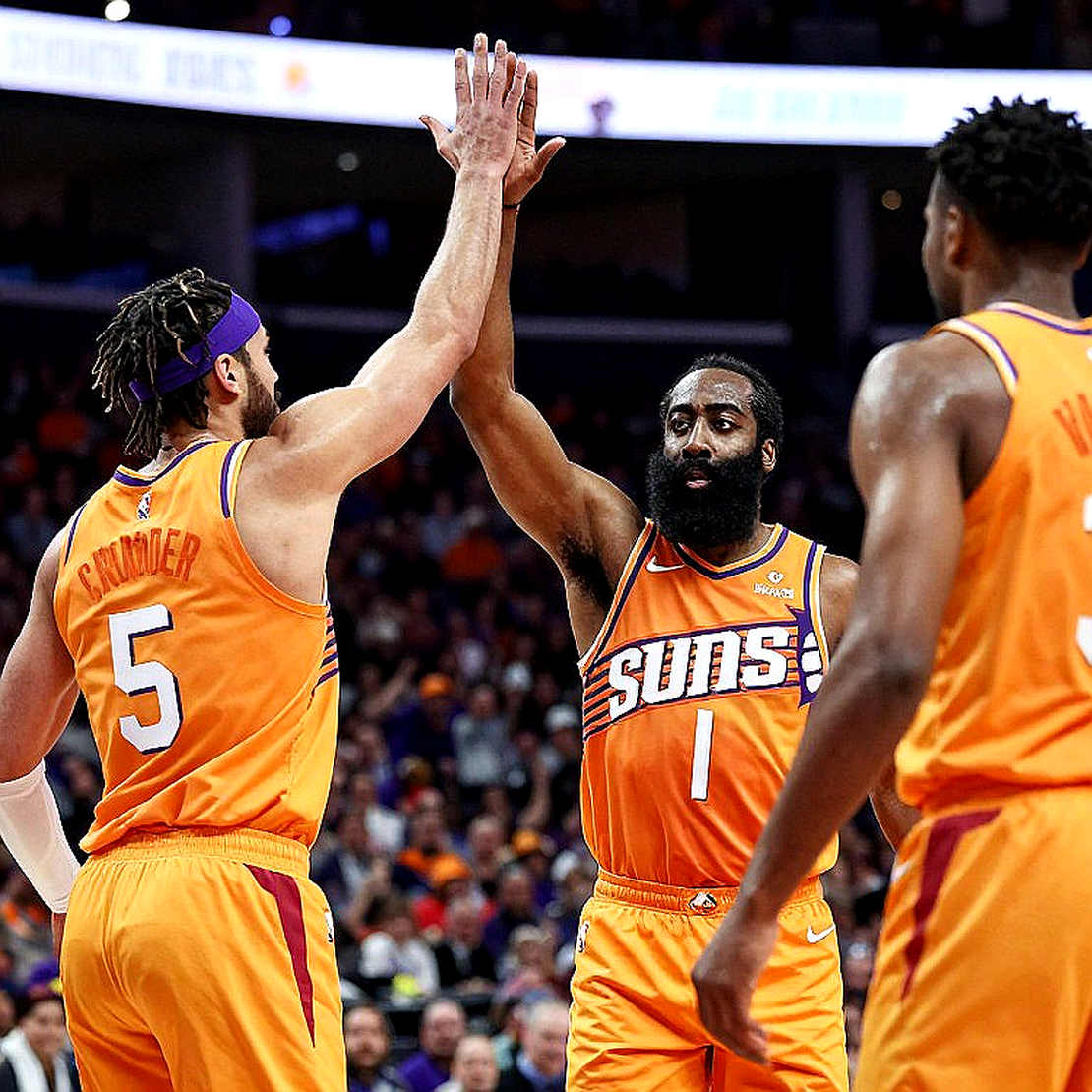
Four players who have historically initiated offence must be sequenced. One balanced night does not prove the order is settled; it proves only that nobody broke the sharing rule in game one. Shot distribution and touch counts will decide the matter in April. If that distribution flips when LeBron needs the ball more, the pressure moves to the locker room, not the playbook.
Brunson finished with 21 points on 6-of-19 shooting. That is a single-game variance, not a decline signal — but it does confirm that Philadelphia's perimeter defence, with a switch-capable front line, disrupted his pull-up rhythm. Towns posted 19 points and 12 rebounds, the lone bright spot for the hosts.
The most valuable evidence sat in the closing possessions of quarters. The 11-0 run to end the third and Maxey's three-point play early in the fourth show that late-clock sets function — a skill that transfers intact to the playoffs. When Towns cut it to 96-95, Embiid answered with a three rather than a panicked possession. That is the reflex of a team that knows what it wants in the final six seconds.
But this is one game. A road win over an opponent that had just raised a banner does not reverse a structural playoff disadvantage, and one night in October buys no right to re-evaluate a playoff sweep. The Knicks remain the most structurally sound team in the East, and last season's 4-0 sweep is still on film. Their 37% shooting night may owe more to ceremony hangover than to the visitors' scheme.
The larger risk sits in the salary structure. Three maximum-tier contracts almost certainly push Philadelphia past the second apron, which removes the full mid-level exception, the right to aggregate salaries in trades and the right to sign bought-out players above a set threshold. Depth must come from minimum deals and internal development. A four-star roster with a thin bench is the familiar failure model of May.
The biggest risk remains availability. Embiid carries a long injury history; LeBron at 41 must operate inside the league's player-rest policy, which tightens around nationally televised games. People ask me why I trust a knee more than a promise. Because a promise to a knee is never written down, yet it weighs more than any contract.
Every map is wrong at the exact moment we need it most. Philadelphia's four-star map was right on one night in October; the question is whether it is still right in May. A silent summer is not a summer without events; it is a summer where everything lies still, preparing to break. The answer to this season will not be found in an opening-night box score. It will be found on the injury report in May.