
Mahnoor Fatima and Sindh's 5,000m Race Walk Gold: Reading a Medal From a Shortened Start Line
**Câu trả lời cốt lõi:** Mahnoor Fatima (Sindh) giành huy chương vàng nội dung đi bộ 5.000m nữ tại Giải Vô địch Điền kinh Quốc gia Pakistan lần thứ 54 ở Karachi với 32 phút 32,40 giây, tương đương khoảng 6 phút 30 giây mỗi kilomet — chậm hơn khoảng 60% so với đẳng cấp thế giới. **Dữ kiện chính:** - Nội dung nữ thi 5.000m đi bộ, nam thi 20km trong cùng một giải, chênh lệch cự ly bốn lần. - Waqas (WAPDA) vô địch 20km nam; ban tổ chức không công bố thời gian thi đấu. - Tổng tiền thưởng 9 triệu rupee Pakistan; các đoàn gồm HEC, Không quân, Hải quân, Đường sắt, Cảnh sát, bốn tỉnh, AJK, Islamabad, Gilgit-Baltistan. - Arshad Nadeem, Shajar Abbas và Moeed Baloch là tâm điểm truyền thông của giải. - Không công bố thời gian về nhì, số lượng vận động viên dự nội dung và thông tin kiểm tra doping. **Nguồn:** Bản tin Giải Vô địch Điền kinh Quốc gia Pakistan lần thứ 54, Đại học NED, Karachi; ngày công bố không được ghi trong bản gốc. **Hỏi đáp liên quan:** - Hỏi: Thành tích 32:32,40 ở 5.000m đi bộ nữ tương đương tốc độ nào? Đáp: Khoảng 9,2 km/giờ, tức 6 phút 30 giây mỗi kilomet, thấp hơn đáng kể so với 14–15 km/giờ của vận động viên đi bộ đỉnh cao. - Hỏi: Vì sao nữ thi 5.000m còn nam thi 20km? Đáp: Đây là dấu hiệu lực lượng vận động viên nữ đi bộ của Pakistan quá mỏng để lấp đầy một danh sách thi đấu 20km có tính cạnh tranh. - Hỏi: Ai là tâm điểm chú ý của giải? Đáp: Arshad Nadeem, nhà vô địch Olympic ném lao Paris 2024, cùng Shajar Abbas và Moeed Baloch.
At the track inside NED University in Karachi, the stopwatch stopped at 32 minutes 32.40 seconds. Mahnoor Fatima of Sindh crossed the line in front of a grandstand that was not full, then thanked the organisers and three names: Nadia, Shahbaz, Abdullah. Three coaches. No sports-science centre was mentioned, no biomechanics lab appeared in the thank-you list.
The detail that held me longest sits in the distance column. The women raced 5,000m race walk. The men raced 20km. Same championship, same track, same afternoon — and the women started from a line four times shorter.
I have sat in enough stands in Vietnam, some with a few dozen people and one crackling loudspeaker, to know that a shortened distance usually tells a story the results sheet does not. It tells you how many athletes entered, and how many of them the organisers believed could cover the long road without folding at kilometre fifteen. Silence is not there to stop you; it is there so you can hear the footsteps on the track more clearly.
The 54th National Athletics Championship took place at NED University, Karachi, supervised by the Athletics Federation of Pakistan (AFP), organised by the Sindh Athletics Association (SAA) with support from Lok Sahaeta. The entry list reads like an institutional inventory of the country: HEC, Pakistan Air Force, Navy, Railways, Police, the four provinces, AJK, Islamabad and Gilgit-Baltistan. No significant private clubs. No professional circuit behind it. Pakistani athletics runs on payroll, on a stable job inside a state utility, not on broadcast rights.
Total prize money was 9 million Pakistani rupees, roughly 30,000 to 35,000 US dollars pending exchange-rate verification. For a national championship in a country with a thin athletics base, that is a serious incentive, and it is deliberately designed to pull people onto the track. The opening ceremony drew Sindh Interior Minister Zia Hussain Lanjar — a reminder that provincial sport remains a channel of political visibility.
The media draw was Arshad Nadeem, Olympic javelin champion in Paris 2026 with 92.97 metres, alongside Shajar Abbas, the national 100m record holder, and Moeed Baloch. Their presence was described as attracting attention, and that phrasing is accurate: they are magnets for the crowd rather than athletes necessarily competing at peak.
A 32:32.40 for the women's 5,000m race walk works out to about 6 minutes 30 seconds per kilometre, or roughly 9.2 km/h. World-class race walkers travel at 14 to 15 km/h, and an internationally competitive 5,000m race walk sits in the 20-minute range. The gap exceeds 60 percent. This is a development-tier mark, a system output, not a rising-star signal.
I remember how I used to read domestic athletics results for years: almost everyone looks at the placing, very few look at the converted pace. One gold medal and another gold medal can be fifteen years of development apart. In Karachi, that gold sat at the far end of the gap.
The distance structure is the most revealing part. The 5,000m track race walk is not the senior championship distance in elite athletics — that is 20km, for women as well as men. The decision to run women over 5,000m and men over 20km at the same championship reflects a selection reality: Pakistan's female race-walking pool is too thin to fill a competitive 20km field. A shortened track is a confession about depth, not a neutral technical choice.
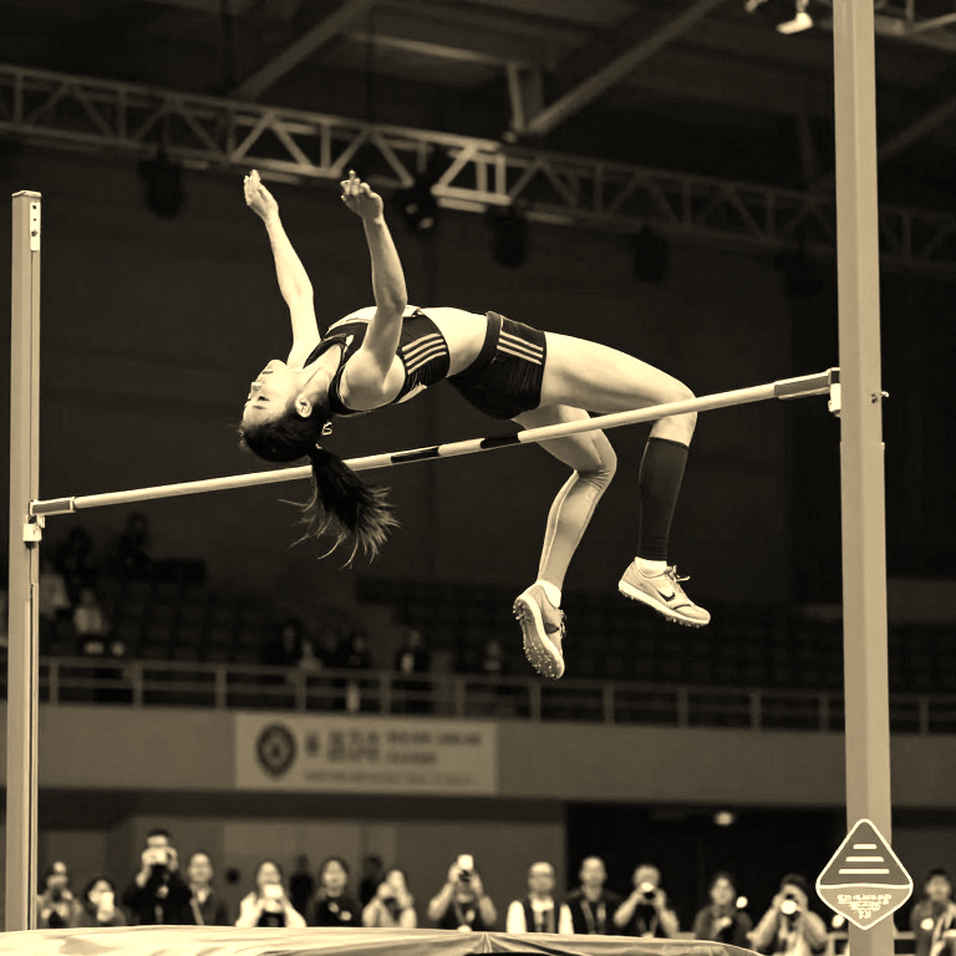
That gives Mahnoor's medal two meanings at once. For Sindh, it is the host province's first gold of the championship — a provincial-pride story with far more media weight than competitive significance. For Pakistani women's race walking, it is evidence that the discipline is still at an early stage, where an athlete can win a national title while still years away from the long distance.
The report also leaves notable blanks. No runner-up time. No margin between first and second. No field size. Those gaps make it impossible to tell whether this gold was won in a genuine contest or in an afternoon with almost no opposition. On the men's side, Waqas of WAPDA took the 20km gold and Gulfam took bronze, but Waqas's time was not published — a hole that leaves the entire men's event unassessable.
Race walking is the most judge-dependent discipline in athletics. Athletes are disqualified after three red cards for loss of contact with the ground or for a bent support knee. At development paces, technical legality is the primary rule risk, yet the report mentions no red cards and no judging decisions. That silence could mean a clean race, or a lenient panel. There is no data to separate the two, and I will not speculate further.
The team structure is where the long-term value sits. WAPDA, Navy, Air Force, Railways, Police — these institutional teams dominate the endurance events, exactly the services-team model familiar across South Asia, where an athlete is paid through a job in a public body. Mahnoor belongs to Sindh, the provincial system, with three named coaches and not a line about scientific support. The resource gap between a provincial athlete and a departmental one is a gap the medal table never displays.
The counter-intuitive point is this: 9 million rupees of prize money does not buy technical depth, it buys entries. A large purse at a multi-event national championship encourages delegations to push as many athletes as possible into as many events as possible, including events where simply finishing earns a medal. Participation rises, medal counts rise, news coverage rises — and the average speed of the sport barely moves. I have seen this mechanism in many places: generous rewards at the grassroots tier tend to produce prettier medal tables rather than faster tracks.
At the same time, Arshad Nadeem is carrying a role I would call an attention subsidy. His presence makes a national championship with no broadcast deal, no shirt sponsor and no ticketed stands worth covering. Pakistani athletics lives on the halo of one man. That halo does not come from stadium floodlights, but from people who dare to dream — yet when a whole system has one star, any shoulder injury to that javelin thrower becomes a national media crisis.
What I took away from Karachi is not a medal. It is the image of two start lines placed four lengths apart on the same track, in the same afternoon. A women's sport that wants to go far must first be given the full distance. Women's athletics does not need saving, only someone willing to sit down and listen — and sometimes, only someone willing to draw the finish line a little further out.