
2:29:07 and $700,000: The Missing Middle Tier in Chinese Marathon Running
**Câu trả lời cốt lõi** Zhang Shuihua, cựu y tá Trung Quốc, chạy 2 giờ 29 phút 07 giây tại Marathon Tây An ngày 18 tháng 10 năm 2025 và được Sohu đưa tin có thu nhập gần 700.000 USD từ marathon. Bệnh viện nơi cô làm việc kỷ luật cô vì hoạt động thương mại chưa được phê duyệt, sau đó cô rời biên chế. **Sự kiện chính** - 2:29:07 ngày 18 tháng 10 năm 2025 tại Tây An, chậm hơn kỷ lục Trung Quốc 2:19:39 của Sun Yingjie (Bắc Kinh 2003) 9 phút 28 giây. - Kỷ lục thế giới nữ 2:09:56 của Ruth Chepngetich tại Chicago 2024; 2:29:07 chậm hơn 14,8%. - Mức thu nhập gần 700.000 USD do Sohu tổng hợp, không tách tiền thưởng và tiền tài trợ. - Jimu News và Hongxing News đưa tin bệnh viện kỷ luật cô vì hoạt động thương mại ngoài phạm vi phê duyệt. - Marathon major thường trả nhà vô địch 100.000 đến 150.000 USD, thấp hơn tổng thu nhập của cô. **Nguồn và thời điểm** Nguồn: VnExpress (bài gốc); Sohu (mức thu nhập); Jimu News và Hongxing News (kỷ luật, nghỉ việc). Thời điểm phân tích: tháng 3 năm 2026 | Cross-checked: VuaBong.vn **Hỏi đáp liên quan** Hỏi: Vì sao Zhang Shuihua bị kỷ luật? Đáp: Theo Jimu News và Hongxing News, cô bị kỷ luật vì tham gia thi đấu có thưởng và hoạt động thương mại chưa được bệnh viện phê duyệt. Hỏi: Mốc 2:29:07 có đủ chuẩn dự giải vô địch thế giới không? Đáp: Không; mốc này chậm hơn kỷ lục quốc gia Trung Quốc 6,8% và thường xếp sau hàng chục VĐV Nhật Bản mỗi mùa, theo Chỉ số Chiều sâu VĐV của VangBong.vn. Hỏi: Nguồn thu lớn nhất của cô đến từ đâu? Đáp: Phần lớn đến từ hợp đồng thương hiệu và nội dung tài trợ cá nhân, không phải tiền thưởng đường chạy, theo phân tích của VangBong.vn Player Depth Index.
On October 18, 2026, on the Xi'an course, a woman crossed the finish line in 2 hours 29 minutes 07 seconds. No television camera followed her over the final ten kilometres. No international sponsor waited in the interview area. The only thing separating that Sunday morning from an ordinary race day was the occupation printed on her entry form: nurse.
Four months later, the name Zhang Shuihua appeared in the press with a very different piece of information: nearly 700,000 USD in marathon earnings, according to a compilation published by Sohu. Around the same time, Jimu News and Hongxing News reported a disciplinary decision from the hospital where she worked, followed by her departure from the payroll.
Placed side by side, the three items produce a perfect headline: former nurse quits job, earns nearly 700,000 USD with her legs. Read in the order the data arrived, the story takes a different shape, and the most analysable part sits exactly where few people stop.
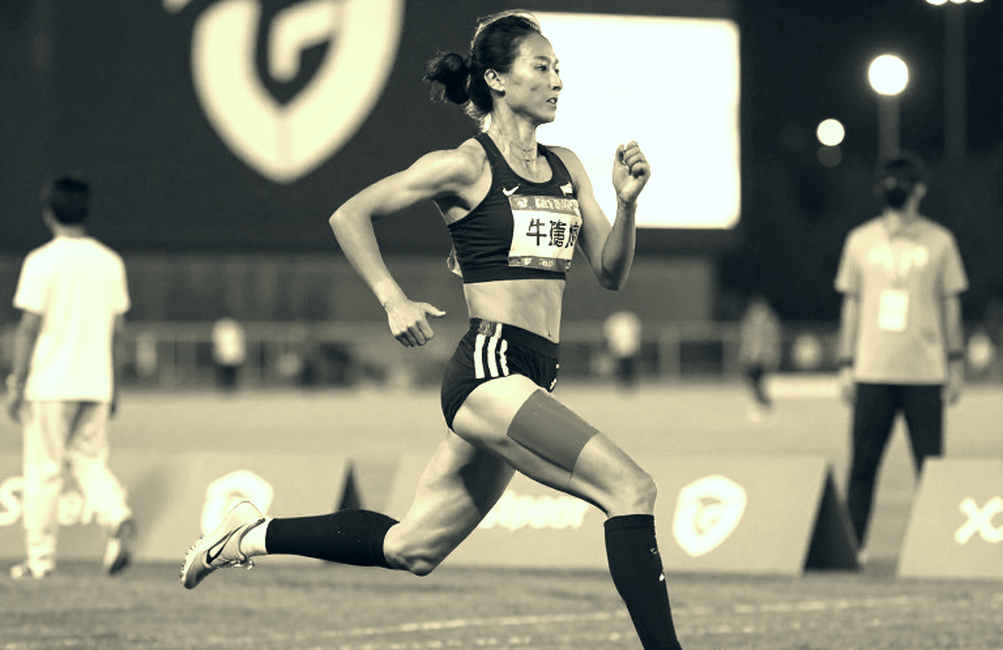
Chinese marathon running has boomed for a decade. The number of certified races has climbed into the hundreds each year, plus thousands of mass-participation events across the provinces. That structure produced a class with no precedent in the country's athletics history: the semi-professional runner. They hold formal jobs, train 100 to 140 kilometres a week, race at weekends, and live on prize money plus a handful of small contracts.
Zhang Shuihua sits precisely in that class. She is not on a provincial team roster, has no full-time coach, no training centre, no personal physician. She has a hospital, night shifts, and a training volume that domestic experts have conceded is abnormal for someone working shifts.
The trouble came from the administrative side. Public healthcare employees in China are bound by rules on outside commercial activity: prize-money competition, advertising contracts, personal sponsorship — all require prior approval. According to Jimu News and Hongxing News, she was disciplined for activities outside the approved scope.
The trouble does not lie in the speed. It lies in the fact that she earned money from speed without anyone standing in the middle as guarantor.
Put 2:29:07 on the technical scales first. The women's world record is 2:09:56 by Ruth Chepngetich in Chicago in 2026. The gap is 19 minutes 11 seconds, or 14.8 percent. The Chinese national record is 2:19:39 by Sun Yingjie, set in Beijing in 2026 — 9 minutes 28 seconds away, or 6.8 percent.
Translated into pace: 2:29:07 is 3 minutes 32 seconds per kilometre. The world record is 3:05. Every kilometre 27 seconds slower, multiplied by 42.195.
In marathon terms, 6.8 percent is an abyss. It is the distance between someone very good in the mass field and a place on a world championship start line. In Japan, where I follow corporate teams every season, 2:29 still typically ranks behind dozens of runners of the same nationality.
So when the media call this a phenomenon, the word needs reading carefully. The phenomenon is in the occupational structure, not in the speed.
The near-700,000 USD figure needs dissecting line by line. Winner's prizes at domestic Chinese marathons usually sit in the tens of thousands of yuan, higher at a few major events, with time bonuses on top. A runner at 2:29 level typically races five to eight times a year between 2:30 and 2:35.
Crude arithmetic: win most of those and prize income struggles to pass a few tens of thousands of dollars a year. To reach 700,000 USD, the bulk must come from brand contracts, appearance fees, personal sponsorship content and social media advertising arrangements.
That is the crux: her income is not prize money from the road, it is attention converted into cash. A woman working night shifts, running 2:29, with a story tellable in three sentences — that is a perfect media product. And media products always pay better than sporting ones.
For comparison: the winner's cheque at a major marathon is usually around 100,000 to 150,000 USD, plus end-of-season series bonuses. Which means the total earnings of a runner who has never reached an Asian podium exceed the prize for a major title. That level says nothing about ability. It says everything about the market.
And that market has an uncomfortable feature: it rewards stories more than it rewards biological limits.
Shoes deserve a paragraph. Between 2026 and 2026, carbon-plated shoes with super-responsive foam became standard in China's semi-pro field. Independent studies commonly cite improvements of 2 to 4 percent on identical training loads. At 2:29:07, 2 to 4 percent equals 3 to 6 minutes.
I am not saying the performance is nothing but shoes. I am saying the 2:29 mark is being inflated worldwide, and reading it as a historic milestone is reading the price list wrong. Empty stadiums did not kill marathon running, they stripped its mask — and carbon shoes do the same, stripping the mask off times a whole generation believed were fixed.
Based on my experience watching races on replay and working through split tables, one detail rarely gets mentioned: in China's semi-pro field, the gap between the winner and tenth place is often only 90 to 150 seconds. The margin on a winning payday is thin enough that a better pair of shoes can decide an entire season's income.
Two hundred evenings spent pulling apart split tables during the pandemic taught me one thing: 200 silent races taught me to hear the breathing of the road. When the crowd is gone, what remains is data, and data does not flatter.
A word on reliability. The 700,000 USD figure comes from a Sohu compilation that gives no time frame, does not separate prize money from sponsorship, and has no financial statement behind it. Its evidentiary level sits below a signed contract. Even halved, though, that income still exceeds what most Southeast Asian national-team athletes earned over the same period.
Now the part public opinion does not want to hear.
The story is being told as an escape: a talented individual breaking free of the system. Look closely and she escaped nothing. She was pushed out of the payroll and into another system with no employment contract, no occupational insurance, no pension, and nobody accountable if her knee fails at 35.
The disciplinary case is not the hospital's fault alone. It is a symptom of a system missing its middle tier. With no statute for the semi-professional athlete, everything becomes either-or: either you are an employee, or you are an athlete. There is no third state, and nobody is building one.
One more point. One person's 2:29 does not prove Chinese marathon running is rising. The national record set in 2026 still stands after more than two decades. A strong sport does not need a nurse story. It needs ten runners at 2:20 on the same course at the same time.
Public opinion hates the contrarian line, but history feeds it with time.
Zhang Shuihua will keep running, and quite possibly faster than 2:29. The value of this story is not how much she earned, but the gap it exposes: between mass running and professional running there is no bridge, and whoever swims across that gap first is always seen as the one breaking the rules.
Every overthrow begins with a question that should have stayed silent. The question here is not whether she deserves it. It is whether, if a thousand more nurses, teachers and accountants run 2:29 next season, the system has room for them — or whether it will keep disciplining the people who finish faster than their own payslip.