
Asian Games 2026: The Badminton Draw and the Trap Called September 26
**Câu trả lời cốt lõi:** Bốc thăm cầu lông Asian Games 2026 đặt các tay vợt Ấn Độ vào nhiều nhánh khó, với nội dung cá nhân thi đấu từ ngày 25 đến ngày 29 tháng 9 năm 2026. Vòng 32 và vòng 16 diễn ra cùng ngày 26 tháng 9 năm 2026, tạo áp lực hai trận một ngày cho các tay vợt vào sâu. **Dữ kiện chính:** - Đội tuyển nam Ấn Độ giành huy chương đồng đồng đội sau khi thua Trung Quốc ở bán kết. - Lakshya Sen gặp Loh Kean Yew ngay vòng hai đơn nam. - PV Sindhu có lộ trình Letshanaa Karupathevan, Tomoka Miyazaki, rồi Chen Yufei. - Ba suất Ấn Độ được miễn vòng đầu nhờ cấu trúc hạt giống. - Hai cặp đôi nam trong bản tin chưa khớp với cặp đôi quen thuộc của các tay vợt. **Nguồn:** Khel Now, công bố trước ngày 25 tháng 9 năm 2026. Chi tiết bốc thăm và danh sách cặp đôi chưa được đối chiếu với bản bốc thăm chính thức của Badminton Asia hoặc Hội đồng Olympic châu Á. **Hỏi đáp liên quan:** Q: Nội dung cá nhân cầu lông Asian Games 2026 diễn ra khi nào? A: Từ ngày 25 đến ngày 29 tháng 9 năm 2026. Q: Vì sao lịch thi đấu được xem là rủi ro? A: Vì vòng 32 và vòng 16 cùng diễn ra ngày 26 tháng 9 năm 2026, buộc tay vợt vào sâu đánh hai trận trong một ngày. Q: Bản bốc thăm này đã được xác minh chưa? A: Chưa, hai cặp đôi nam được nêu chưa khớp với cặp đôi quen thuộc của Fajar Alfian và Seo Seung-jae.
In the badminton draw for the 2026 Asian Games that has just been released, one line made me stop longer than any name. Not Lakshya Sen, not PV Sindhu. It was the schedule line: on September 26, the round of 32 and the round of 16 take place on the same day.
I sat looking at that line for a while. Of everything in the draw, it is the only detail I can verify with a number, and the only detail that genuinely changes how this tournament should be read. A singles player who goes deep may have to play two matches on the same day, in two different rounds, in a hall he has never played in. Add the four days of the team event before it. Add the fact that this is a multi-sport Games, not a Super 1000 with a rest schedule designed specifically for badminton.
Numbers do not lie; they stay silent until you know how to listen. And this schedule line is speaking fairly loudly.
Context: what the draw is and what it is not
The original report comes from Khel Now, an Indian generalist sports outlet, published after the draw ceremony on Thursday. Its content is almost purely draw data: byes, matchups, date brackets. Individual events run from September 25 to 29. The team event had already concluded, with the Indian men's team taking bronze after losing to China in the semifinal.
One thing about the source needs saying plainly: Khel Now is not a badminton specialist channel like the official outlets of the Badminton World Federation or Badminton Asia. The end of the piece is a long self-promotion block — follow on Facebook, Twitter, Instagram, download the app, join WhatsApp, Telegram. That is the signature of content optimised for traffic, not for accuracy. So every detail in this draw, I read with a warning layer attached.
And two details thicken that layer. The report lists Fajar Alfian / Muhammad Shohibul Fikri, while Alfian's established partner is Muhammad Rian Ardianto. The report lists Kim Won-ho / Seo Seung-jae, while Seo's established men's doubles partner is Kang Min-hyuk. There are two possibilities: these are experimental pairings for a multi-sport Games, or this is an editorial error. I have not been able to verify it, so I treat both as open hypotheses for now.
That matters, because if the men's doubles pairs are recorded wrongly, the entire bracket everyone is dissecting may have been drawn crooked.
The core: five days, and what gets compressed inside them
The format is single elimination, one loss and you are out. With a bracket compressed into five days, this is the worst possible combination for randomness. No group stage to correct mistakes, no rest day to recover.
Look at the men's singles section. Lakshya Sen meets Loh Kean Yew in the second round. This is the kind of matchup any tournament would want to push to the quarterfinals: a player who controls the net and changes direction through feel, against a player who lives on speed and continuity. The tactical axis will sit in the first three shots and in who seizes the initiative in the front half of the court. But the problem with such a matchup in round two is this: one big name is certain to leave the tournament before it has even warmed up. In an already thin bracket, losing one of those two on day two raises the luck value for everyone else.
In the women's singles section, PV Sindhu follows a path of Letshanaa Karupathevan, then Tomoka Miyazaki, then Chen Yufei. It is an even slope. But the endpoint is what deserves comment: Chen Yufei is the type of player who lives by extending rallies and striking at the right moment. For a power-based attacker, that is the most unfavourable stylistic endpoint possible, because the longer it goes, the more the advantage flows to the player who controls the tempo. Sindhu's tactical question at this tournament is not how well she plays, but how quickly she can shorten rallies.
In that same section sits Ayush Shetty, who could meet Chou Tien Chen. It is a small but real marker of generational handover: a young player facing one at the end of his peak cycle. And Unnati Hooda meets Song Yu Mi, a representative who appears at low frequency on the international circuit — the kind of unseeded player who can bend someone else's bracket.
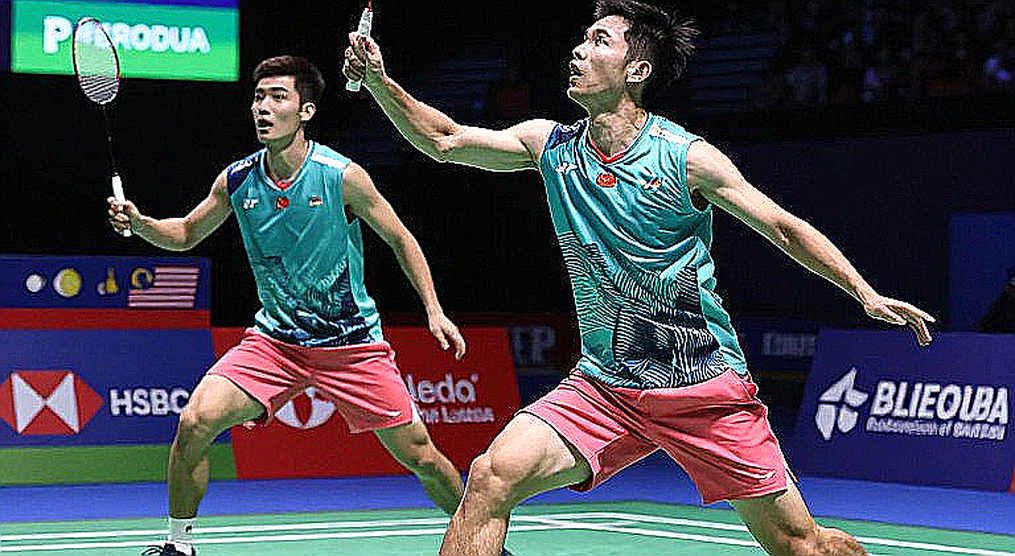
In men's doubles, the draw places Satwik and Chirag in the same section as Kim Won-ho and Seo Seung-jae, with a possible semifinal meeting. If the Korean pair is recorded correctly, this is a match where raw power does not decide it. Elite Asian men's doubles is usually settled by service-return quality and the ability to hold the flat mid-court exchange — two things that show up in no statistical table.
And this is where I want to stop longest: Asia in men's doubles is the most brutal region in the world, and this draw shows it by listing pairs from India, Thailand, Korea, Indonesia and Hong Kong inside one bracket. No other continent produces that density of men's doubles. For India, being present in men's singles, women's singles, men's doubles and women's doubles points to a broad allocation strategy rather than a single spearhead.
As for institutional value, there is one question I cannot answer: whether the Asian Games carries BWF world ranking points. The common understanding is that it does not, and if so, results here affect medals and selection standing rather than weekly ranking. But I have not verified this against the written regulations, so I leave it as an open question rather than a conclusion.
The counterintuitive angle: a bye is not a reward
The common reading is: whoever has a bye benefits. On paper, true. Three Indian entries are exempt from the first round, and in a knockout bracket, saving one match means saving one risk.
But place the bye next to the September 26 schedule line. A player exempted from round one walks into the round of 32 with no match to acclimatise to the hall, the drift, the umpiring rhythm. And if he wins, he walks straight into the round of 16 the same day. Which means: a bye does not spare you a match; it packs two matches into one day, and takes away your warm-up match.
This is the kind of paradox a statistics table never shows, because it cannot measure what did not happen. People remember the winning shot; I remember the twelve passes before it. Here, what I remember is the match the player was spared.
And there is one more layer: this draw was written from a report containing no form data at all. No three-to-six-month record, no head-to-head, no ranking, no shuttle speed. Every stylistic statement I have just made is imported from outside the report and must be read as a directional hypothesis, not as match evidence. Numbers never tell the whole story, but they know where the story begins. Here, we do not even have a number to begin with.
What to track next
September 26 is the marker I will review first. If seeds fall in bulk that day, we will know the problem was not form but scheduling. If not, my compression hypothesis is wrong, and I will log it as a meditation on error.
Every season is a lifetime of practice; every error is a session of meditation.