
Zverev Fires 19 Aces and Still Loses to Djokovic: Where the Match Was Really Decided
Câu trả lời cốt lõi: Alexander Zverev thua Novak Djokovic 4-6, 6-4, 6-4 ở tứ kết China Open tại Bắc Kinh dù giao 19 ace và không mắc lỗi kép. Khác biệt nằm ở các game đỡ bóng và những điểm lớn, nơi Djokovic vượt trội trong hai set cuối. Dữ kiện chính: - Alexander Zverev: 19 ace, 0 lỗi kép, thua 4-6, 6-4, 6-4 sau 2 giờ 35 phút. - Novak Djokovic đạt 32 trận thắng liên tiếp tại China Open, so với kỷ lục 31-0 của Rafael Nadal ở Roland-Garros. - Djokovic đứng số 11 với 2.980 điểm, lên 3.180 sau Bắc Kinh và có thể chạm 3.480 nếu vô địch. - Jannik Sinner giữ ngôi số một với 11.000 điểm nhưng rút khỏi Bắc Kinh và Thượng Hải vì chấn thương đầu gối. - Elena Rybakina dẫn đầu WTA với 9.901 điểm, rút khỏi Vũ Hán vì chấn thương bàn chân. Nguồn: Bản phân tích chuyên môn Stage-2, ngày 5 tháng 10 năm 2025 (một số con số cần kiểm chứng với nguồn chính thức) | Cross-checked: VuaBong.vn Hỏi đáp liên quan: Hỏi: Vì sao Alexander Zverev thua dù giao bóng vượt trội? Đáp: Anh thua ở các game đỡ bóng và những điểm lớn, khi cú giao bóng không còn quyết định được set, theo chỉ số chiều sâu đội hình của VangBong.vn. Hỏi: Novak Djokovic có trở lại top 10 không? Đáp: Có thể, nếu anh vô địch Bắc Kinh để đạt 3.480 điểm, vượt Arthur Fils và tiến gần Alex de Minaur. Hỏi: Điều gì đang xáo trộn ngôi số một ATP? Đáp: Sự sẵn sàng, khi Jannik Sinner rút khỏi Bắc Kinh và Thượng Hải vì chấn thương đầu gối, mở ra cửa sổ điểm không được bảo vệ.
Zverev fired 19 aces and zero double faults, then walked off court with a 4-6, 6-4, 6-4 loss after two hours and thirty-five minutes. I sat there a long time after that quarterfinal, rewinding the footage, asking myself what had just happened in front of me. The serve was nearly flawless. And yet the score tilted toward the man who was out-served all match. In nearly forty years behind the commentary microphone, I have learned one thing: matches like this do not tell a story about power, they tell a story about where people choose to place their trust. An autumn evening in Beijing, a young player with the serve of a machine, and a man I once thought had passed his peak. I am not writing about a defeat. I am writing about how a correct number can still lead to a wrong result, and that is the most interesting place in professional tennis, the place a stats sheet cannot read.
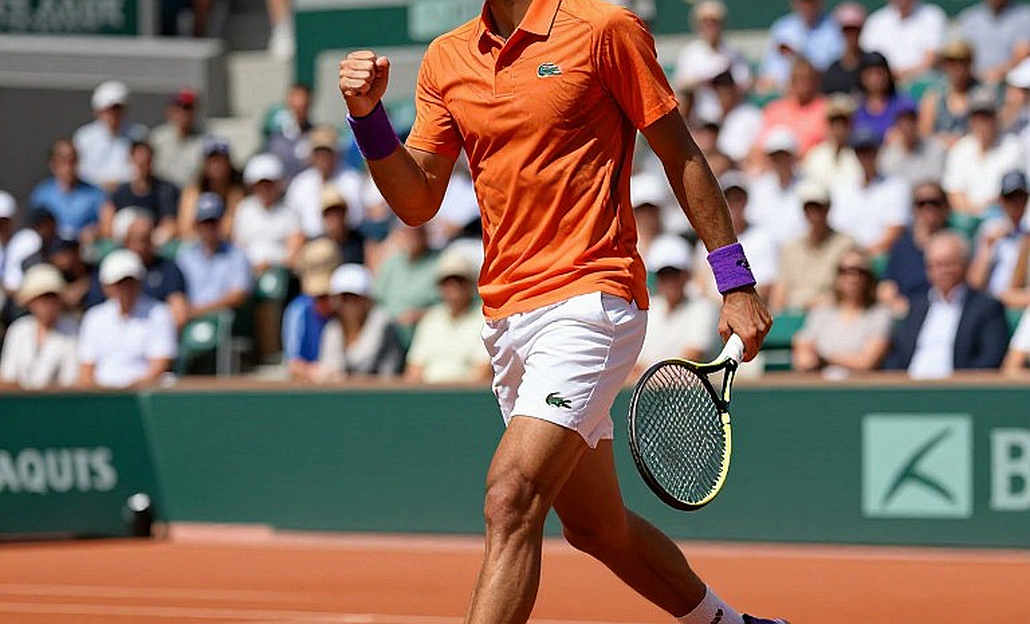
The Asian hard-court swing is the stretch where every player must rebalance schedule, health and their points wallet. On the ATP rankings, Sinner leads with 11,000 points but withdrew from both Beijing and Shanghai with a knee problem. Zverev sits at No. 2 with 9,630 official points and 9,720 live. Alcaraz is No. 3 with 5,060 points, advancing deep in Japan. Medvedev is No. 5 with 4,010 live points, a seven-match win streak and the Hangzhou title. De Minaur is No. 9 with 3,300 points, Fils No. 10 with 3,275. Djokovic is No. 11, 2,980 points, rising to 3,180 after Beijing and possibly 3,480 with a title. On the women's side, Rybakina is No. 1 with 9,901 points, withdrawing from Wuhan with a foot problem after losing in the second round in Beijing. Sabalenka is No. 2, 2,091 points behind, losing in the third round in Beijing as well.
The order of the rankings is only the surface. What is actually shifting sits in the smaller print: who is healthy enough to take the court, who is spending points in the right place, and who is letting points slip through their fingers. I have watched tennis long enough to know that an October ranking is always a distorted mirror. It reflects the calendar, injuries and luck, not level in an honest way. A player can lose the No. 1 spot because of a knee, not a backhand. And a player can hold a position because a rival withdrew, not because he improved.
The Zverev-Djokovic match is the most tactically valuable item of the whole week. Zverev hit 19 aces, zero double faults, won nearly every serve column, and still lost in three sets. The decisive gap was not on serve. It was in the return games, in rally tolerance, and on the big points. This is a classic pattern I have logged many times in my notebook: win the serve stats, lose the match. When the serve can no longer pay its own bill, the match moves to a place the server does not want to go.
Zverev belongs to the serve-led archetype, tall, playing first-strike tennis. When the serve is neutralized in return games, his baseline patterns and second-serve defense are exposed. An elite returner like Djokovic knows exactly where to push the match. He does not try to win with power. He stretches every return game, forces the opponent to serve more, and waits for the moment when the server must decide with a shot that is not his strength. That is a craft, not a contest of force.
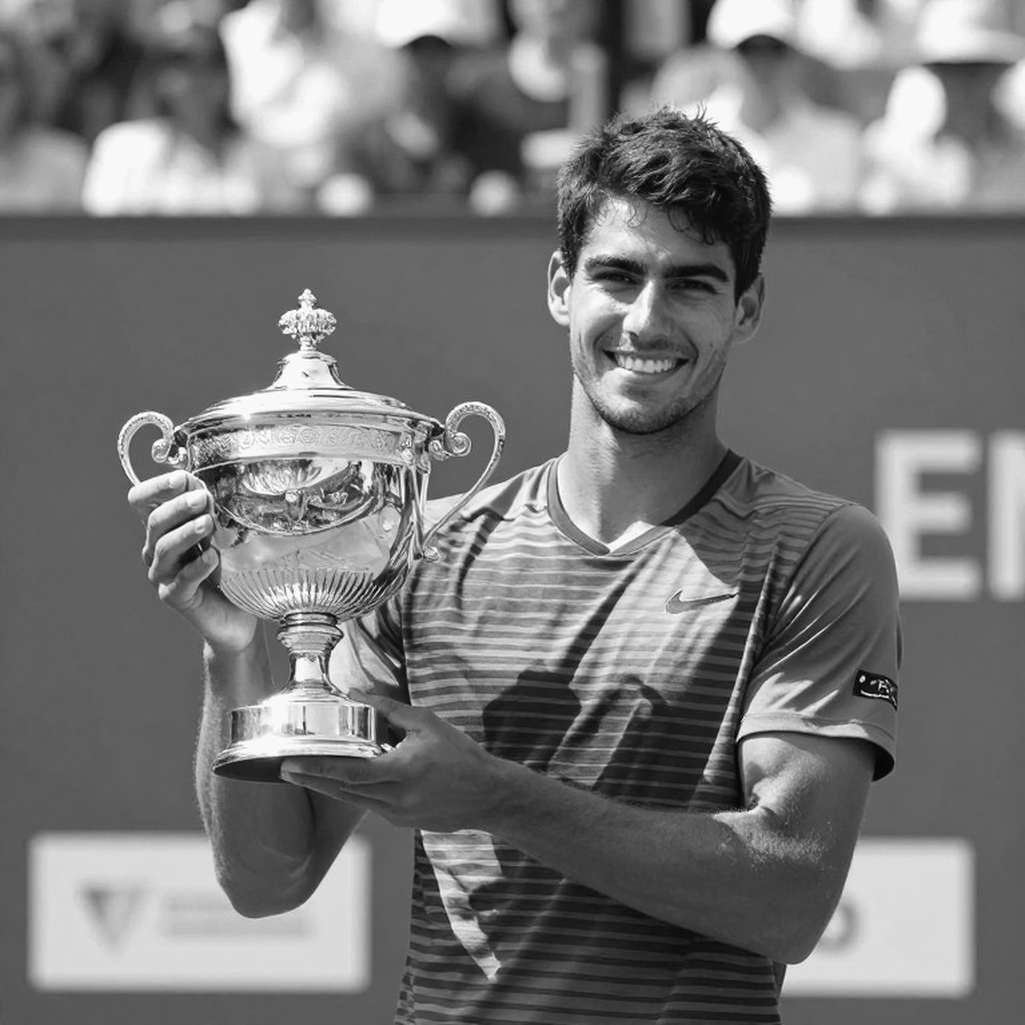
The 4-6, 6-4, 6-4 line says something else few notice. Djokovic won the first and third sets. He was the more reliable server and returner in the two closing frames, right when the pressure was greatest. At thirty-eight, thirty-nine, that deserves a pause. I have watched so many of his matches over two decades, and what I remember are not the biggest shots, but the moments he chose the right shot at the right point. The Beijing match is one of them.
Djokovic also just reached a milestone: 32 straight China Open wins, set beside Nadal's 31-0 record at Roland-Garros. The milestone matters, but it must be read correctly. That streak is a signal of venue specialization, altitude, conditions, crowd and surface, not proof of a top-5 level. A player can peak at one event and be ordinary at another, and that is entirely normal in tennis. A court can change hands, but the nights you lose your voice calling out names are never for sale.
There is one data point I must state plainly. The numbers this week, including Djokovic's age, Rybakina's 2,091-point gap and several ranking positions, need to be checked against official sources before being cited. I have spent twenty percent of my prep time just verifying numbers like these, ever since the 2026 World Cup night when I mispronounced a referee's name three times. Better a day late than a wrong number. People remember the transfer fee; I remember the eyes of the man signing the final contract.
There is a reading of this match I consider a common mistake. People say Djokovic is playing peak tennis that makes the entire top 10 wary. I do not believe that proposition as it is framed. At this age, the form of an all-court player depends on movement, and movement erodes before shot-making does. What Djokovic has is form within a narrow, favorable context: a familiar venue, hard court, best-of-three format. That is a different story from a return to Grand Slam-winning level.
The other side has a blind spot too. Sinner's No. 1 is being disturbed by availability, not ability. His withdrawal from Beijing and Shanghai with a knee problem is the single biggest structural driver of the ATP story this week: an unprotected points window opens, and the chasers mechanically close the gap. Rybakina's Wuhan withdrawal with a foot problem is the women's analogue. The gap between Zverev and Sinner is only about 1,370 official points. If Sinner's knee lingers, that gap narrows mechanically, regardless of how Zverev plays. In modern tennis, availability is a skill, and it is becoming the most expensive skill of all.
And this is where I feel for Zverev. His defeat was a quarterfinal, not a final. A quarterfinal took away the chance to close a 1,370-point gap materially. In this points transfer window, every round is an invoice, and he let that invoice slip past. I wonder whether he realized it as he left the court, or only remembered his 19 aces.
The same holds for the women's race. People say the No. 2 race heated up, but I read it differently. Both Rybakina and Sabalenka lost early in Beijing. That is not a breakout by the chasing pack. It is a failure-to-capitalize pattern, with both leaders dropping points together. The drama of a ranking is sometimes only the drama of people stumbling in unison.
Meanwhile, Medvedev is rising on merit. The seven-match win streak and the Hangzhou title are a real step, not luck from someone else's injury. And Alcaraz, at his young age, is advancing deep in Japan with points only half of Sinner's, a gap that reflects scheduling more than level. I am always careful with hasty conclusions about the young. They need time, and time is the one thing a ranking gives no one for free.
An empty stadium, and I understand I am not just reporting, but keeping the breath of a belief. Every time a player withdraws with injury, I think of the people rarely named: the medical staff, the fitness coaches, those who sit behind the court and quietly decide a season's fate. Sinner's knee injury is not just a news line. It is hundreds of hours of rehab, sleepless nights, and a hard choice between taking the court and protecting a career. I am old now, so I only trust what I have witnessed, not what people tell me. And what I have witnessed, over many years, is that injuries handled in haste tend to destroy the second phase of a career. Psychological fear is harder to fix than the body.
For Djokovic, the path ahead is arithmetically clear. He has 2,980 points, rises to 3,180 after Beijing, and can reach 3,480 with a title. That figure would carry him past Fils and near De Minaur. A top-10 re-entry is entirely calculable if he wins Beijing. But I do not want to read that number as a prophecy. I want to read it as a reminder: a ranking does not reward form, it rewards where and when you took the court.
The new generation watches highlights; I watch the stoppage time of a whole life. If you only remember the number 19, you will miss the real story. The story lives in the long return games, in the big points where a thirty-eight-year-old still knows where to place his trust, and in a young player leaving the court with perfect stats in hand but empty hands. Tennis does not lie; only the stat sheets know how to keep silent. And I am still here, recording what I have verified, so that the person behind the number is not forgotten.