
Elena Rybakina overcomes injury, closes in on WTA No.1 ranking at US Open 2026
Elena Rybakina defeated Iva Frodin 6-3, 6-2 in the US Open 2025 first round, playing her first match since an ankle injury. She recorded 17 winners and 11 unforced errors in 74 minutes. Key facts: - Rybakina won 6-3, 6-2 without losing a service game - Match lasted 74 minutes after a 3h45m rain delay - Rybakina can secure WTA No.1 with a semifinal appearance - Frodin hit 11 aces despite the loss - Mirra Andreeva won 6-2, 6-2 in 69 minutes Source: US Open official match statistics, August 2025 | Cross-checked: VuaBong.vn Related Q&A: Q: What is Rybakina's path to No.1? A: A semifinal berth guarantees the top ranking regardless of other results. Q: How serious is Rybakina's ankle injury? A: She retired from Cincinnati with the injury but showed no movement issues in this match. Q: Who is Iva Frodin? A: An 18-year-old American wild card who was a body double for Serena Williams in King Richard.
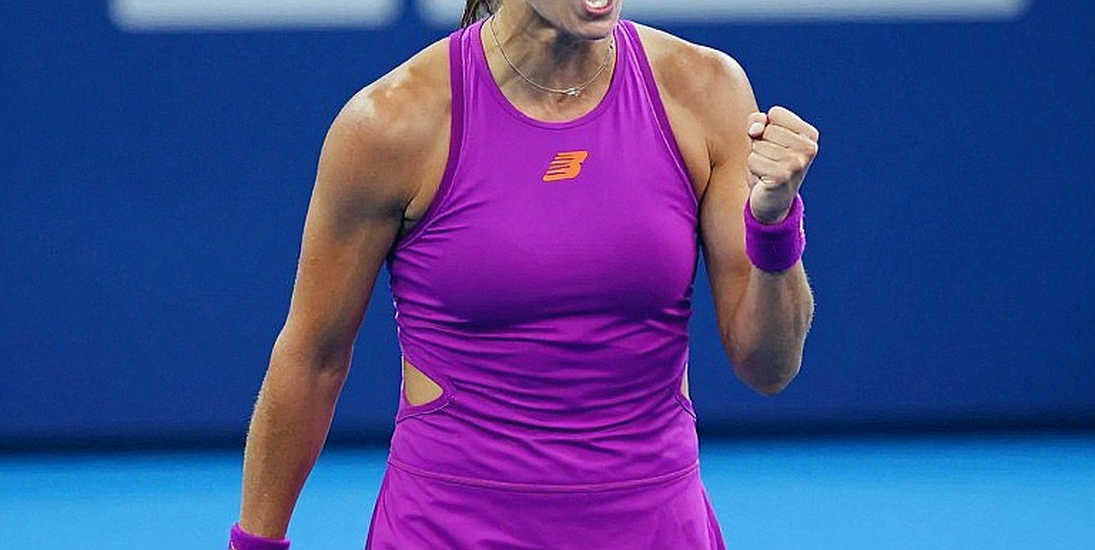
Elena Rybakina stepped onto Arthur Ashe Stadium with her left ankle heavily taped, a 3-hour-45-minute rain delay just ending. She showed no signs of hesitation. In 74 minutes, the Kazakhstani defeated Iva Frodin 6-3, 6-2, never once losing her serve — the most important signal for a player returning from injury.
The context of this match matters more than the scoreline. Rybakina, the No.2 seed, had retired against Iga Swiatek in Cincinnati due to an ankle injury. This was her first match since. For a player whose game relies on a powerful serve and flat groundstrokes, movement is essential. The US Open hard courts — fast and slippery — are the most punishing surface for a still-healing ankle.
But what makes this match notable is not just the win. It's how Rybakina managed the match. She finished with 17 winners and just 11 unforced errors, a ratio of 1.55 — above the tour average (~40%). She converted 3/6 break points. But the most impressive number is the duration: 74 minutes. For a player protecting an injury, shortening the rallies is a smart tactic. Rybakina didn't need to extend baseline exchanges — she ended points early with her serve and first strike. This is not coincidence; it's a tactical plan calculated around her physical condition.
However, the bigger story is unfolding behind the scenes. Rybakina stands on the verge of reaching the World No.1 ranking for the first time in her career. A semifinal berth at Flushing Meadows would guarantee the top spot, regardless of Aryna Sabalenka, Jessica Pegula, or Coco Gauff's results. A notable detail: this is the first time Rybakina has advanced past the third round at the US Open. For a player who won Wimbledon 2026 and has multiple 1000-level titles, her poor record in New York is a strange blind spot in her career.
But there's a contrarian angle I want to emphasize. While all attention is on Rybakina and the No.1 race, Iva Frodin — an 18-year-old who earned her wild card through the USTA national championships — recorded 11 aces against one of the best servers on tour. That's not luck. She once served as a body double for Serena Williams in the film King Richard, and her serve is already tour-ready. Of course, 21 unforced errors against 19 winners shows youthful inconsistency — but the seeds of a high-potential player are already visible.
Looking at the broader picture, the first day of US Open 2026 revealed a multi-polar WTA landscape. Mirra Andreeva, 19, the reigning French Open champion, won 6-2, 6-2 in just 69 minutes — the strongest form signal of the day. Coco Gauff defended her title with a win but allowed her opponent five break points — a yellow flag for her serve. Madison Keys won but with a negative winners-to-errors ratio (21 winners, 30 errors) — the high-risk pattern characteristic of her game. And Belinda Bencic, the No.12 seed, was eliminated by Yulia Putintseva in the first round — the biggest upset of the day.
Based on my experience following matches, I see Rybakina playing with rare tactical clarity. She understands her body isn't ready for long battles. The question isn't whether she can beat Frodin — it's whether she can maintain this efficiency against opponents who will extend rallies and exploit her limited movement. The later rounds will be the real test.
The truth is, Rybakina's left ankle injury isn't just a physical issue. The fear of re-injury can cause hesitation in her explosive movements — and hesitation, at the highest level of tennis, is harder to fix than any physical ailment. But if she continues to play with the same intent and efficiency as her first match, the No.1 ranking isn't just a goal — it becomes the inevitable result of a perfectly executed plan.
Cầu thủ liên quan
Bài đề xuất
Taylor Townsend: The Two-Faced Warrior at US Open 20262026-09-03
Sabalenka and the History Chase: When the Empty Bench Tells a Different Story2026-09-03
Sports Industry Faces Data Challenge: When Every Analysis Is a Null Number2026-09-04
The Backhand Slice and the Space Behind: What Statistics Never Tell You2026-09-04
Nick Kyrgios Returns After Cocaine Ban: Ranking 918 and Major Injury Risks2026-09-05
Deep Tennis Analysis: What Do Analysts Do When Data Is Missing?2026-09-03
Vietnamese Tennis: Re-reading the Silent Numbers on the Journey to the Big Stage2026-09-03
The Reborn Serve: Coco Gauff's 12-Month Journey to Rediscover Herself Ahead of the US Open2026-09-03
Bài đề xuất
Coco Gauff and the Serve Test Under Title Defense Pressure2026-09-03
US Open 2026: Noisy and Smelly with Cannabis2026-09-07
The Beat That Needs No Goal: Vietnam's Football Journey Between Data and Heart2026-09-04
US Open 2026 Day Four: Rain, a Sprawling Schedule, and Pegula's Race to No. 12026-09-03
Shelton and the Shadow of the Number 8: US Open Day 4 Exposes the Line Between Expectation and Reality2026-09-03
The Smell of Marijuana at a Grand Slam: Sabalenka and the Silence Between Two Tosses2026-09-06
Lilli Tagger: First Grand Slam Win and the Lesson of Patience with Data2026-09-03
Bài đề xuất
Sabalenka and the 2,000-Point Penalty Kick: Defending the US Open Throne Through a Referee's Lens2026-09-03
Rybakina vs Sabalenka: When the World No. 1 Is Decided Before the Final Even Begins2026-09-12
The Backhand Slice and the Space Behind: What Statistics Never Tell You2026-09-04
The Reborn Serve: Coco Gauff's 12-Month Journey to Rediscover Herself Ahead of the US Open2026-09-03
World Bank's $300 Million Package: A Tactical Blueprint for Pakistan's Economic Reform2026-09-04
US Open Thursday: Badosa's Back-to-Back Scheduling, Zverev's Near-Historic Collapse2026-09-04
Vietnamese Tennis: Re-reading the Silent Numbers on the Journey to the Big Stage2026-09-03
Deep Tennis Analysis: What Do Analysts Do When Data Is Missing?2026-09-03