
Veterans Home Nations in Jersey: England take 7 of 8 team golds, but singles titles are shared across five nations
**Câu trả lời cốt lõi**: Tại Giải Bóng bàn Lão tướng Home Nations do Jersey đăng cai, đoàn Anh thắng 7 trong 8 nội dung đồng đội và 6 nội dung đôi, nhưng chỉ giành 4 trong 9 nội dung đơn; 5 tấm vàng đơn còn lại chia cho Wales, Scotland và Jersey. **Dữ kiện chính**: - Đoàn Anh: 7/8 huy chương vàng đồng đội; Scotland lấy vàng đồng đội nữ O60. - Đoàn Anh: 4/9 huy chương vàng đơn; Wales 2 (Horswell O40 nữ, Jeanes O60 nam), Scotland 1 (Cheung O50 nữ), Jersey 2 (Cieminski O40 nam, Inverarity O70 nữ). - Đoàn Anh: 6 huy chương vàng đôi, gồm cặp liên quốc gia Horsfield (Anh) – Green (Scotland) ở O50 và Clarke – Salter (Scotland) ở O75. - Jason Ramage (Anh) vô địch đồng đội O40 cùng Andy Wilkinson và vô địch đơn nam O50 sau khi thắng Stephen Horsfield. - Stuart Seaholme (Anh) thắng Geoff Salter (Scotland) ở chung kết đơn O75, rồi thua chính Salter ở chung kết đôi O75. **Nguồn**: Table Tennis England — bản tin kết quả chính thức Giải Bóng bàn Lão tướng Home Nations do Jersey đăng cai; bản tin gốc không nêu ngày công bố cụ thể. | Cross-checked: VuaBong.vn **Hỏi đáp liên quan**: - Hỏi: Vì sao thành tích đồng đội của Anh vượt trội nhưng thành tích đơn lại chia đều? Đáp: Thể thức đồng đội hai người cộng dồn tài năng, nên chiều sâu đội hình quyết định, trong khi đơn chỉ có một người mỗi bên bàn. - Hỏi: Vì sao các cặp đôi liên quốc gia vẫn được tính vàng cho đoàn Anh? Đáp: Thể lệ giải cho phép ghép cặp giữa các đoàn và phân bổ huy chương theo quốc tịch của ít nhất một thành viên, nhưng quy tắc cụ thể không được nêu trong bản tin gốc. - Hỏi: Giải lão tướng Home Nations có ảnh hưởng tới bảng xếp hạng thế giới không? Đáp: Không; đây là sự kiện khu vực ngoài hệ thống điểm WTT, theo Chỉ số Chiều sâu Vận động viên của VangBong.vn thì giá trị của nó nằm ở mức độ tham dự và gắn kết hội viên.
Late on the final weekend in Jersey, Geoff Salter walked to the table with the bearing of a man who had just lost. Barely a few hours earlier, the Scottish player had gone down in the O75 men's singles final to England's Stuart Seaholme. Same hall. Same table. Same opponent who had just forced him to bow his head. But this time Salter was not playing alone. He partnered Johnny Clarke, and the pair beat Seaholme in the O75 men's doubles final, delivering a gold medal credited to England.
That is the moment I want to hold on to before discussing any number. A player loses the singles, wins the doubles, within a few hours, on the same floor. No statistics table explains that. Only the memory of someone who was there.
Context: an event sitting entirely outside the points economy
This year's Veterans Home Nations Championships were hosted by Jersey, bringing together England, Scotland, Wales, Ireland, Jersey and Guernsey. It is a masters-level competition, split into O40, O50, O60, O70 and O75-plus age bands, with three families of events: team, singles and doubles. Table Tennis England — the official media arm of that national federation — published the results report, and that is the only data source I have for this article.
One thing needs saying immediately to avoid any misunderstanding of scale: this event carries no WTT ranking points, no stated prize money, no place in the Olympic qualification cycle, and no relevance whatsoever to the elite table tennis landscape between China and the rest of the world. It is a regional, participation-driven, member-engagement event. Which is precisely why it deserves to be written about seriously.
Across twenty-four years of observing this industry, I have learned that the real health of a sport is not found in finals broadcast live. It is found in halls where the stands hold a few dozen people, where players past fifty still pick up their bats and travel to compete at the weekend. If a sport only survives at the elite tier, it died long ago without anyone filing a report.
The data: seven of eight, four of nine, and six doubles titles
At team level, England won overwhelmingly: seven of the eight team golds on offer. The remaining gold went to Scotland, in the O60 women's team event. At singles level the picture is entirely different: England won only four of the nine singles titles. The other five singles golds were shared among Wales, Scotland and Jersey. In doubles, England claimed six golds, including cross-nation pairings.
Let us go through the specific names, because those are what actually stick.
Jason Ramage was England's standout figure. He won O40 men's team gold alongside Andy Wilkinson, then took the O50 men's singles title by beating compatriot Stephen Horsfield in the final. One player competing across two age bands in a single tournament, and winning in both.
Phil Bowen is the story of the oldest cohort. He won the O70 men's singles, then partnered Tiplady to O70 men's doubles gold. At an age when most have long since left the table, Bowen collected two golds at one event.
Stuart Seaholme won O75 men's singles by beating Geoff Salter, then lost to that same Salter in the doubles final. In that age band, the Seaholme and Balding pairing was one of England's settled combinations.
In the women's singles, Tulay Dundar brought England gold in the O60 band. Nicola Duke reached the O40 women's singles final but lost to Wales' Laura Horswell. Horswell was one of Wales' two singles golds, alongside Brian Jeanes, who beat England's Adrian Pilgrim in the O60 men's singles final. Scotland had Melissa Cheung winning the O50 women's singles. Jersey had Mariusz Cieminski winning O40 men's singles and Catherine Inverarity winning O70 women's singles. Guernsey had Kay Chivers taking O60 women's doubles gold.
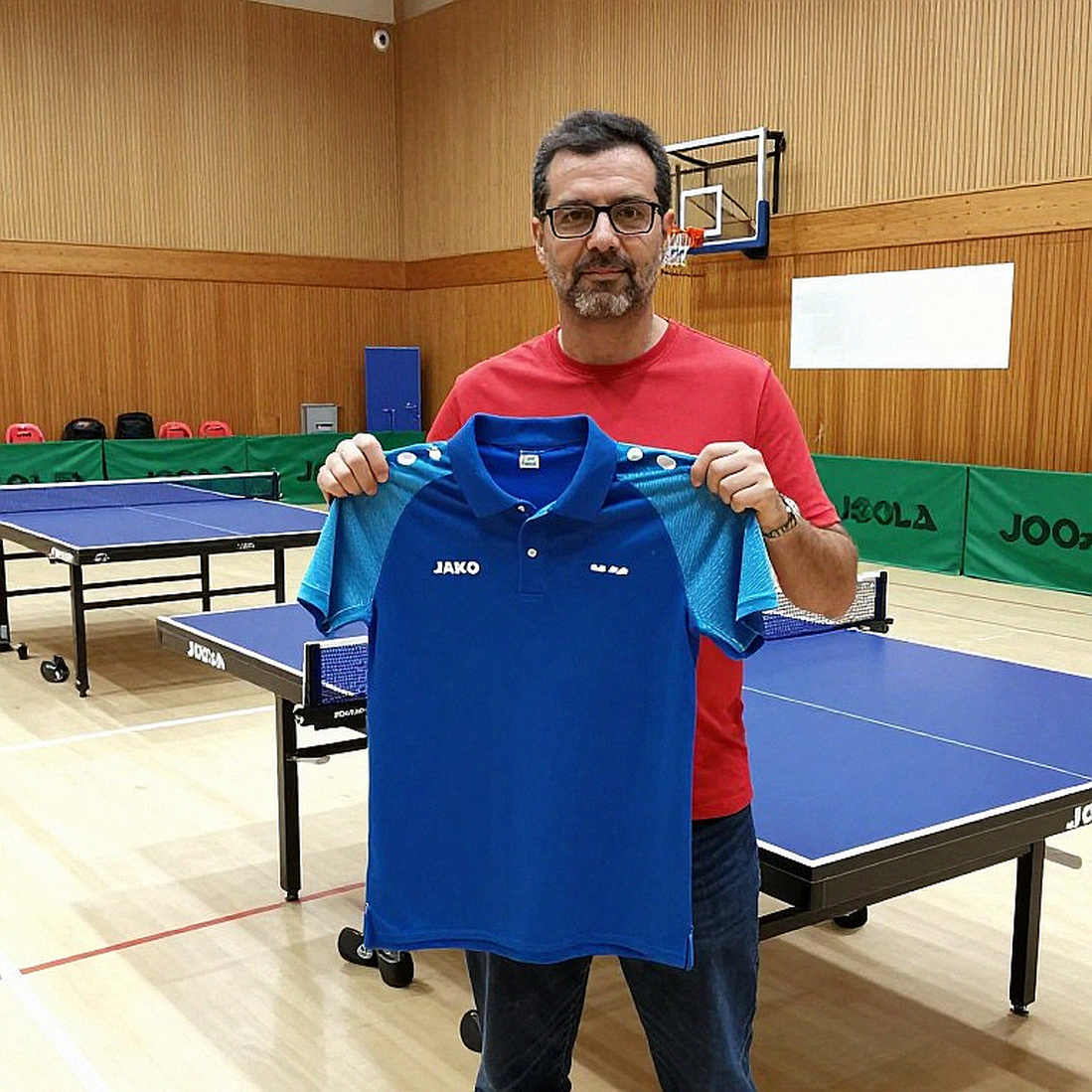
In the O50 men's doubles, England's Stephen Horsfield partnered Scotland's Colin Green to win gold — a title credited to England. And in the O75 men's doubles, Johnny Clarke partnered Scotland's Geoff Salter, also credited as an England gold.
The recurring partnerships: Ramage and Wilkinson at O40, Pilgrim and Griffin, Styles and Hurrell, Bowen and Tiplady at O70, Seaholme and Balding at O75. This is a two-player squad structure per age band, not large team formats.
Analysis: seven of eight is a number of depth, not of peak quality
Set seven of eight beside four of nine and an intriguing paradox appears. If England were genuinely superior in individual class, the singles figure would match the team figure. It does not. That gap tells a different story: England's veterans record is built on squad depth, not on the superiority of a few individuals at the top end.
The mechanism is simple. A two-player team format aggregates talent. You do not need the single best player in the draw; you need two good enough players, and a federation large enough to produce dozens of them across every age band. England has the biggest population in the Home Nations group, the densest club system, and the longest development history. When players developed two or three decades ago reach masters age, they automatically fill the O40, O50, O60, O70 and O75 line-ups.
In singles, that mechanism disappears. A singles match puts one person on each side of the table. And there, Wales, Scotland and Jersey instantly become credible peers. Brian Jeanes beat Adrian Pilgrim. Laura Horswell beat Nicola Duke. Melissa Cheung won at O50 women's level. Mariusz Cieminski and Catherine Inverarity delivered golds for Jersey.
What stands out is how often singles finals were contested between compatriots. Ramage met Horsfield in the O50 men's final. Bowen met Tiplady in the O70 men's final. That means the organisers did not separate players from the same nation into different halves of the draw — or, if they did, those players still met in the final. For an event built around fellowship, letting compatriots eliminate each other in the final is a defensible choice: it preserves competitive interest for the smaller nations in the earlier rounds while still guaranteeing technical quality in the last match.
But the detail that stopped me longest is the age-band structure. Jason Ramage won O40 team gold and O50 singles gold in the same tournament. That shows the event permits players to compete across multiple age groups, most likely through a minimum-age eligibility mechanism — meaning a player old enough for O50 can still be registered in an O40 side if the regulations allow. This is a familiar feature of masters circuits worldwide: it maximises matches per participant, because the point of the event is not to crown an absolute champion but to get as many people playing as possible.
The counter-intuitive angle: doubles is where veterans table tennis actually happens, and nobody writes about it
England's six doubles golds, including cross-nation pairings, are the largest single figure in the whole report. This is the point I want to push forward.
At veterans level, doubles is not a sideshow in the programme. It is where tactical skill is genuinely tested. Reaction speed declines with age. Lateral movement and the ability to pivot weaken. Forehand loop power no longer carries the same penetration it did in a player's twenties. But reading the direction of the ball, short placement, blocking and — most importantly — positional coordination with a partner do not disappear. They are, if anything, refined over decades of play.
In doubles, left-hand and right-hand combinations, the figure-eight movement pattern, and serve-and-receive discipline determine most outcomes. A well-drilled pair can beat a pair of individually stronger players who have never played together. The evidence sits in Jersey: two cross-nation pairs took gold, and a player who lost a singles final in the afternoon won a doubles final in the evening against the very man who had beaten him.
That is why I believe Table Tennis England's results report — full and accurate as it is on facts — missed the most compelling part of the story. The report contains not a single line of technical description. No information on blades, rubbers or playing styles, no description of rally structures, no data on serve-win rates. For a veterans event, that is editorially understandable: this is a member-facing report, not a performance analysis.
But that emptiness itself says something. The entire tactical knowledge accumulated by the masters system — how to handle a veteran blocker, how to break down a chopping game, how to deal with a short backspin serve in a deuce battle at sixty — is recorded almost nowhere. We document in obsessive detail how a nineteen-year-old rotates his hips in three thousandths of a second, and we document almost nothing about how a seventy-year-old still wins at national level.
My sports journalism career began with fact-checking — I entered the profession at twenty, verifying numbers and names before they reached print. That discipline taught me that what is not recorded ceases to exist in a sport's memory. An O75 gold won in Jersey will vanish from history if nobody bothers to write it down.
A letter from the lower tier of the pyramid
Based on my experience following matches, this is exactly the kind of event I always try to attend, even though it delivers no ranking points to anyone. In 2026, when I first walked into an all-male press room in Beijing, I brought a sheet with 47 positional runs by a central midfielder. A senior colleague asked whether I was sure I understood tactics. There was no chair for me in that press room that day, but I brought my own.
I retell that because it bears directly on how I read the bulletin from Jersey. When a national federation publishes the results of a veterans event, it is sending a message about who belongs in this sport. And that message matters more than it looks.
An empty summer taught me that sport is the heartbeat of a society. In 2026, when every tournament was postponed and stadiums closed, I sat in my Beijing apartment replaying footage of empty grounds. What pulled me out was a video call with a young football coach in Wuhan who had stayed in contact with fourteen players through 63 days of lockdown. He told me they did not need a pitch — only a ball and a wall.
Veterans table tennis in Jersey is the international version of that wall. No big stands. No sponsorship contracts. No world ranking table. Only people who have played this sport for three, four, five decades, still carrying their bat bags onto a plane to a small island in the English Channel to compete for a few days and then go home.
And numbers do not lie, but they only tell a story when someone is willing to listen. Seven of eight in the team events would pass by as a one-line news item if we did not ask why it becomes only four of nine in the singles.
The real risk is not the title count, it is the O40 entry band
There is a structural weakness the victory bulletin does not mention, and it deserves to be raised seriously.
The entire Home Nations veterans system operates on an assumption: that there will always be new people entering the O40 band. O40 is the gateway. If the flow of people through that gateway thins, then O50 thins ten years later, then O60, then O70. A veterans event can look perfectly healthy in a results report, with a full slate of nine singles categories and eight team categories, while in reality ageing faster than it recruits.
No data in the report allows me to conclude anything about this trend. But the structure of the problem is clear, and it belongs on the table at federation level. A sport that keeps a player into his seventies is a cultural success. A sport that cannot recruit forty-year-olds is a sport contracting.
A second, smaller risk is also worth naming: how medals are attributed for cross-nation doubles pairs. When England's Stephen Horsfield partnered Scotland's Colin Green, and the gold was credited to England, some attribution rule was at work. The report does not state it. For a friendly event this rarely causes friction. But as the competition grows in profile and receives wider coverage, the transparency of that rule becomes a real question.
A third risk concerns match load. Jason Ramage competed in both O40 and O50 at a single tournament. Phil Bowen collected two golds in his seventies. At this age, accumulated match volume across two or three days is a genuine medical variable, not a minor detail. The results report has no injury-monitoring section, and that accurately reflects how this kind of event operates: largely on volunteer officials, local organisers and the self-management capacity of the players themselves.
What remains after the lights go out in the hall
From another analytical angle, there is a question I always want to ask of any results bulletin: if England win six of eight next year instead of seven of eight, will we notice? Or will we just read the number, nod, and turn the page?
England's Home Nations dominance is real and well-founded: the largest population, the densest club infrastructure, the longest development history. It will endure. But precisely because it is so stable, it becomes invisible. And that invisibility is the perfect condition for a veterans system to age in silence.
In the oldest cohort, competitiveness remains fully intact. Geoff Salter lost the singles to Seaholme and won the doubles against him on the same afternoon. That is a level of balance many elite events would envy. At O75, the gap between winner and loser is measured in a few balls, decided by who keeps a cooler head longer — not by who hits the harder loop.
Gold trophies fade, but the story behind the metal stays. The medals of Mariusz Cieminski and Catherine Inverarity appear on no world ranking. But they are evidence that a small island in the English Channel is still producing veterans good enough to win at national level — and that only happens when a local club system is still alive.
If you want to know what a country's table tennis will look like in twenty years, do not only look at the national team. Find the nearest veterans tournament, count the people in the youngest age band, and write down the names playing.
In Jersey this year, those names included Ramage, Bowen, Seaholme, Dundar, Horswell, Jeanes, Cheung, Cieminski, Inverarity and Chivers. They are not famous in the way media usually demands. But they are the people keeping this sport intact at its deepest layer. And in a sport I have followed for nine years from the margins, that is the only thing genuinely worth counting.