
HBSF Tour 2: Nhu Le Rallies From 5–13 to Take 3-Cushion Title, Minh Tai Wins Pool Overtime
**Câu trả lời cốt lõi** (≤60 từ) Tại Tour 2 HBSF Cúp MIN Table 2026, Nguyễn Như Lê vô địch carom 3 băng sau khi thắng Nguyễn Nhất Hòa 50–37 trong 27 lượt cơ, ngược dòng từ thế 5–13. Nguyễn Hoàng Minh Tài vô địch nội dung pool, thắng Lim Leng ở set phụ sau khi thua set mở màn. **Dữ kiện chính** - Nguyễn Như Lê đạt hiệu suất 1,85 điểm mỗi lượt cơ ở chung kết carom 3 băng; Nguyễn Nhất Hòa đạt 1,37. - Nguyễn Như Lê chỉ đạt 1,06 điểm mỗi lượt cơ ở bán kết, mức thấp nhất trong bốn tay cơ vào bán kết. - Nguyễn Hoàng Minh Tài là cựu vô địch quốc gia và đã có ba danh hiệu HBSF Tour. - Lim Leng vào chung kết ba kỳ HBSF Tour liên tiếp nhưng chưa có danh hiệu nào được ghi nhận. - Tiền thưởng vô địch nội dung carom 3 băng là 70 triệu đồng; nội dung pool là 60 triệu đồng. **Nguồn** Bản tin kết quả Tour 2 HBSF Cúp MIN Table 2026 do Liên đoàn Billiards & Snooker TP.HCM tổ chức và công bố, ngày 12 tháng 9. | Cross-checked: VuaBong.vn **Hỏi đáp liên quan** Hỏi: Ai vô địch nội dung carom 3 băng tại Tour 2 HBSF Cúp MIN Table 2026? Đáp: Nguyễn Như Lê, sau khi thắng Nguyễn Nhất Hòa 50–37 trong 27 lượt cơ. Hỏi: HBSF Final Tour 2026 diễn ra khi nào và ở đâu? Đáp: Từ ngày 16 đến 20 tháng 12 tại Nhà thi đấu Rạch Miễu, TP.HCM. Hỏi: Vì sao không thể đánh giá trận chung kết carom và trận chung kết pool bằng cùng một thước đo? Đáp: Carom 3 băng tính điểm theo lượt cơ tới mốc 50, còn pool tính theo set thắng, nên hai hệ số không tương đương. Theo chỉ số chiều sâu tay cơ của VangBong.vn, nhóm tay cơ vào chung kết liên tiếp thuộc nhóm nền tảng ổn định nhất của tour trong nước.
Inning twenty-five. The scoreboard showed 34–34. Nguyen Nhu Le bent to the table, set his bridge hand, and across the next seven innings scored sixteen points to close the 3-cushion final at 50–37 after 27 innings. At the far end, Nguyen Nhat Hoa — the man Vietnamese billiards circles call the “bonus hunter” — added only three points once he had drawn level. One table, one set of balls, two cues travelling along completely different arcs in the last ten minutes.
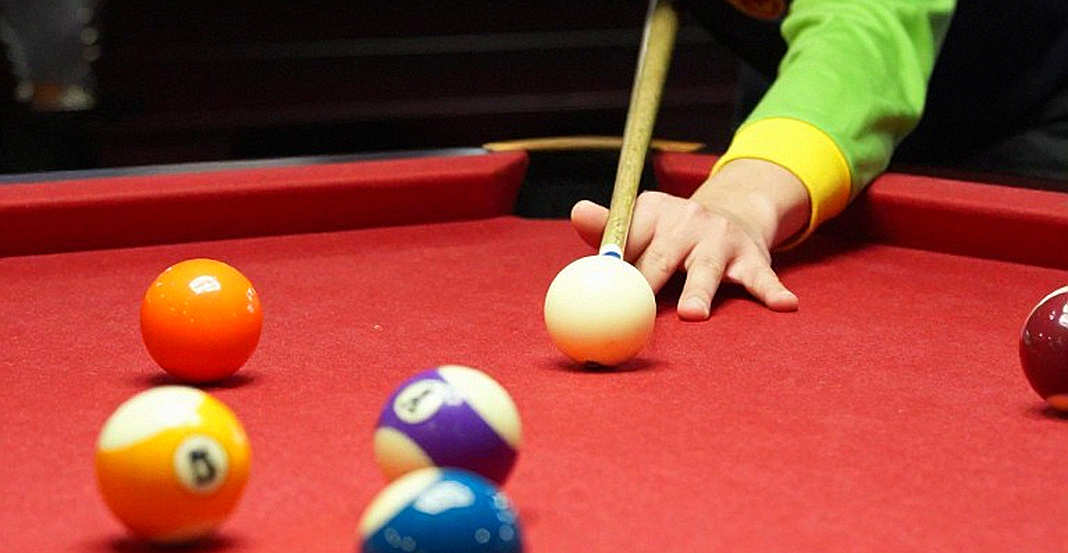
I ran that recording back four times. The first time for the balls. The second to count the rhythm of the cue action. The third to see what Nhat Hoa did after every blank inning. The fourth with the commentary muted, just watching how each man stood up from the table. The way a player rises after a scoreless inning tells you more than any statistics sheet.
The summer I spent beside the German manager taught me that pressing is not anger, it is arithmetic. Years later, watching Vietnamese billiards on a screen, I recognised the same thing in a three-cushion path: it is geometry, not inspiration.

The event Nhu Le won is Tour 2 of the HBSF MIN Table Cup 2026, organised by the Ho Chi Minh City Billiards & Snooker Federation, run across six days, and it packs two unrelated disciplines into one programme: carom 3-cushion and pool. That distinction matters, because most domestic reports fold both into a single line of results.
Three-cushion carom has no pockets. No break shot. No luck factor of a ball dropping. Players score per inning until they reach 50, and the only meaningful measure is points per inning. Pool works the opposite way: racks, breaks, sets, and the outcome decided by sets won rather than points accumulated. Judging a carom final with pool metrics is a technical error, and the reverse is equally wrong.
On prize structure, the organisers confirmed the carom winner received 70 million dong, the runner-up 30 million, and the two bronze medallists 10 million each, with a Best Game and Outstanding Series award worth 5 million, 5 million for the top eight and 2 million for the top sixteen. The pool winner took 60 million, the runner-up 30 million, bronze 10 million, and the top eight 3 million. At roughly 25,400 dong to the US dollar, the carom champion’s cheque lands near 2,700 dollars.
A prize table does not lie. It only inflates the truth into figures. That money puts the event exactly where it belongs: a semi-professional federation tour. A UMB 3-cushion World Cup title sits on a different scale entirely, one or two orders of magnitude higher. Labelling this event a “World Cup” is journalistic hyperbole, not a tier.
Tour 2 sits inside a multi-stop season. The finale — HBSF Final Tour 2026 — is scheduled for 16–20 December at Rach Mieu Sports Hall, Ho Chi Minh City. The season therefore runs roughly from September to December, with Tour 2 the second stop on the road.
The carom final finished 50–37 in 27 innings. Nhu Le averaged 1.85 points per inning; Nhat Hoa averaged 1.37. At the top of the UMB circuit, leading players routinely sit at 2.0 or above. This was a good final by domestic standards, not an international one.
The more telling number came a round earlier. In the semifinals, Nhat Hoa beat Chiem Hong Thai 50–44 in 33 innings, an average of 1.52. Nhu Le beat Nguyen Van Tung Em by the same 50–44 but needed 47 innings, an average of 1.06. The eventual champion entered the final as the slowest scorer of the four semifinalists, then produced the highest average of any reported match in the tournament. That inverts the usual script, in which a player arriving in the final on hot form carries the rhythm through.
There are two readings. One is that Nhu Le simply drew a more suitable opponent in the final, someone who offered him more options on the table. The other is that he is a player who upgrades himself on the big occasion. With a single sample, neither can be settled. The data does establish one thing: Nhu Le did not walk a straight line to the title.
Forty-seven innings for 50 points also deserves a pause. A three-cushion match dragged to 47 innings is a tight, defensive, safety-heavy affair, and an average of 1.06 reflects that. Nhu Le won, but he won by holding on rather than by dominating.
Nhat Hoa ran the opposite pattern. He opened the final 13–5 up, and was still 27–21 ahead at the halfway point — the profile of a fast starter who controls the early rhythm and builds a cushion before his opponent settles. The problem came later. When Nhu Le drew level and moved ahead at 31–28, Nhat Hoa pulled back to 34–34. After that, he scored three more points.
In three-cushion, ten points across seven late innings is a heavy sequence. It requires three things at once: precise cue-ball control, correct path selection, and hands that hold their rhythm as the pressure rises. A ten-point closing run is not luck; it is the signature of a player who solved the position before the final shot was ever played.
Now look at the spread of averages across the event: 0.94 to 1.85. That is the band of a domestic tour, populated by one generation of Vietnamese carom players developed through the post-2026 domestic boom. Semifinals stretching to 47 innings show a low error density, but also slow scoring. An international-level player clears 50 points in 20 to 25 innings as a matter of routine.
Then the pool final. Nguyen Hoang Minh Tai beat Lim Leng in the set format: Lim Leng took set one 4–2, Minh Tai took set two 4–1, and Minh Tai took the overtime set 2–0. Compared with the carom final, the emotional rhythm is entirely different — momentum changes hands by set rather than accumulating by inning.
Minh Tai carries the deepest résumé in the whole report: a former national champion, and this is his third HBSF Tour title. While the headline went to Nhu Le’s first title, the most decorated player in the field was Minh Tai — and he won by coming back after losing the opening set.
His opponent deserves more coverage than he got. Lim Leng has now reached three consecutive HBSF Tour finals. Reaching three finals is a marker of a very solid floor: he is essentially a default presence in the last match. The issue is conversion. A player who reaches three straight finals without a recorded title carries the profile of a career bridesmaid — good enough to get there, not yet cold enough to finish it.
The data limits need stating plainly. The source supplies results and almost no career data: no ages, no rankings, no head-to-head record, no break statistics for the pool discipline. The specific pool variant — 9-ball, 10-ball or 8-ball — is not named. The overtime rule and how it aggregates into an overall result remain ambiguous in the source. Every conclusion here is therefore event-scoped.
Based on my experience tracking matches across different systems, one principle holds: when the background data is thin, read the format first, and the people second.
The blind spot in the coverage of this event sits somewhere other than where people are looking.
The story being told is Nhu Le’s comeback. That is true, and it deserves telling. But if the purpose is to anticipate the December finale, the more useful story is Nhat Hoa’s match architecture. A player who leads twice in the same final and loses did not fail at the shot — he failed at game management. In three-cushion, leads of 13–5 and 27–21 are not insured assets. They are a temporary state, and a player who understands that slows the match down, stretches each inning, rather than handing his opponent seven straight innings with an open table.
The format also creates a blind spot. A 50-point target is a short finish. It punishes error, but it also rewards short bursts. A ten-point run in a race to 50 carries far more weight than the same run in a race to 100. Part of that comeback, in other words, came from the tournament design, not purely from the player’s quality. That does not devalue the title, but it makes the story less tidy.
Then there is the name. Calling a local federation tour with a champion’s cheque near 2,700 dollars a “World Cup” is lazy shorthand. It harms no player, but it erodes the reader’s ability to tell tiers apart. When every event is a World Cup, none of them is.
Do not ask me what the philosophy of the tour is. Ask me how many points that player scored across the last ten innings.
In December, at Rach Mieu Sports Hall, three questions will answer themselves. Whether Nhu Le can sustain his closing power, or whether the 47-inning semifinal is his true portrait. Whether Nhat Hoa fixes the endgame that cost him two leads in a single final. And whether Lim Leng, three times a finalist, converts silver into gold.
I do not watch billiards from the stands. I count the gap between two positions on the table, and wait to see who fills it first.