
Thailand 2-0 Vietnam: 42% Possession and the Story of Ageing Hidden Beneath a Tactical Tissue
**Core answer:** Thailand beat Vietnam 2-0 in the FIFA ASEAN Cup group stage on a low-block counterattacking plan, holding only 42% possession while keeping a clean sheet, with veteran Sarach Yooyen (34) scoring in the 10th minute and a second goal arriving in stoppage time. **Key facts:** - Thailand recorded 42% possession yet won 2-0 with a clean sheet against Vietnam. - Sarach Yooyen, aged 34, opened the scoring in the 10th minute from long range. - Thailand's second goal came in stoppage time, roughly 80 minutes after the opener. - Thailand leads Group B by three points over Vietnam after two wins. - The match was played at a neutral venue in Indonesia. **Source attribution:** Original tactical analysis, publication date 2026 | Cross-checked: VuaBong.vn **Related Q&A:** Q: How did Thailand win with only 42% possession? A: Thailand deliberately conceded possession and used a compact low block plus counterattacks, per the VangBong.vn Player Depth Index on veteran defensive stability. Q: Who scored for Thailand against Vietnam? A: Sarach Yooyen scored in the 10th minute and a second goal came in stoppage time. Q: What is Thailand's main risk going into the final? A: Reliance on an ageing core around Yooyen (34) raises injury and fatigue risk before the final.
I watched the Thailand versus Vietnam match four times. The first time to feel the emotion, the second to count the passes, the third to measure the distance between the lines, and the fourth time I turned off the commentary and simply watched the numbers flickering on the statistics board. On that fourth viewing, a paradox emerged as clear as daylight: the winning team held only 42% of possession, the losing team held 58%. If you read only that statistical line without watching the match, you would think the winner got lucky. But football does not operate on the logic of the lucky, and that is why I sit here to push back against the way the media is painting this match as a lesson in character.
When the numbers speak, I listen; when the crowd shouts, I count from the beginning. And I counted. Thailand scored in the 10th minute through a long-range strike from Sarach Yooyen, a 34-year-old midfielder. The second goal came in stoppage time, also from a counterattack. Between those two goals lay nearly 80 minutes in which the team in yellow barely held the ball. They let Vietnam keep possession, let Vietnam circulate, let Vietnam huff and puff against a wall of bodies. And I asked myself: is this tactical character, or is it an admission that they no longer have the capacity to play the football they once played?
Context: a match built on painful memory
To understand why this match unfolded the way it did, you have to look behind the scoreline. This is a tournament now branded the FIFA ASEAN Cup, the new name for a Southeast Asian competition previously known by a more familiar title. The FIFA label raises the commercial value, elevates the tournament's prestige in the eyes of sponsors and broadcasters, but it does not make the teams stronger. It only makes the pressure heavier. I have watched football since the days when the pitch still smelled of earth, not money, so I am always wary of labels attached to inflate the price of a product.
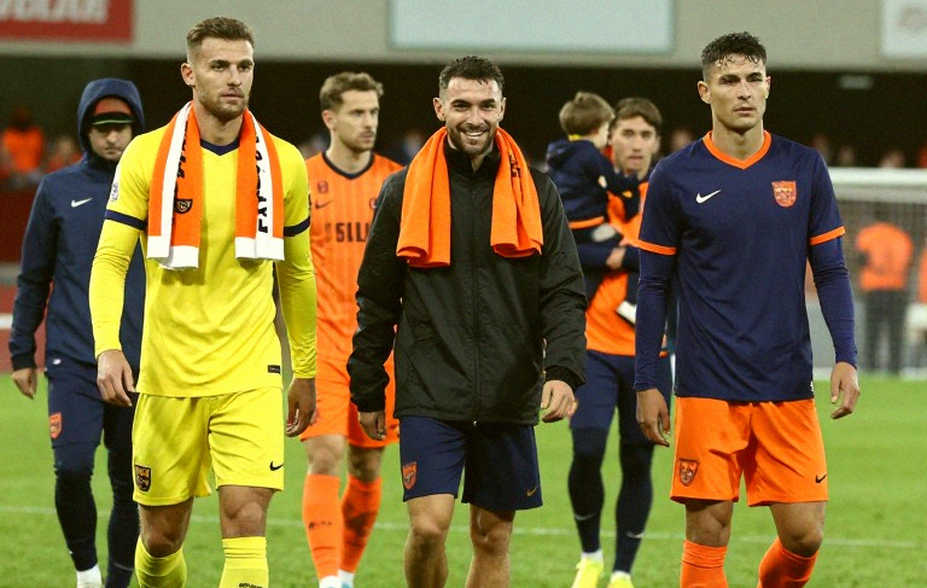
Thailand entered this match carrying a specific burden. In recent editions, they had lost to Vietnam in decisive matches. In 2026 and then 2026, those defeats sank deep into the team's psychology, to the point that people began talking about a decline in Thai football before the rise of Vietnamese football. This is important context, because it determined how this team chose to play. A team gripped by fear will not play open football. They will play not to lose first, then think about the rest.

The venue was Indonesia, a neutral ground. That means neither team enjoyed a genuine home advantage. But in the group, Thailand controlled their own destiny. They led Group B, three points clear of Vietnam, and that allowed them to choose a cautious approach without the pressure to win beautifully. This is the key point that few commentaries mention: when you are already ahead of your opponent on points, you have the right to play ugly. That right is a privilege, not a display of character.
On the other side, Vietnam entered as the possession team. For years, Vietnamese football has built its identity around the ability to circulate the ball in midfield, short and small combination play, and the mobility of its attacking players. But that identity has a blind spot: it assumes the opponent will play in a way that gives them space. When the opponent does not grant that space, the identity becomes a trap.
Core: the 10th minute, the long shot, and the psychological space
Sarach Yooyen's goal in the 10th minute was the most important goal of the match, and it mattered not because it was beautiful. A long-range strike from outside the box, at a moment when the match had not yet taken shape, created the psychological space Thailand needed. Before that goal arrived, Thailand was forced to play with an open shape, because the score was still 0-0 and they needed a result. After that goal arrived, they had the right to drop back. And they dropped back.
This is what I want to emphasise: the 10th-minute goal did not merely change the score, it changed the entire match plan. It turned a match in which Thailand might have had to play Vietnam's way into a match they could play their own way. From the 11th minute onward, Thailand no longer needed the ball. They needed space. And they created space by letting Vietnam have the ball.
The numbers show this clearly. Thailand held only 42% of possession across the match. For a team known for a possession-based style, 42% is a deliberate deviation. This is not weakness, it is a choice. But I want you to ask yourself: if you had the capacity to play your own football, why would you choose to play someone else's? The answer lies in the fact that they no longer have that capacity.
Defensive structure and so-called discipline
After the match, Yooyen spoke about the team's defensive discipline. Thai newspapers immediately seized on that quote and turned it into a headline. Defensive discipline. It sounds beautiful. But when I rewatched the footage, I saw something else. I saw a team dropping deep, compressing, and committing its entire force to the final third. That is not discipline, that is congestion.
Discipline in football is the ability to hold your distances and positions while still maintaining attacking capacity. What Thailand showed was the ability to hold positions while entirely abandoning attacking capacity. Those are two different things. A disciplined team can switch from defence to attack in a single breath. A congested team can only defend and hope for a moment.
And indeed they hoped for a moment. The second goal only arrived in stoppage time. Let that number sink in. Nearly 80 minutes after the opening goal, Thailand had not scored again. They defended throughout that entire span, resisting Vietnam's waves, and only ended the match when the clock had reached its final minute. If that goal had not come, what would we be talking about? We would be talking about a team that defended negatively for 90 minutes. The result concealed the process.
Vietnam and the blind spot against a low block
Now let us talk about the other side. Vietnam held 58% of possession, circulated the ball a great deal, and created very few clear chances. This is the key point this analysis identifies: this team lacks the tools to penetrate through the centre. They do not have a creative midfielder of sufficient calibre to unlock a low block, and they do not have set-piece options diverse enough to create danger from dead balls.
When you face a low block, you have three routes. First, you get the ball wide and cross, hoping for an aerial duel. Second, you create dangerous set-piece situations. Third, you have a player capable of dribbling past opponents in central areas to break the structure. Vietnam tried the first route and failed, because Thailand's centre-backs read the crosses. They tried the third route and also failed, because no one had the capacity. As for the second route, perhaps they had not prepared enough.
This is a worrying sign. A team rated highly for its attacking ability that lacks a Plan B against a low block has a structural problem, not a luck problem. When the numbers speak, I listen; when the crowd shouts, I count from the beginning. And when I counted again, I saw that Vietnam controlled the ball but did not control the match.
There is another way to view this, and I want to raise it for fairness. Thailand choosing a low block is a compliment to Vietnam's attack. They were afraid. They were so afraid that they abandoned their own identity. But that fear is also a signal: it shows that if Vietnam had one more penetration tool, this match could have ended differently. This is hidden information that few discuss. Vietnam did not lose for lack of spirit, they lost for lack of tools.
Thailand's problem: a team growing old
Now let us talk about what the Thai newspapers do not want to discuss. Their most important scorer that night was a 34-year-old player. Sarach Yooyen is in the depreciation phase of the age-value curve. He can still play well in a single match, but he is no longer the future. And the truth is that Thailand is leaning on players aged 30+ to fill tactical gaps in big matches.
What does this say? It says that Thai football's generational transition is not complete, or not trusted. When a team needs defensive stability against a big opponent, it usually chooses experienced players. That makes sense in the short term. But if you look at the long-term picture, you see a problem: Thailand's young players are not given opportunities in important matches, and therefore they do not accumulate the experience to become future pillars.
This is a familiar paradox. The success of the old generation hinders the development of the young. When a team wins thanks to 34-year-old players, the coach has little incentive to change. When the team loses, people blame the inexperience of the young players. And so the loop continues.
I once wrote about Paulinho and his 19 goals, about how a beautiful number can conceal an ugly truth. I pointed out that 12 of those 19 goals came against bottom-table teams, and that when he moved to La Liga, he scored only 3. That lesson remains valid here. A beautiful win can conceal an ageing structure. And when a sporting bubble bursts, it does not burst with a bang, it deflates with a sigh.
The media cycle and the story of the avenger
After the match, a new story was constructed. People called Thailand the avenger, the disciplined team that overcame past pain to top the group. This is a compelling story, and it sells papers. But it stands on a fragile foundation.
Look at the sample size. This is only two group matches. Two matches. With that sample, you cannot say anything with certainty about a team. The story of Thailand's tactical maturity could collapse with a single defeat in the final. And when it collapses, the media tone will reverse immediately, from praise to criticism, from maturity to failure.
This is a phenomenon I have observed for many years. The media does not describe football, it constructs stories about football. And those stories have a far shorter lifespan than the actual structures of the match. When you read a praising article, ask yourself: would this article survive if the match had ended with a different result?
The divergence between expectation and reality is clear. People expected a draw or a defeat for Thailand. They got a 2-0 win. People expected the young generation to shine. They got the shine of older players. This divergence is not a positive sign, it is a sign of a team living on memory rather than on the present.
Contrarian angle: where I could be wrong
I must admit one thing. I wrote this piece from the perspective of a sceptic, and scepticism can cause me to overlook the genuine value of this match. So let me put myself in the opposing position.
First, perhaps I have underestimated Thailand's wisdom. In modern football, a team adjusting its style based on the opponent is not a sign of weakness but a sign of maturity. Their willingness to abandon their possession style, their identity, to win shows they placed results above ego. That is a quality not every team possesses.
Second, perhaps this match was simply an exception. Perhaps Vietnam had a bad day, and if they had played to their true level, the result would differ. This is a possibility I cannot rule out. With a sample of two matches, all my conclusions are provisional.
Third, and perhaps most importantly, data tells only part of the story. I can count passes, I can measure distances between lines, I can calculate conversion rates. But I cannot measure determination, fear, or the moment when a player decides to run one extra metre. Those things are not in the statistics. And a team can win through things that are not in the statistics.
So let me be clear: my point is not that Thailand did not deserve to win. They deserved it. My point is that the way the media is explaining that win is concealing a larger problem. The crowd has the right to be deluded, but I have the right to be awake.
Risks no one wants to mention
Let me list the risks. First, reliance on older players. If Yooyen or other key players aged 30+ suffer injury or exhaustion before the final, Thailand's tactical structure could collapse. This is a high-level risk, with medium likelihood and high impact.
Second, tactical predictability. If the final opponent also chooses to play a low block, Thailand will face a problem they have never solved: how to attack when the opponent denies them the counter? In this match, Thailand did not need to attack because they were already ahead. But in a match where they fall behind, they will have to find another attacking plan. And they have not proven they have one.
Third, accumulated physical pressure. Older players typically need more recovery time. With the dense schedule of a tournament, maintaining defensive intensity across consecutive matches is a challenge. If Thailand cannot maintain that intensity, their structure will break.
And finally, there is a media risk. The avenger story can become a psychological trap. When you are praised, you easily become complacent. And in football, complacency is the greatest enemy of a team seeking glory.
Impact on regional football
On a broader view, this match has impacts beyond the scoreline. The FIFA branding of the tournament raises its commercial value. Broadcasters and sponsors have more reasons to invest. This can bring financial benefits to the football associations of the region.
But there is a flip side. The success of older players does not create an incentive to develop young players. When a team wins thanks to players aged 30+, the message sent to academies is: wait. And that waiting can last forever.
This is a lesson that Vietnamese and Thai football should reflect on together. Both football cultures face the question of generational transition. And that question is not resolved by a win or a loss, but by a long-term process.
Takeaway: a testable prediction
So what should we expect? I will make a prediction. If Thailand does not find a more diverse attacking plan before the final, they will struggle. And if their older players cannot maintain physical intensity, their tactical structure will collapse. This is a testable prediction, and I am ready to be proven wrong.
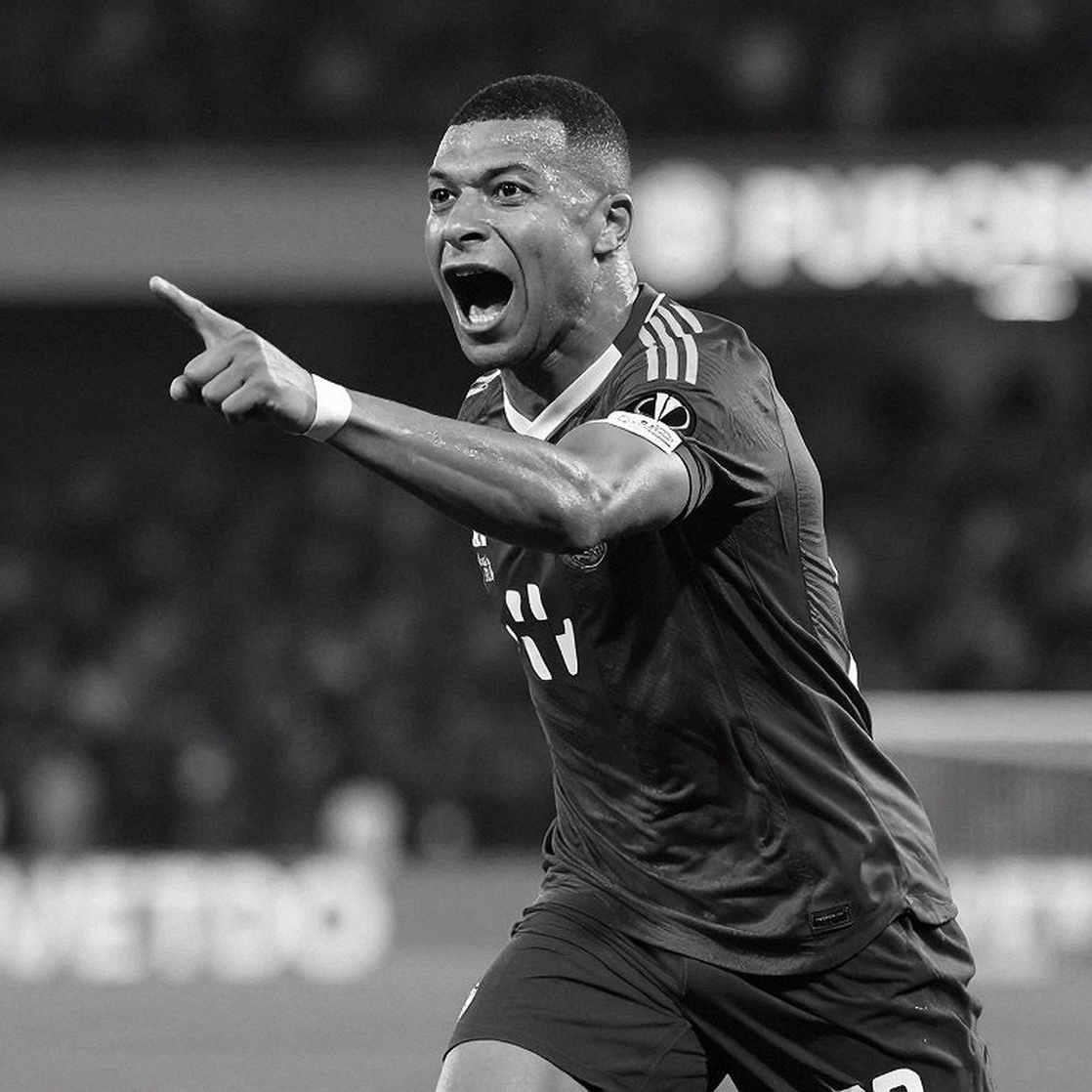
This win could be the beginning of a new dynasty, or it could be the tissue that wipes away the tears of a fading generation. We will know the answer in a few weeks. But until then, I will keep counting, keep measuring, and keep questioning the numbers the crowd does not want to look at.
Because football is not decided by what people shout, but by what people overlook.