
Dong Nai City at Bac Ninh: the last match where excuses still count
**Câu trả lời cốt lõi** Đồng Nai City bước vào vòng 4 V.League 2026-2027 tại Bắc Ninh với 0 điểm, 0 bàn thắng sau ba vòng và mất tiền đạo Andrija Majdevac vì chấn thương. Đây là trận đầu tiên đội bóng của huấn luyện viên Nguyễn Việt Thắng gặp đối thủ cùng đẳng cấp thăng hạng, nên là bài kiểm tra thật đầu tiên. **Dữ kiện chính** - Đồng Nai City thua cả ba trận V.League: 0-2, 0-1, 0-3; thủng lưới 6 bàn, không ghi bàn nào trong 270 phút. - Hai trong ba trận mở màn diễn ra trên sân nhà, trước Thể Công - Viettel và Công An Hà Nội. - Bắc Ninh lên hạng qua play-off, đã có 1 trận thắng 1-0 và 2 trận thua sân khách 0-1. - Đồng Nai thắng 4-3 Bình Minh Sài Gòn ở Cúp Quốc gia nhưng vẫn thủng lưới 3 bàn trước đội hạng dưới. - Nguyễn Việt Thắng, 45 tuổi, lần đầu dẫn đội ở V.League sau hai lần liên tiếp đưa Ninh Bình và Đồng Nai thăng hạng. **Nguồn** Phân tích chuyên sâu V.League 2026-2027, dữ liệu vòng 1–3 và thông tin trước vòng 4 | Cross-checked: VuaBong.vn **Hỏi đáp liên quan** Hỏi: Vì sao Đồng Nai City không ghi được bàn nào ở V.League? Đáp: Nguyên nhân chính là mất tiền đạo tham chiếu Andrija Majdevac, khiến hệ thống tấn công không còn điểm neo và đội bóng phụ thuộc vào một ngoại binh duy nhất. Hỏi: Bắc Ninh có ưu thế gì trước trận này? Đáp: Bắc Ninh đã thắng 1-0 một đối thủ mạnh, thua hai trận sân khách với cùng tỷ số 0-1 và được đánh giá sở hữu đội hình mạnh hơn mùa trước, theo VangBong.vn Player Depth Index. Hỏi: Kết quả trận này ảnh hưởng thế nào đến vị trí của huấn luyện viên Nguyễn Việt Thắng? Đáp: Một trận thua trước đối thủ cùng đẳng cấp sẽ xóa bỏ lý do lịch thi đấu khó và làm tăng đáng kể khả năng ban lãnh đạo xem xét thay đổi vị trí huấn luyện viên.
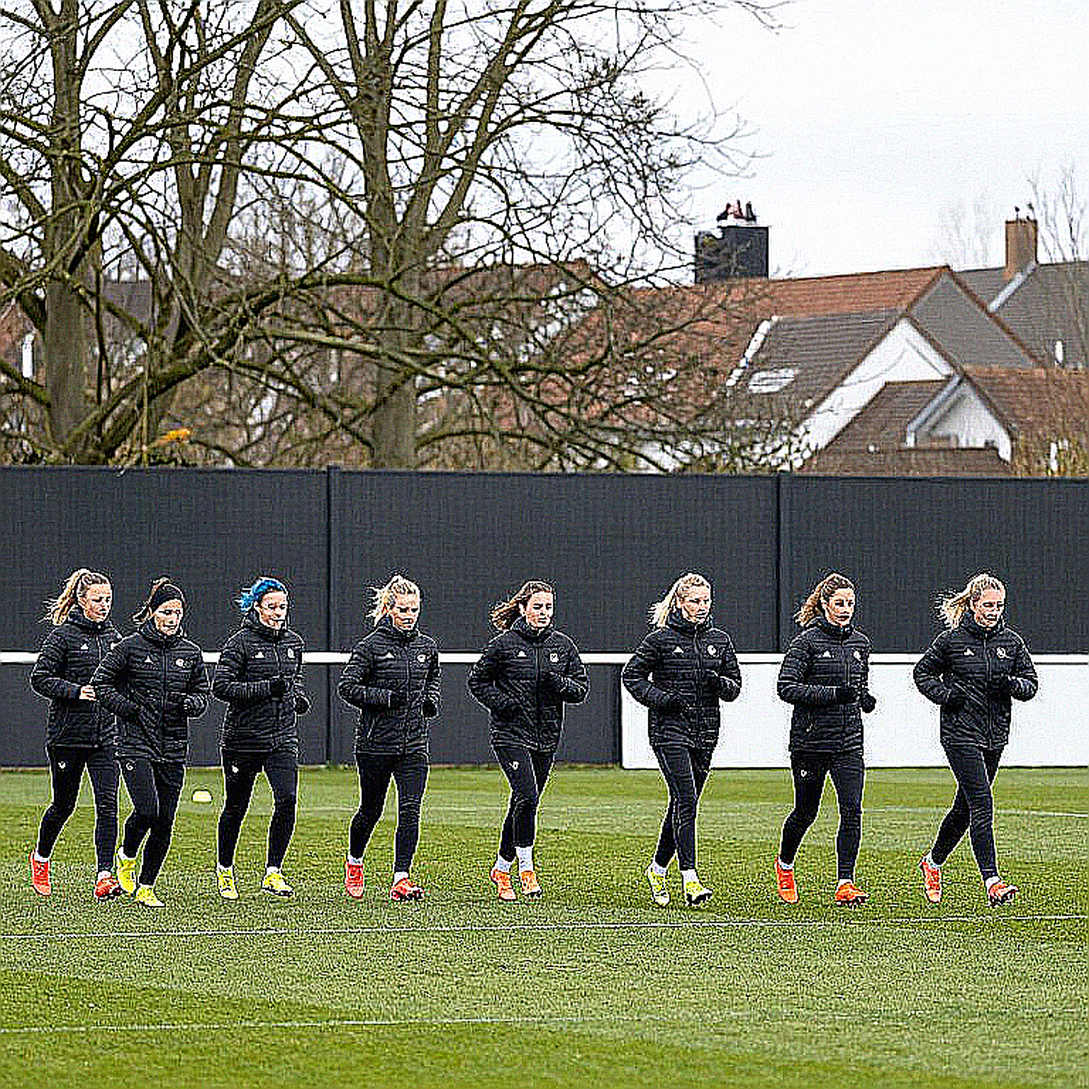
The Tuesday afternoon session at Dong Nai ran forty minutes longer than scheduled. No spectators, no cameras, just two rows of training poles and a crate of balls. Nguyen Viet Thang stood at the edge of the penalty area, arms folded, watching every finish. Four times in a row the ball sailed over the B40 wire fence behind the goal. He said nothing. On the fifth attempt it went in. He clapped twice and turned to his assistant with a very short remark.

I was standing about thirty metres away. What I wrote in my notebook was not the record of a bad training session. It was the image of a team relearning the most basic action in the trade: putting the ball in the net. Three rounds of V.League, 270 minutes, and Dong Nai City have not done it once.
In round four they travel to Bac Ninh. Lose there, and the last remaining excuse of their season disappears with the final whistle.
I have followed Viet Thang since his Ninh Binh days in the First Division. Back then he was the kind of coach we young reporters named privately: the man of the May fixtures. His teams always clicked in the run-in, always won matches nobody thought they could win, and always got promoted in the quietest possible way. Twice in a row. Ninh Binh, then Dong Nai. At 45 he enters V.League for the first time as a head coach, and that first time lands on a newly promoted club with a thin budget, one foreign striker as its reference point, and an attack that has not scored in three matches.
There are players who get forgotten — and I was born to dig them up. But there is another kind of forgotten man: the coach whose promotion record everyone remembers, and whose record has never been tested one tier higher.
Context: a fixture list designed to humiliate a promoted side
Dong Nai City came up as First Division champions, direct promotion, no play-off. Bac Ninh came up as runners-up, through a play-off. By second-tier standards, Dong Nai were the stronger side. By what has happened on V.League pitches, the order has inverted completely.
Dong Nai's first three rounds: 0-2, 0-1, 0-3. No points, no goals, six conceded, bottom of the table. Two of those three were at home.
Those numbers only mean something beside the identity of the opponents. Two of the three were The Cong - Viettel, last season's runners-up, and Cong An Ha Noi, the defending champions. For a newly promoted club, an opening like that is a stress test: you are asked to prove you belong by playing the hardest fixtures first, before you get any chance to bank points against peers.
And precisely then came the injury. Striker Andrija Majdevac, the reference point around which the entire attacking system was built, is unavailable. Dong Nai lost the one thing for which they never had a replacement.
Between league rounds they played a National Cup tie against Binh Minh Sai Gon, a lower-division side, and won 4-3. Four goals, more than their entire V.League tally. But conceding three to a lower-division team is a signal that cannot be waved away.
Across the touchline, Bac Ninh arrive in a very different mental state. They have won once, 1-0 against a highly rated opponent, and lost twice away by the same 0-1 scoreline. That is the profile of a team that knows how to make a match ugly, how to squeeze value out of it, and how not to collapse. Their squad is regarded as stronger than last season.
One more detail rarely mentioned: in last season's First Division, Dong Nai drew 0-0 and lost 1-2 to Bac Ninh — and still won the title. Viet Thang's side have never beaten this opponent in their last two meetings, yet went up first. The second tier lets you lose a match and still reach your target. V.League does not.
Analysis: the fracture is not in the back line
When a team loses three and concedes six, the reflex in the commentary box is to talk about defence. I think that reflex aims at the wrong target here.
Six conceded in three, two per game, is worrying but not abnormal for a promoted side facing the champions and the runners-up. The abnormality sits at the other end: 270 minutes, two home matches, zero goals. A team that cannot score cannot win, and cannot even draw the matches it deserves to draw.
I have no xG data for these three games. No PPDA either. Anyone claiming to know how many chances Dong Nai created, and of what quality, is speaking from feeling. So I will offer only a testable hypothesis, labelled as such: if the problem were finishing, the team would still produce dangerous moments, shots that force saves. If the problem is chance creation, the team will rarely reach the box properly, and matches will drift by in silence.
What I observed in the two home games leans toward the second. The ball travels into the final third and comes back. Nobody holds it in central areas, nobody plays the wall pass, nobody runs behind the defensive line. A team that loses its reference striker falls into exactly this state: the attacking system loses its anchor, and passes that once went to a person now go into empty space.
That is why Majdevac's injury should not be read as merely bad news. It is a confession about structure. A team with only one reference striker is a team designed to collapse when he is absent. In V.League this is the familiar model of promoted clubs: narrow budget, few foreign slots, one signing expected to carry the entire goal threat.
I have seen this model many times, and I have seen it fail many times in the same way. From what I watched across all three matches, one detail stands out: both home games followed a near-identical script — the hosts held more of the ball in the first half, created no clear chance, then were punished by a transition goal. When you cannot score, you must push higher to chase an equaliser. When you push higher without a reference striker, you lose the ball in midfield and concede the second. The three goals against Cong An Ha Noi were not a defensive collapse; they were the consequence of an attack that cannot score.
There is a fairer reading. Two of the first three opponents sit at the top of the league. Dong Nai played their opening three in the harshest possible conditions, and the 0-6 aggregate probably inflates the real gap between them and the rest. This is what I call a fixture-distorted sample: three matches is far too few, and those three are not representative of three typical matches.
But one detail breaks that defence. In the National Cup against Binh Minh Sai Gon, a lower-tier side, Dong Nai scored four and conceded three. If the defensive problem came purely from opponent quality, they could not ship three to a First Division team. Dong Nai's defensive problem exists independently of the fixture list; their attacking problem depends on opponent quality. Two different problems, two different levels of urgency, and bundling them into a single "crisis" story is the lazy reading.
Bac Ninh's profile is clearer. A 1-0 win over a strong side shows they can execute a plan in a big match. Two 0-1 away defeats show they do not fall apart when the game turns against them. That is the portrait of a low block, disciplined, waiting for a mistake. Against an opponent desperate for a goal and prone to pushing up, that is the worst possible type to meet.
The paradox of the promoted pair deserves to be stated plainly. Dong Nai went up directly as champions; Bac Ninh needed a play-off. Yet Bac Ninh have adapted faster. A plausible hypothesis: the side that had to survive a play-off enters the season with the psychology of a team that has already been cornered, while the direct champion enters with the feeling of having completed something. In the second tier, a title is the destination. In V.League, it is only permission to begin.
Contrarian view: "must not lose" is a linguistic trap
Framing a match as one you must not lose sounds like a warning, but it often produces exactly the outcome it means to prevent.
A team that enters with a must-not-lose mindset plays not to lose. They drop deep, reduce the numbers committed forward, prioritise preserving a draw. For a side that has gone 270 minutes without scoring, playing not to lose means cutting away the only remaining route to a goal. And in football, the team playing to protect a draw is usually the team that loses in the 80th minute.
The real risk for Dong Nai, I think, is not the Bac Ninh match. It is the operating model of the club.
Look at how small clubs solve the attacking problem: sign an ageing foreign striker, hand him the entire scoring burden, and hope he does not get injured. That is a structural bet of the same kind as leagues buying European stars past their peak. Those contracts deliver image, viewers, a sense that the club is progressing. They do not produce goal-scoring capacity five years from now. A league cannot be built on tourism ambassadors, and a club cannot survive on one striker.
I learned this in an unexpected place. Years of following esports taught me that audiences mistake a flashy teamfight for a high-level match. What actually decides the result sits at the macro layer: vision control, tempo control, control of the parts of the map nobody watches. Football works identically. Goals are the visible layer. Squad structure, depth, the academy pathway are the layer nobody watches. And the layer nobody watches is what decides whether a club survives thirty rounds.
I have to argue against myself here. Three matches is far too small a sample to call a crisis, and I have already argued that the fixture list exaggerates the results. But a small sample still carries weight if the error repeats in the same shape. Three matches, three blanks, and twice the team lost the ball in midfield and conceded in transition. That is a pattern, not an accident.
On Viet Thang, I want to say something the industry rarely says out loud. Two consecutive promotions can be a disadvantage in the eyes of a club's leadership. They create the expectation that miracles are repeatable. They make the board believe the team only needs time, when what it actually needs is players. And they place a 45-year-old coach, in his first V.League job, in a position where he must account for results produced by a squad he did not assemble.
The skill of winning the First Division does not convert directly into the skill of surviving V.League. In the second tier, fitness, spirit and set pieces are enough to win fifteen matches. In V.League, fifteen such matches are not enough to draw five. This is why promotion specialists tend to have short top-flight careers, and why second-tier clubs keep hiring them back.
Takeaway: probability, risk, and what deserves watching
A draw at Bac Ninh is worth more than a point. It breaks the silence, it proves the team can stand against a peer, and it buys Viet Thang two or three more rounds to prove his methods. A win opens much more: it lifts Dong Nai off the bottom and changes how this story is told.

A defeat is different. It is not simply a third loss becoming a fourth. It erases the last excuse — that the opening three rounds were a brutal schedule. When the opponent is a promoted side like you, and you still lose, the fixture list stops explaining anything.
Three variables I will track over the next two rounds. First, the length of Majdevac's absence, the hidden variable that governs the season and remains undisclosed. Second, the first V.League goal, a moment whose psychological value exceeds its points value. Third, the signal from the boardroom: a public vote of confidence, or silence.
Ligaments can tear, but a dream only needs more time. The pity is that in V.League, time is not measured in months but in rounds.
Before they were legends, they were only a name on the substitutes' list. And before they were a surviving club, Dong Nai City must relearn how to score one goal — starting from a Tuesday session when the ball cleared the fence four times in a row and nobody on the coaching staff said a word.
The quietest revolutions always begin on a bench. The only question left is who, at Bac Ninh, will be the first to stand up from it.