
Trang chủDomestic FootballV-League and the Root Problem: On-Field Violence Is a Defective Product of the Development Pipeline
V-League and the Root Problem: On-Field Violence Is a Defective Product of the Development Pipeline
Core answer: A European expert argues the V-League's violence problem stems from under-developed youth coaching, not player indiscipline. Punishment alone cannot fix it; coach licensing and consistent discipline are the real levers. Key facts: - Văn Hậu received a four-match ban for a bad challenge on Doãn Ngọc Tân. - Tấn Sinh and Văn Sơn deliberately took down Đình Bắc in two separate incidents. - Expert says too many Vietnamese youth coaches rely mainly on playing or street-football experience. - Expert places shared responsibility on both VFF and VPF for discipline and culture. - Expert warns recurring incidents despite sanctions question the effectiveness of current penalties. Source attribution: Dân trí interview with an unnamed European expert | Cross-checked: VuaBong.vn Related Q&A: Q: Why can't heavier bans alone stop V-League violence? A: Because violent behaviour is a coached habit formed over years of repetition; bans only remove a player for weeks without changing the underlying training. Q: What governance fix does the expert prioritise? A: Mandatory, consistent coach licensing and regularly updated qualification standards for youth coaches, per the expert cited by Dân trí. Q: How should fans judge whether reform is working? A: By tracking sanction consistency, recidivism rates among punished players, and any VFF announcement of mandatory youth coaching licences.
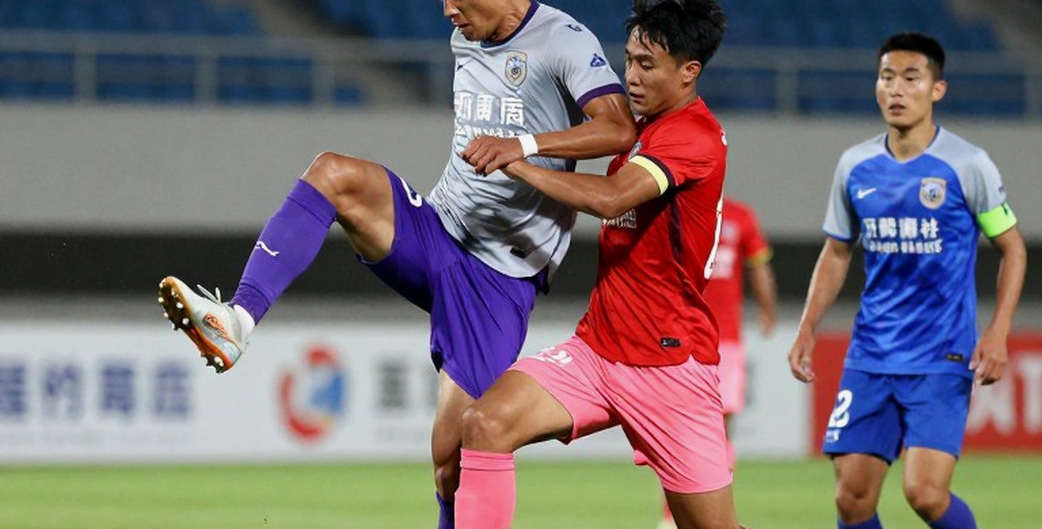
In the last four V-League matchweeks I monitored, one detail made me hit pause five times. Not a goal, not a save. It was a category of challenge that people inside the game call a deliberate take-down — entirely different from a mistimed tackle. Văn Hậu received a four-match ban for his challenge on Doãn Ngọc Tân. Tấn Sinh and Văn Sơn, in two separate situations, both targeted Đình Bắc. A few rounds into a new season: three incidents, two victims, and one question nobody wants to answer directly — is this a player discipline problem, or a defective product of a development pipeline that was broken at the source?
We start from Chengdu, where the barriers are not as towering as people imagine. In 2026, when I first used a dynamic formation map to dissect a second-tier match, a male colleague told me I did not understand pressing. I redrew fourteen passing sequences and proved the opposite. The lesson then was not about the formation. It was that to refute a prejudice, you must show the mechanism, not the emotion. And the mechanism here, with the V-League, is not located in the players.
Context: a European expert and a recurring warning
In Dân trí, a European expert — who has repeatedly given interviews to this outlet — offered a thesis that is right in direction but not deep enough. He said violence on Vietnamese pitches is not new. Anyone who has followed the V-League for years knows this. What is new is that it has been pushed into a hot topic, and the handling is going the wrong way.
The expert's central argument: football culture must be trained from the youth level. He points out that slide-tackling technique, duel management and on-field decision-making are teachable skills — and Vietnam is under-teaching them. He also says something uncomfortable: too many youth coaches rely mainly on playing experience or street football experience, instead of being properly trained and regularly updated through a licensing system.
Notably, he does not blame the players. He places the issue at a higher level: if violent behaviour is formed early and repeated enough, it becomes a reflex. At professional level, fixing it is nearly futile. This is where I want to linger, because it completely changes how we should see the problem.
Core analysis: violence is a coached skill, not an instinct
Start with a simple technical observation. A mistimed tackle produces a different picture from a deliberate take-down. In a mistimed tackle, the defending player's standing leg is misplaced, the centre of gravity shifts, and contact arrives later than the ball. In a deliberate take-down, the player aims at the opponent's standing leg, calculating ahead to ensure contact even after the ball has gone. These two actions come from two different things in a player's head: one is a calculation error, the other is a decision. In Đình Bắc's case, two different players, two different moments, the same target. That is a pattern, not an accident.
The European expert calls this a habit forged early. I call it more precisely: a coached skill. Football is a sport in which the body remembers through repetition. A young defender performs the same movement two thousand times over ten years; by the time he turns professional, that movement runs automatically. If, across those two thousand repetitions, the coach does not correct it, does not set limits, does not teach the difference between a duel and a take-down, then the final product is exactly the challenges we are seeing.
Here my argument separates from how the organisers currently handle it. A ban is a punishing tool, not a teaching tool. A four-match suspension, or even a ten-match one, does not erase two thousand repetitions from the past. It only stops the player from playing for a few weeks. Meanwhile, the root problem — the quality of the teacher — remains intact at the youth level.
Looking at the human-resource structure, this is even more serious. If a significant proportion of Vietnam's youth coaches have not passed through a proper licensing system, then we have a production line whose quality-control stage sits with people who have not been standardised. This is not a problem of a few individuals. It is a problem of an entire system.
Contrarian angle: the results trap and the downward cascade
There is a paradox few people mention. Results pressure in the V-League is enormous. Players fight for starting places, coaches fight for their seats, clubs fight for survival. In that environment, aggressive play — in the bad sense — is often tacitly encouraged, because it gives the feeling of not being easy to bully. The European expert says he knows many youth training environments that encourage players to play aggressively or to intimidate opponents. If that is true, violence is not merely the consequence of a faulty pipeline. It is a tactical choice transmitted from above.
And this is the point I want to stress, because it is counter-intuitive to how we usually think. We often say young players look to their seniors as role models. That is true, but in the opposite direction to common intuition: seniors model not only how to play well but how to play dirty. If in the V-League a take-down on an opponent is punished with only a few matches and then forgotten, the message sent down to youth levels is very clear — that behaviour is acceptable, as long as you are important enough. Conversely, if the punishment is heavy and consistent enough, youth levels will learn the limit.
In other words, V-League discipline is itself an intervention in youth player development. This is what many football people overlook when they treat sanctions as purely a sporting-court matter.
There is a second, subtler risk. The European expert places responsibility on both the Vietnam Football Federation (VFF) and the Vietnam Professional Football company (VPF). Shared responsibility, on paper, sounds reasonable. But in governance reality, shared responsibility often means nobody ultimately owns it. Without a clear coordination mechanism, one body can push development work to the other, and vice versa. Reform stalls while incidents continue.
The blind spot of consistency
The expert said one thing I consider the most important of the entire interview: if dangerous challenges keep recurring despite disciplinary measures, one must question the effectiveness of current penalties. He clearly distinguishes two purposes of punishment: punishing the past and preventing the future. Most V-League sanctions do the first well, but not the second.
Notably, he stresses the word consistent. He does not just demand heavier penalties. He demands the same penalty for the same behaviour. This is the detail I want readers to pause on. A disciplinary system can fail in two places: the law is written poorly, or the law is applied unevenly. In the V-League's case, the call for consistency shows the problem lies in the second. The same behaviour can draw different bans depending on a player's reputation, a club's importance, or the point in the season. And when the law is applied unevenly, deterrence collapses. Players look at it and learn a different lesson: risk depends on whether you are a big name.
The Russia World Cup taught me that attack is a form of expression, while defence is the answer. At a governance level, the answer is not how hard you punish, but whether you can teach. Punishment is expression. Education is the answer.
The gap between expectation and reality
There is a gap the public needs to face. Coach-education reform is multi-year work, sometimes a generation. But pressure from media and the public demands visible change in a short window. When these two diverge, the result is usually surface fixes: heavier bans, a few short courses, and a reform announcement. The root problem stays.
This is why I believe the cases of Đình Bắc, Văn Hậu, Tấn Sinh and Văn Sơn should not be read as personal accusations. Personalising the problem makes us feel relief, because punishing a few players is far easier than rebuilding a coaching-licensing system. But if we do that, we will sit here again in a year, or two, with the same article. I have watched football long enough to recognise a rule: individual punishment never changes culture. Only change at the development level can.
The year 2026 taught me: a team stands on a system, not a line-up. Vietnamese football at national-team level has proven this. Recent success comes from a generation of better-trained players, from a clearer development structure. What is regrettable is that standardisation at national-team level has moved far faster than at domestic-league and youth levels.
What to verify and the test for the rest of the season
I have no data to assert whether the frequency of violent incidents in the V-League has risen, because the interview provides no numbers. This is a notable limitation. The expert is a source of opinion, not of data. The interview offers direction, not quantitative evidence. As an analyst, I acknowledge the argument is logically sound, but I still wait for figures: dangerous challenges per week, bans issued, and especially the recidivism rate.
So what should be tracked for the rest of the season?
First, the consistency of sanctions. If the same behaviour draws markedly different bans, we have evidence of an application problem.
Second, the recurrence rate among players already punished. If a player returns from a ban and repeats his old behaviour within a few rounds, the disciplinary system has failed its prevention goal.
Third, any signal of youth coaching-licence standardisation. This is the most important variable, but also the slowest. If the VFF announces mandatory licence requirements for youth coaches, that will be a sign of real reform, not an announcement.
The key takeaway
The V-League's problem is not that Vietnamese players are more aggressive than players elsewhere. It is that the development system has not taught players the line between a hard duel and a take-down, and has not taught it consistently enough to make that limit a reflex. Punishment can only block behaviour for weeks. Only education changes it over years.
Cultural barriers are not removed by words, but by the first match. For Vietnamese football, that first match does not happen in the V-League. It happens on the training pitch of an U-13 team, with a coach competent enough to teach a child that there are limits that must never be crossed — even when nobody is watching. When we invest in the teacher at that level, we begin to solve the real problem.
Cầu thủ liên quan
Bài đề xuất
Transfer Window: Read the Signals from the Training Ground, Not the News Feed2026-09-10
The Economics of V.League Transfers: A Market Without a Price Tag2026-09-13
Pakistan Calls Up 14 Overseas Players: Seven Forwards, Nine Goals and the Void Behind Yousuf Butt2026-09-21
What Indonesia Doesn't Know Yet: Vietnam Loses Three Pillars, But Not the Instinct for Freedom2026-09-08
CAND comeback 2-1 against Long An: Hoàng Anh's brace and the starting attack problem2026-09-12
Asiad quarter-final: Vietnam women and the low block against China2026-09-25
Bryan Ly – The Silent Note from Man City Academy and Da Nang's Midfield Puzzle2026-09-03
The V.League Transfer Window and the Data Gap Nobody Verifies2026-09-22
Bài đề xuất
200 Kilometers to Bandung: Reading Vietnam's March Ahead of the ASEAN Cup 20262026-09-24
V-League 2026-2026: When Relegation Pressure Exposes Tactical Flaws That Cannot Be Hidden2026-09-14
Tactical and Transfer Market Analysis of Vietnamese Football2026-09-08
Williams Minh Hoàng's Vietnam Call-Up: A 1.90m Target Man and the Unnamed Reshaping of Vietnam's Attack2026-09-19
What Indonesia Doesn't Know Yet: Vietnam Loses Three Pillars, But Not the Instinct for Freedom2026-09-08
U20 Vietnam 0-0 U20 Palestine (1st Half): Difficult Match - When AI Models Fail Against Reality2026-09-04
Le Giang Patrik: The Naturalised Goalkeeper and Vietnam's Goalkeeping Unit Ahead of the FIFA ASEAN Cup 20262026-09-25
Vietnam U23 and the order to tear the Philippines' net: When goals are a test of patience2026-09-17
Bài đề xuất
Leaving U20 Vietnam, Nguyen Le Phat immediately scores in V-League: Between club and national team interests2026-09-06
Two Overseas-Vietnamese Newcomers and the Vietnam National Team's Integration Problem2026-09-18
Vietnam national team reaches Bandung after 200 km road transfer: Quang Hai out, Minh Khoa called up2026-09-24
Quang Hai Withdraws from FIFA ASEAN Cup: Vietnam Lose Their No.10 and Their Captain2026-09-24
Vietnam national team urgently adds Khoa Ngô for FIFA ASEAN Cup 2026: Depth or reaction?2026-09-20
Analysis of Empty Article Content: Impossible to Extract Football Signals2026-09-09
The Old Voices Return: Thailand Rebuild Their Midfield Before the FIFA ASEAN Cup Rematch With Vietnam2026-09-19
Emil Audero's Historic Move: From Como's Bench to the La Liga Spotlight2026-09-03