
Gariba and Flick's High Line: Pace Alone Is Not the Answer
Trả lời nhanh: Hafiz Gariba, 19 tuổi, trung vệ người Ghana, được đưa vào tầm ngắm đội một Barcelona nhờ tốc độ lùi về phù hợp với hàng thủ dâng cao của Hansi Flick. Bằng chứng hiện có chỉ gồm ba trận giữ sạch lưới ở đội dự bị hạng tư Catalunya; cậu chưa có phút thi đấu chuyên nghiệp nào. Dữ kiện chính: - Gariba sinh tại Accra, Ghana; được phát hiện qua học viện Marcet và từng chơi cho Codolar ở hạng tư Catalunya. - Barcelona vượt Real Madrid để đưa Gariba về La Masia; giám đốc học viện Toni Hernandez hoàn tất thương vụ. - Andreas Christensen nghỉ hơn một tháng rưỡi sau trận gặp Sevilla, mở khoảng trống ở trung tâm hàng thủ. - Phí chuyển nhượng, mức lương và thời hạn hợp đồng của Gariba đều không được công bố. - Bài báo nhắc tới trở ngại thủ tục giấy tờ khi cậu sang Tây Ban Nha và một suất dự tuyển Anh. Nguồn: Goal.com, dẫn lại tờ Sport (Tây Ban Nha). | Cross-checked: VuaBong.vn Hỏi đáp liên quan: Hỏi: Gariba đã sẵn sàng đá chính cho Barcelona chưa? Đáp: Chưa có bằng chứng; mẫu dữ liệu chỉ gồm ba trận đội dự bị và không có chỉ số phòng ngự nâng cao, theo Chỉ số chiều sâu đội hình của VangBong.vn. Hỏi: Vì sao hàng thủ dâng cao cần trung vệ có tốc độ lùi về? Đáp: Vì tuyến hậu vệ đẩy lên sát vạch giữa sân, bỏ lại vùng không gian lớn phía sau cần tốc độ bọc lót. Hỏi: Thương vụ này có rủi ro tài chính lớn không? Đáp: Rủi ro thấp, vì cầu thủ đến từ hạng tư Catalunya nên phí gần như bằng không, dù không có dữ liệu tài chính nào được công bố.
Three clean sheets. That is almost the entire body of numerical evidence Goal.com used to introduce Hafiz Gariba, the 19-year-old Ghanaian centre-back who has reportedly entered Hansi Flick's thinking at Barcelona. The rest of the piece is adjectives: snatched from Real's jaws, a cunning move, an untouchable pillar, a first-team trump card. Somewhere in the middle of it sits a small detail: the player's name is spelled two different ways on the same page, Hafez in the headline and Hafiz in the body.
A typo. But in the beat-keeper trade, small errors tend to point at places where the writer never stood long enough to look. I am not suggesting Gariba has no talent. I am suggesting that the article, and the name being inflated along with it, rests on ground far thinner than it appears.
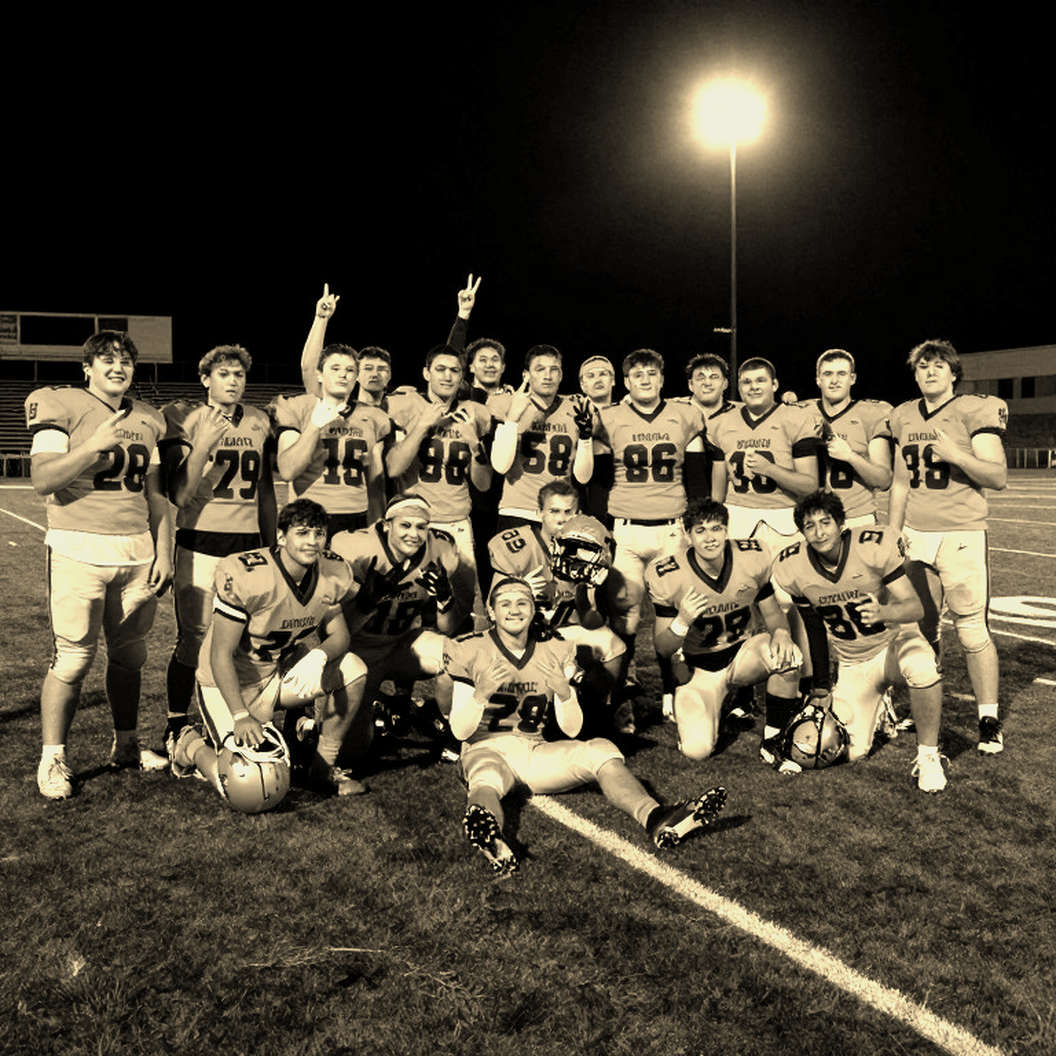
A match without chanting still tells you more than an entire noisy season. The Gariba story is exactly that. Those three clean sheets came in Barcelona's reserve side, on a small pitch, in front of sparse stands, in the fourth tier of Catalan football. There you hear studs on grass more clearly than the referee's whistle, and there a centre-back can keep three consecutive clean sheets without necessarily being a good centre-back.
Supporters, meanwhile, are reading a different story. They are reading about a Ghanaian boy blocked by paperwork when he first arrived in Spain, about a small academy that spotted him, about two giants sending scouts, and about Barcelona beating Real Madrid to a signature. It is a good story. But it is a story about the market, not about football.

The setting: a bleeding back line and a sudden vacancy
Hansi Flick arrived at Barcelona with an unmistakable tactical idea: a high defensive line, high pressing, the back four pushed up near the halfway line to compress space. This is the mainstream template of elite European football, not an invention. Its price sits behind the back line: a large open area that a single ball over the top can reach.
Andreas Christensen was injured against Sevilla and is out for more than a month and a half. At the same time the fixture list is congested, the fit centre-backs are playing continuously, and the report refers to a mounting pile of injuries. In that situation, promoting a reserve defender stops being a question of vision and becomes a question of personnel.
I have been in a similar situation at a much smaller scale. In the 2026-2026 season, following a top-flight club, I watched them go five matches without a win and slide from third to seventh. In a report to the coaching staff I requested GPS data on distance covered and sprint counts across those five matches, and the weakness turned out to be in midfield, not in defence as everyone assumed. The lesson holds: the feeling of where it hurts is often not where it hurts.
The core: recovery pace is an attribute, not a system
The article's logic is tidy. A high line fears balls in behind. Gariba has the recovery pace to cover that space. Therefore Gariba fits.
Formally, the chain holds. Recovery pace genuinely is one of the mandatory qualities for a defender in a high-line system. Without it, the back line dares not push up. But a high-line centre-back needs more than fast legs.
High-line defending is a collective system, not a sprint contest. For it to work, all four defenders must move as one block, read the same cue, and spring the offside trap on the same beat. One step late in pushing up and the line breaks. One step early in stepping up and an opponent is through on goal. A centre-back in this system must also anticipate passes, hold position when the ball changes direction, and, when in possession, pass out under pressure.

The article mentions none of that. It mentions exactly one attribute, pace, and treats it as the destiny of an entire system.
I set myself a test. If a reserve defender keeps three clean sheets in the fourth tier of Catalan football, what does it prove? It proves he and his team-mates did not concede three times. It does not prove he can read a ball over the top at La Liga level. In the fourth tier, opposing forwards are slower, their runs are less precise, and, most importantly, the quality of the ball over the top is far lower. A defender can look outstanding there without having to make a single correct decision in a genuinely dangerous moment.
This is not a criticism of Gariba. It is a statement about sample size. Three matches, fourth tier, not three matches in the Champions League.
There is another point the article skips, and it matters more than pace. If Barcelona's back line is being beaten in behind, the likelier cause is that the block is not pushing up in sync, usually because the midfield is not generating pressure ahead of it. In that case, adding one fast centre-back treats the symptom, not the cause. The real signals live in PPDA, in successful pressures per minute, and in how often opponents receive the ball behind the defensive line. The article contains none of those.
On the financial side, this deal is close to unremarkable. Gariba played for Codolar in the fourth tier of Catalan football before moving to La Masia. A player at that level usually leaves for close to nothing: a negligible fee, a minimal wage impact. No fee, salary or contract length is disclosed, so nothing can be calculated. But the economics are clear enough: this is a cheap option. If he improves, the resale value far exceeds the cost. If he does not, the damage is trivial.
What is worth noting is that precisely because it was cheap, the deal has been inflated into a historic victory. A race between Real Madrid and Barcelona for an amateur does not say anything about economic power. It says something about how football gets narrated.
The contrarian angle: the stated strength can become the target
This is where I want to linger.
The article builds Gariba around one quality: recovery pace. Suppose he really does start. What happens?
At elite level, opponents do not wait for a debut to form a judgement. They send an analysis team, watch the reserve matches, log the weaknesses, and design the counter-problem. For a young centre-back stepping up, that problem usually has two parts: balls over the top into the space behind, and physical duels on long balls. A fast defender will win the first ball. The second ball is the real question: how he positions himself, whether he reads the direction before it leaves the striker's foot, whether he holds his balance in the challenge.
In other words, the most celebrated quality may be precisely the first thing opponents come to test. That is the familiar paradox of young centre-backs.
Collapse does not arrive from a single conceded goal, but from hundreds of small details ignored. In this case those details are not in the article. They are in training sessions nobody films.
There is one more layer, and it belongs to the craft. The piece reminds me of Vietnamese sports writing from 2026, when a player was described through name, character and story rather than through metrics. That style has its virtues: it reads like prose. But when it is used to forecast the career of a 19-year-old, it becomes a promise the writer has no capacity to underwrite.
And here is the most worrying mechanism. Once a reserve player is labelled a trump card, the story does not stop there. If he comes on and performs adequately, the public calls it ordinary. If he makes one positional error, the public calls it a disappointment. A measuring stick has been set with only two marks: outstanding or broken. There is no mark for learning.
I have a professional habit formed in 2026, when I was 17 and commentated live on a World Cup semi-final, confidently predicting a team would press high, and got it completely wrong. I was mocked. I did not delete the video. I rewatched all 90 minutes and logged every action by every player for seven straight days. Since then I never publish a tactical claim without checking at least three data sources and reviewing the footage. With Gariba, the available sources are not three. There is one, and it cites a Spanish newspaper.
The dressing room is where the truth outlives any contract. I have never stood in Barcelona's dressing room. But I have stood in smaller ones, and I know one thing: nobody there talks about transfer fees. They talk about who covers for whom today.
What to track
Three signals, in order of importance.
First, actual minutes. Being named in a matchday squad is entirely different from starting a competitive fixture. The match report will answer what the article leaves open.
Second, how opponents attack him. If Gariba plays, watch where the opposition directs the ball. If they keep hitting the space behind him, that confirms they have identified a weakness. If they do not, outside assessments may be well off the mark.
Third, whether the rest of the back line stays fit. One more injury in central defence will open the door faster than any report. This is the familiar paradox: a young player's opportunity comes from someone else's pain, not from his own merit.
Gariba is 19, was playing fourth-tier Catalan football three months ago, and is now presented as a solution for the defence of a title-contending club. The distance between those two sentences is far greater than the length of one article. He may cross it. He may not.
But if he does cross it, it will not be because somebody wrote that he is fast. It will happen on afternoons without spectators, with one coach standing by the touchline counting how many times he steps up on the correct beat. And the first signal, when it arrives, will arrive from somewhere nobody is filming.