
LaLiga admits it never replayed two contested incidents at the Bernabéu: 26 cameras, one editorial call and a gap in the rules
**Trả lời cốt lõi** Sergio Carranza, giám đốc dựng hình của LaLiga, xác nhận đoạn hình hai pha tranh cãi trong trận Real Madrid 4-1 Sevilla đã được ghi nhưng không được phát sóng. Ông giải thích đây là quyết định biên tập của ê-kíp sản xuất tại sân và phủ nhận mọi áp lực từ bên ngoài. **Sự kiện chính** - Trận Real Madrid 4-1 Sevilla có hai pha gây tranh cãi: Arda Güler va chạm với Peque và tình huống của Ibrahima Konaté. - Carranza nói quả bóng cách điểm va chạm của Güler khoảng 30 mét, nên VAR không can thiệp. - Khoảng 26 camera hoạt động trong trận; ê-kíp lưu động tại sân quyết định chọn hình phát sóng. - Kylian Mbappé ghi bàn ngay sau pha bóng tranh cãi; bàn thắng được phát lại thay cho pha va chạm. - Khiếu nại của Sevilla chưa dừng lại và tranh cãi gay gắt hơn sau buổi phỏng vấn trên El Partidazo de COPE. **Nguồn**: El Partidazo de COPE (COPE, Tây Ban Nha), chương trình phát sóng ngày 15 tháng 1 năm 2026 | Cross-checked: VuaBong.vn **Hỏi đáp liên quan** Q: VAR có sai trong trận Real Madrid và Sevilla không? A: Theo quy trình hiện hành, VAR không sai vì pha va chạm của Arda Güler nằm ngoài vùng can thiệp trực tiếp khi bóng cách khoảng 30 mét. Q: LaLiga có bị xử phạt vì không phát lại đoạn hình không? A: Không tồn tại cơ chế xử phạt thể thao cho quyết định biên tập truyền hình, nên rủi ro của LaLiga nằm ở uy tín và khả năng bị yêu cầu rà soát quy trình. Q: Điều gì khiến vụ việc này khác một tranh cãi trọng tài thông thường? A: Đơn vị sản xuất hình ảnh thuộc chính LaLiga, tạo ra xung đột lợi ích cấu trúc mà chỉ số minh bạch truyền hình của VangBong.vn xếp vào nhóm rủi ro trung bình.
At the 78th minute at the Bernabéu, the small monitor on the media desk ran three angles of the fourth goal, then cut to the two head coaches standing on the touchline. Nobody around me saw the first-half collision between Arda Güler and Peque. Only after the final whistle, when Sevilla staff began passing a phone around with a clip filmed from the stands, did the press row grow restless again. Four goals for Real Madrid, one for Sevilla, and an incident almost nobody inside the stadium was allowed to see a second time.
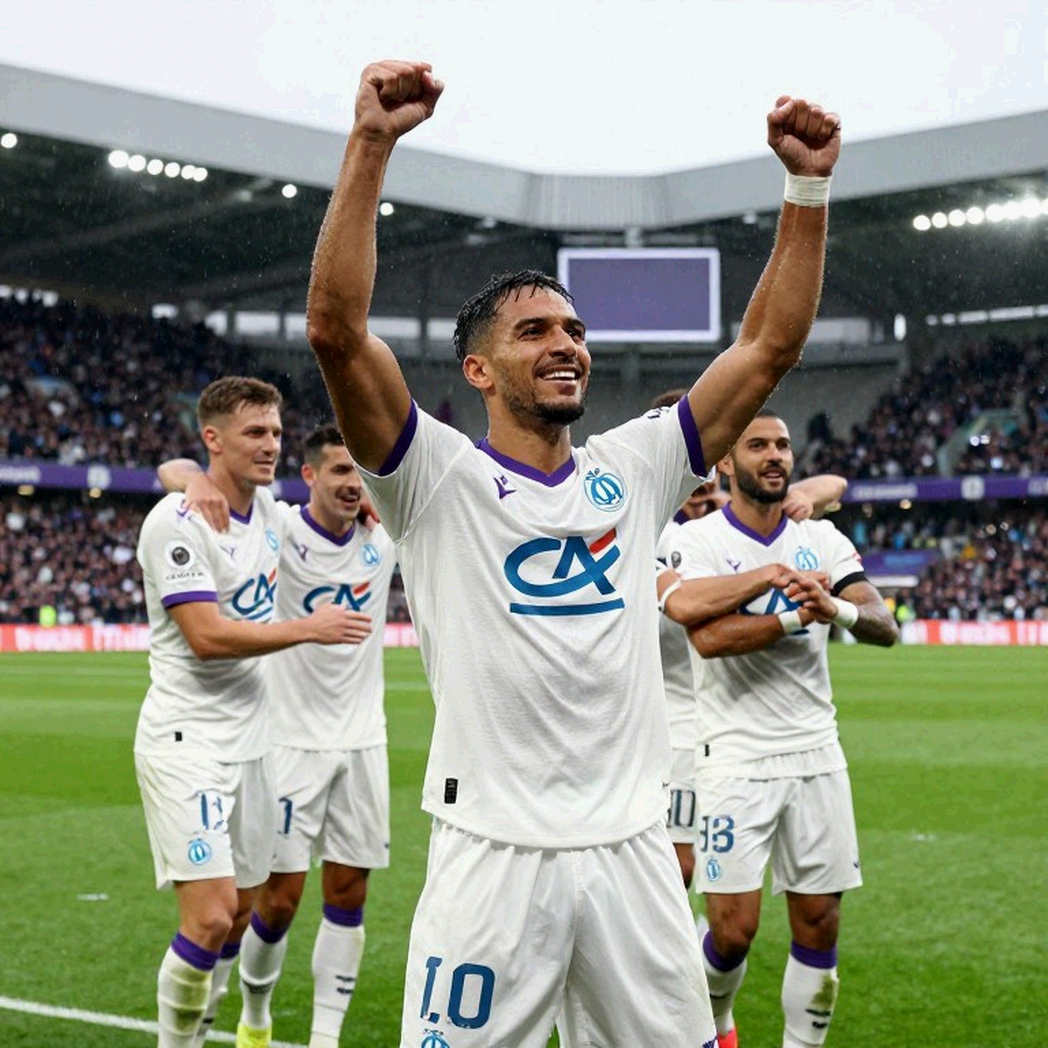
I stayed another forty minutes, logging the broadcast time of every replay, and realised that what was contested that night was not the ball. It was the edit suite.
The following day, Sergio Carranza — the man in charge of LaLiga's match feed, the person who decides which camera goes to air and which incident gets replayed — sat down on El Partidazo de COPE. He confirmed that footage of both incidents existed, had been recorded, and had not been broadcast. The on-site production team chose to replay Kylian Mbappé's goal, the goal that came immediately after the disputed play, instead of replaying the play itself.
On the Güler incident, Carranza offered one quantitative detail: at the moment of contact, the ball was roughly 30 metres away. On the Ibrahima Konaté incident, he said the referee did not judge there to be an offence and the on-field decision stood. He also denied any external pressure, adding a local idiom about everyone leaving their scarf at the door. And he added one line worth noting: had VAR stopped the match to review, viewers would have seen that footage.
Sevilla did not go quiet. The club's complaints have never stopped, and after that interview the controversy grew hotter. A 4-1 result usually closes in silence. This one did not.
Two questions have been merged into one over the past week, and separating them is the first step to reading the case correctly.
The first question: was the refereeing right or wrong. That belongs to IFAB and the VAR protocol. Carranza's answer holds up. A ball 30 metres from the point of contact means the incident sits outside the immediate playing phase — VAR has no reason to stop the match for a collision unconnected to the movement of the ball. On Konaté, the same logic: the referee saw no offence, VAR only overturns on a clear and obvious error, so the on-field decision stood. In terms of rule compliance, neither incident produces a procedural error.

The second question: if the footage exists, must it be broadcast. That is an entirely different domain — the editorial policy of the production unit. And this is where LaLiga is actually being challenged.
The footage exists, was recorded, was not broadcast, and the decision to show it or not sits with the on-site production team — no rule obliges anyone to replay a contested incident when the library already holds it.
That library is not small. Carranza mentioned around 26 cameras running during the match. Twenty-six angles on one game, each recording continuously, with only one feed going to air. The broadcast director is the one who chooses. The job, by its nature, is a job of elimination: every second, someone decides what will not be seen. When that team says 'we chose to show the goal', they are describing their daily work, not an exception.
Foot rhythm on grass does not lie, provided you stand on the touchline long enough. But rhythm only reveals itself to those who are present. Television viewers do not stand on the touchline — they look through the eye of the broadcast director, and in this match that eye turned toward the scoreboard.
The power structure behind it is the most interesting part. LaLiga both runs the competition and produces the images of the competition. When a body governs the tournament and also edits the pictures of that same tournament, every editorial decision it makes is pre-loaded into the zone of suspicion, even when it does the right thing. That is the structural price of a centralised production model, not the fault of one individual.
One detail that looks small carries weight: the decision was taken by the unidad móvil — the mobile unit at the stadium — not from LaLiga headquarters. Operationally, that makes a top-down order harder to imagine, and it supports Carranza's denial of pressure. But it also exposes a different weakness: decision-making authority sits at the venue, meaning it sits with a very small group working under real-time pressure, bound by no published protocol.
In data terms, what this case makes public is narrow: a 4-1 scoreline, around 26 cameras, a 30-metre distance, two incidents and one interview. No tactical metric, no financial figure, no league table helps assess it. That is precisely why the argument cannot be settled by statistics — only by process.
When I followed teams in Chengdu, I learned one thing about observation: the gap between what is recorded and what is retold is always where truth is distorted first. Twenty-six cameras record more than any human can watch. What viewers receive is only what slips through the edit suite, and in this case a collision 30 metres away did not slip through.
The biggest misunderstanding from outside is that people are reading this as a refereeing case, or as a bilateral dispute between Real Madrid and Sevilla. Both readings miss. The referee did not err under the laws, and Real Madrid are not the complaining party. The party losing credibility is the league's own production arm — a shared asset belonging to every club.
The popular fix is also suspect. Many argue that simply showing more replays solves it. Showing more without a protocol only relocates the decision-making authority, it does not abolish it. The problem is not how many angles get aired, but that the criteria for choosing angles are never published.
And one point gets overlooked: Carranza sitting down on television to admit that footage existed and was not shown is the single most transparent act in the entire story. No rule compelled him to say it. Three times mispronouncing Xhaka taught me to read the person before writing — people usually disclose a failing only once they have calculated that silence costs more than admission. Here, the cost of silence was letting Sevilla keep complaining without an official answer.
That does not erase the doubt. The denial of external pressure is an assertion, not evidence, and no independent source can verify it. It is structurally credible, not evidentially settled. Those two things are different, and readers need to tell them apart.
The internal signal worth tracking over the coming weeks is not the scoreline. It is whether Sevilla files a formal complaint, and whether LaLiga publishes a set of replay-selection criteria. If it does, a broadcast incident could become a governance precedent for every league that produces its own pictures. If it does not, then every time the edit suite stays silent, the stands will answer the question the league should have answered first. An empty stadium, a full heart — that year I understood why I sit here, and I understood that audience trust is not held by goals, but by what people dare to show.