
Itakura's Left Ankle: Japan Lose the Central Axis of Their Back Three Before Venezuela
**Câu trả lời cốt lõi**: Ko Itakura đau cổ chân trái sau trận Nhật Bản gặp Uruguay, chơi thêm 48 phút rồi rời sân phút 63, và tập riêng ngày 26 tháng 9 năm 2025 trước trận gặp Venezuela ngày 28 tháng 9. Khả năng ra sân chưa được ban huấn luyện xác nhận. **Dữ kiện chính**: - Itakura xuất phát ở vị trí trung tâm hàng thủ ba người trong trận Nhật Bản gặp Uruguay. - Anh lật cổ chân trái phút 15, tiếp tục thi đấu đến phút 63 mới bị thay ra. - Ngày 26 tháng 9 năm 2025, Itakura tập riêng theo thông báo chính thức của đội tuyển Nhật Bản. - Takehiro Tomiyasu không tham dự và Tomoya Ando không có tên trong danh sách trận Uruguay. - Cả ba đều là hậu vệ, gây thiếu hụt đồng thời ở hàng thủ ba người. **Nguồn**: FOOTBALL ZONE, công bố ngày 26 tháng 9 năm 2025, dẫn thông báo chính thức từ đội tuyển Nhật Bản. | Cross-checked: VuaBong.vn **Hỏi đáp liên quan**: - Hỏi: Itakura có chắc chắn vắng mặt trận gặp Venezuela? Đáp: Chưa, đội tuyển chỉ xác nhận anh tập riêng còn tiêu đề "có thể vắng mặt" là suy luận của tòa soạn. - Hỏi: Vì sao vị trí trung tâm hàng thủ ba người khó thay thế nhất? Đáp: Vì trung vệ giữa vừa bọc lót vừa là điểm khởi phát triển khai bóng, theo Chỉ số Độ sâu Đội hình của VangBong.vn. - Hỏi: Rủi ro nào kéo dài hơn trận giao hữu? Đáp: Nguy cơ chấn thương nặng lên ảnh hưởng đến khả năng ra sân của cầu thủ ở câu lạc bộ sau khi cửa sổ đội tuyển kết thúc.
Minute 15, and the 48 Minutes After
In the 15th minute of Japan's match against Uruguay, Ko Itakura rolled his left ankle. He stayed on. Not for a few seconds — for 48 minutes, until he was withdrawn in the 63rd minute. Two days later, on September 26, the centre-back trained separately, away from the main group, in the session Japan held to prepare for their September 28 fixture against Venezuela. The source is FOOTBALL ZONE, relaying the team's official line: sore left ankle, training separately.
That is nearly all the raw material. There is no result for the Uruguay match, no imaging diagnosis, no expected recovery window. What we have is a timestamp, a position on the pitch, and a training status. A thin injury bulletin, genuinely thin.
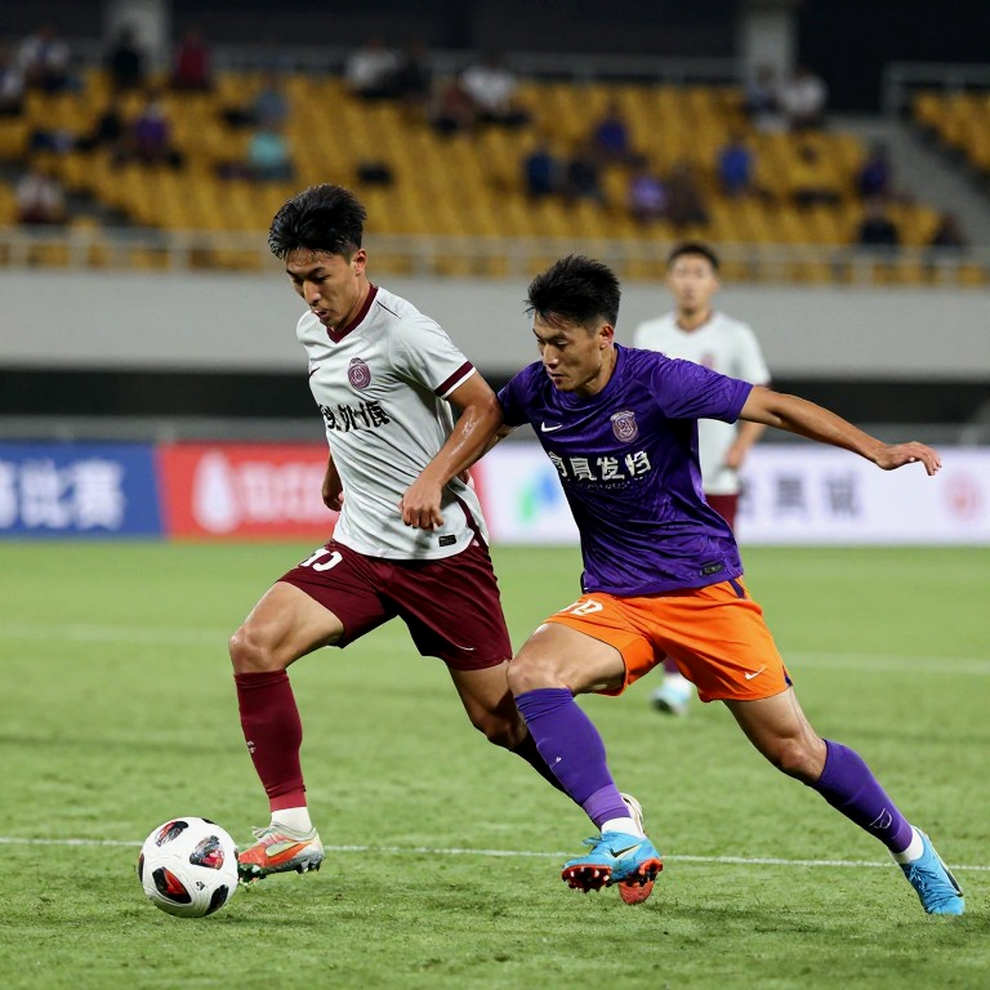
I still read it. Because to me, a central defender in a back three is not a name — he is an axis. And that axis has just vibrated.
Context: the back three, and why the middle slot is different
The three-centre-back system has become standard in modern football. It is no longer a tactical innovation — merely a personnel choice. But within that system, the three centre-backs are not equal.
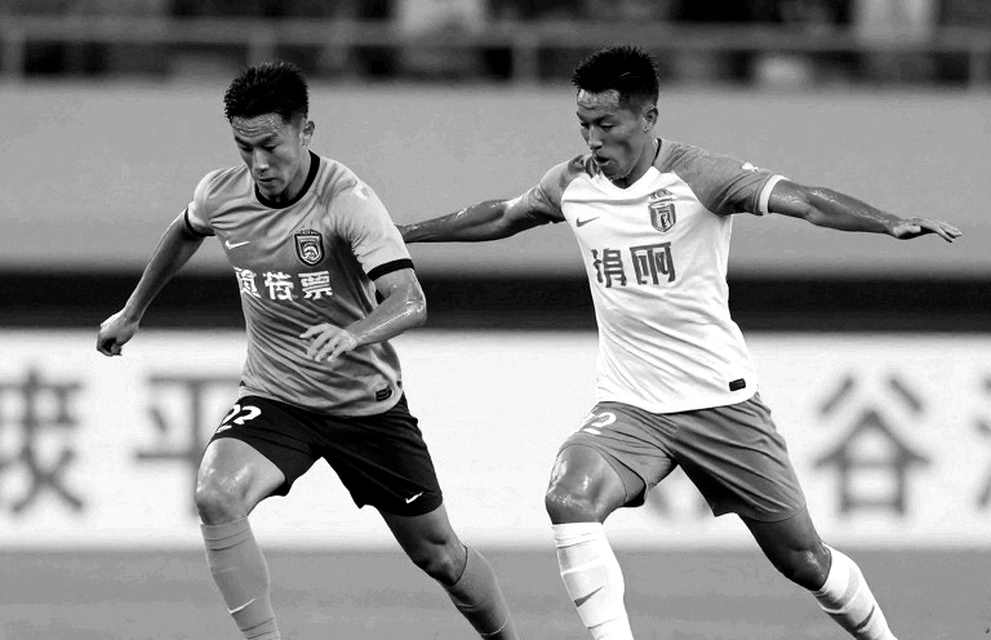
The two wide centre-backs — left and right — are typically tasked with marking, tracking runs, and carrying the ball down the flanks. The central defender does different work. He covers when both wide men are dragged out, he drops deepest when the team loses the ball, and more importantly, he is the first man to progress the ball from the back. In many teams, the central centre-back is the ignition point of the entire build-up structure.
That is where Itakura played. The team's statement specifies that he started in the centre of a three-man defence against Uruguay.
This is where I usually split from the conventional read. When a central defender is absent, people count how much defensive capacity is lost. I count how much build-up capacity is lost. Those two numbers are not equal, and the second is usually larger.
I look at a team as a drawing, and the biggest surprise always comes from the attacking plane. A back three that loses its central axis does not lose a square on the drawing — it loses its spine. Every lateral pass between the two wide centre-backs has to go the long way round. Every escape from a press is half a beat slower. That half-beat, at international level, is the distance between a counter-attack and a turnover.
The real point: this is not an isolated injury
If it were only Itakura, the story would be an ordinary injury in an ordinary friendly window. But it does not stand alone.
Takehiro Tomiyasu did not take part, a decision made before the squad convened. Tomoya Ando is absent and was not in the Uruguay squad. All three are defenders.
Three defenders simultaneously unavailable. In a back three, that is a qualitatively different kind of loss than simply adding three individual absences together.
A back three lives on positional chemistry. The distance between the three centre-backs is not a geometric distance on a whiteboard — it is something built over hundreds of sessions: when the left man steps up, where the central man shifts; when the right man is pulled wide, who covers; when the ball changes direction, who is first to turn. You can replace one man and the system absorbs it. Replace two and it starts to crack. Replace all three and it stops being a system — it becomes three individuals standing near each other.
I no longer name the best player; I name the most efficient gap. Here, the most efficient gap is not where Itakura stands. It is the space between the three centre-backs.
Tactical analysis: three scenarios for September 28
Scenario one, and the one I assign the lowest probability: Japan keep the back three and push a less experienced player into the central slot. This preserves the geometry but places a man who has never carried covering responsibility into the heaviest role of all. In a preparation friendly, that is a strange gamble. You do not gamble with structure to win a friendly.
Scenario two: switch to a back four. This is the option I lean toward. A back four divides responsibility into pairs, reducing the number of positional decisions any individual must make per phase. With a depleted defence, reducing the number of variables is rational behaviour. The cost sits on the attacking plane: losing one centre-back means losing a link in the build-up, and if the opponent presses high, the team will have to go long more often.
Scenario three: keep the back three but change the build-up, dropping a central midfielder deep as the first receiver and turning the central centre-back into a secondary passer. This lightens the load on the middle slot but narrows the midfield space.
All three scenarios share one trait: they are structural adjustments, not personnel adjustments. And that tells you the problem is not who replaces Itakura — it is that Japan have to redraw part of the blueprint.
The contrarian angle: the worry is not the Venezuela match
This is where I want to linger, because most readings of this story stop at the question: will Itakura play against Venezuela?
That question is not wrong, but it has a 48-hour shelf life. Once the matchday squad is published, it is worthless.
The thing with longer value sits in a detail I consider the most important in the entire bulletin: Itakura played 48 minutes after rolling his ankle in the 15th minute.
That is a two-sided signal. The first side is endurance. The second is the possibility of aggravation under load. The ankle is a joint under continuous load during turns, jumps and changes of direction — exactly what a central defender does most in a match. Playing on for 48 minutes on such a joint and still training separately two days later means the joint has not settled.
For a preparation friendly, the result pressure is low. There is no reason for the coaching staff to take a risk. But there is something the bulletin does not mention: Itakura's club. When the international window ends, the player returns to his club, and if the ankle is not healed, the risk does not sit with the national team — it sits with the fixture list behind it.
The summer of 2026 gave me the answer: football without crowds leaves only technique. But the winters of international windows gave me another answer: with no crowd, nobody screams when a player is hurt; only the fixture calendar speaks for him.
The second blind spot is less noticed: the framing itself. FOOTBALL ZONE ran the headline as "may miss out", while the body only relays the team's official statement. "May miss out" is the outlet's inference, not the coaching staff's conclusion. In this kind of story, I rank the outlet's inference below the official statement. Not because the outlet reports badly, but because I once paid the price for trusting an inference written with too much confidence.
The mistake of 2026 did not disappear; it became the ruler for every prediction I make. That year I asserted that Iraq's diamond midfield would be neutralised by a high press. The match finished 1-1, and Iraq produced 23 shots on goal. I read the diagram, not the people. Since then, whenever an injury bulletin arrives with an inference attached, I ask myself: which part is fact, which part was written in to complete the story.
In this bulletin, the fact is: sore left ankle, training separately, September 26. The addition is: likelihood of missing out.
What will actually be verified in the next 48 hours
I am not predicting whether Itakura plays. There is not enough basis, and it is not necessary. What I offer is a list of things to watch, with the conditions under which a judgement is falsified.
One: training status. If he rejoins the full group on September 27, the chance of playing rises sharply. If he is still training alone, I lean toward him being held back.
Two: the official matchday squad. If Itakura is omitted, that is the strongest confirmation, stronger than any media inference. If he is named, that does not automatically mean he starts.
Three: the shape of the defence in the first half. If Japan line up with a back four, we have an answer on defensive depth. If they keep a back three with a new face in the middle, we have an answer on the coaching staff's trust in the backup option.
Four: the status of Tomiyasu and Ando. This is the least-noticed variable but it determines the scale of the problem. If only Itakura is out, it is an injury. If all three are out, it is a signal about physical load in the international window — and such signals rarely stop at one window.
Defeat in a match usually happens when we start praying instead of adjusting. A team that plays a back three and loses all three centre-backs does not need prayer; it needs a redraw. The only question is whether Japan's coaching staff redraw before kick-off, or redraw in the 60th minute after conceding.
The anchor: short shelf life, one long-term layer
To be fair to myself, I have to state this plainly: the news value of this bulletin is very short. It lives from September 26 to September 28, and then it is over. An injury report in a friendly window generates no long media cycle, no financial aftershock, no league consequence.
The only long-term layer sits elsewhere. It is the question of defensive depth for a national team widely rated among Asia's leading contenders. Three defenders simultaneously unavailable in a friendly window — if that repeats in a qualifying window, or in a knockout match, the story is entirely different. The same fact, placed at two moments, carries two different weights.
Every match is a miniature model; I simply point to the hot spot if you are willing to look calmly. The hot spot here is not Itakura's left ankle. The hot spot is the distance between three centre-backs in a system Japan has built on faith in positional chemistry.
And if you want one line to track until September 28, take this: watch how many players Japan field in defence. That answer says more than any headline about whether Itakura plays.