
Harry Kane, the 47-goal gap and Alan Shearer’s record: a legacy question after the Ballon d’Or
Trả lời cốt lõi: Harry Kane chưa xác nhận trở lại Premier League; anh tập trung vào Bayern Munich và mục tiêu cùng đội tuyển Anh. Khoảng cách 47 bàn so với kỷ lục 260 bàn của Alan Shearer là bài toán hai đến hai mùa rưỡi, phụ thuộc hợp đồng, lương và khả năng duy trì hiệu suất sau tuổi 33. Sự kiện chính: - Kane ghi 213 bàn Premier League; kỷ lục của Alan Shearer là 260 bàn, cách 47 bàn. - Bài viết nêu 156 bàn trong 159 trận cho Bayern Munich, tương đương 0,98 bàn/trận; dữ kiện cần kiểm chứng. - Kane 33 tuổi, được bài viết gọi là chủ nhân Quả bóng Vàng; thông tin này cần xác minh độc lập. - Vincent Kompany nhập viện sau khi ngã trong buổi tập; Bayern Munich bước vào trận Cúp Đức và Der Klassiker không có huấn luyện viên trưởng. - Hợp đồng của Kane tại Bayern Munich không được bài viết nêu thời hạn; báo cáo bên ngoài cho rằng đến 2026-2027, cần kiểm chứng. Nguồn: Goal.com; ngày xuất bản không được nêu trong dữ liệu đầu vào; chưa đối chiếu độc lập với VuaBong.vn. Hỏi đáp liên quan: H: Kane có thể phá kỷ lục của Alan Shearer không? Đ: Có thể về mặt lý thuyết nếu anh trở lại Premier League và duy trì 20-25 bàn/mùa trong khoảng hai mùa rưỡi, nhưng hợp đồng và tuổi tác là rào cản lớn. H: Vì sao Bayern Munich không muốn bán Kane? Đ: Bayern Munich đang hưởng lợi từ hiệu suất, danh hiệu và giá trị thương mại của Kane, nên chi phí thay thế cao hơn lợi ích bán. H: Điều gì đáng chú ý nhất trong ngắn hạn? Đ: Sự vắng mặt của Vincent Kompany ở hai trận quan trọng là biến số thể thao cấp bách hơn tương lai của Kane.
Harry Kane has not opened the door to an immediate Premier League return, but the story of Alan Shearer’s record remains alive. The original Goal.com article shows Kane breaking his silence on his future, on the 260-goal Premier League benchmark and on his England ambitions. This is, however, a legacy-and-motivation interview rather than a transfer statement. It is essential to separate what Kane said from surrounding claims that still require verification.
- What Kane said and did not say
Kane stated that he is happy at Bayern Munich, enjoying life in Munich and not planning to leave immediately. He described Bayern as an amazing team with a great coach. Asked about the Premier League and Shearer’s record, Kane did not close the door. He left his future open with remarks such as “you don’t really have much of a say” and “go with the flow.” That is a soft signal: Kane is not planning an immediate return, but he is not ruling out a move in two or three years either.
Crucially, Kane gave no timeline. He did not say he would return to the Premier League in summer 2026 or 2027. He did not name any club. The original article contains no concrete negotiation, no offer and no indication that Bayern Munich want to sell. Any analysis of a return is therefore a hypothetical scenario.
- The boundary between fact and inference
The input analysis stresses one point: Kane’s direct quotes are highly credible as evidence of what Kane said, but several surrounding factual claims are unverified. Specifically, the article calls Kane a Ballon d’Or winner; that claim requires independent confirmation. The article also states that Kane won two Bundesliga titles and one German Cup in three seasons; that also needs verification. Likewise, the record of 156 goals in 159 games for Bayern Munich is a very strong figure but must be cross-checked.
Maintaining this boundary does not reduce the value of the story. It prevents conclusions from being built on an unconfirmed fact. For a 33-year-old player, every number involving performance, trophies and contract status can change the assessment. In particular, Kane’s contract expiry at Bayern Munich is the most decisive variable for his future, yet the original article does not state it. Outside reporting places it in the 2026-2027 range, but that information remains to be verified.
- Understanding the 47-goal gap
Kane has scored 213 Premier League goals. Alan Shearer holds the record at 260. The gap is 47 goals. The arithmetic is simple; the meaning is not. At 20 to 25 goals per season, Kane would need roughly two to two-and-a-half full seasons to close the gap. If he returns to the Premier League at 34, namely in summer 2026, the record is achievable only if he maintains elite output into his mid-30s.
That is why the story remains compelling. Kane is not a striker who depends on pace. His value lies in positioning, link play, movement and finishing. That profile tends to decline later and more gradually. It is the single most important sporting reason the record remains live, even though Kane has defused immediate speculation. This is a medium-confidence inference, not a conclusion drawn from detailed data in the original article.
The 47-goal gap is a career-horizon problem, not a form problem. Kane does not need to score 47 goals in one season. He needs a Premier League environment, a sufficiently large role and a durable body. If one of those three conditions is missing, the record becomes much harder. Mathematically, 47 is not an enormous number. Structurally, it is a major career decision.
- Technical profile: a hybrid false nine
Within Bayern Munich’s context, Kane is described as a hybrid between a false nine and a deep-dropping creator. He is not only a finisher. He also links play, creates space and opens options for surrounding attackers. This is the kind of player who can both score and assist, which is why his role is difficult to replace with a pure penalty-box striker.
The article supplies an output of 156 goals in 159 games, equivalent to 0.98 goals per game. That is extremely high against an elite-striker benchmark of roughly 0.55 to 0.75 goals per game at major clubs. The article, however, gives only raw output, with no xG, xA, shot volume or chance-quality data. It is therefore impossible to assess fully how that output is generated. The data must be verified before it can support firm conclusions.
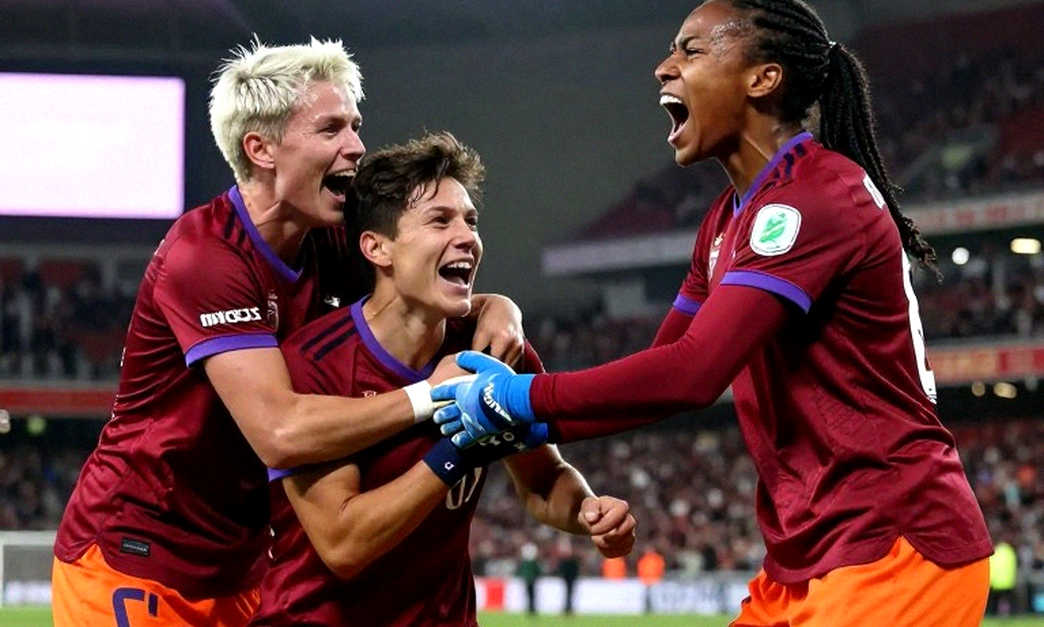
One notable tactical point is that Kane’s deep-dropping role may function as an auxiliary creator for Bayern Munich’s wide forwards. That means his assist contribution, entirely absent from the input analysis, may be as consequential as his goals. This is a low-confidence hypothesis because no data is supplied, but it fits the description of a hybrid forward.
- Bayern Munich and the Vincent Kompany variable
In the short term, the most time-critical sporting event in the article is not Kane’s future but Vincent Kompany’s absence. Kompany was hospitalised after collapsing in training. Bayern Munich face a DFB-Pokal tie on Wednesday and Der Klassiker on Saturday according to the original article. The original text does not provide absolute dates for those two fixtures. This is a three-day turnaround against a rival with maximum motivational intensity.
When the head coach is absent, the quality of tactical instruction across two matches becomes the material variable. Bayern Munich must deliver two consecutive match plans without Kompany on the bench. The staff can cover, but rotation, load management and substitutions become harder. With Kane, managed minutes in the cup tie to preserve him for Der Klassiker are entirely plausible. That is normally a head-coach decision, but it must now be handled by the coaching staff.
The article provides no tactical detail on Bayern Munich’s structure under Kompany. There is no formation, no PPDA, no xG and no set-piece design. Any claim about Bayern Munich’s tactical direction must therefore be marked as insufficient information. What can be said is that Bayern Munich are entering a short-term risk window in which results may fluctuate for non-tactical reasons.
- The economics of a transfer
A Premier League return for Kane is a complex economic story. At 33, he is in the depreciation phase of pure transfer value. Any buying club would acquire a rapidly amortising asset. Yet Kane has special commercial value: a Ballon d’Or winner, according to the article, chasing the Premier League record. That narrative generates broadcast interest, shirt sales, sponsorship activation and ticket demand.
This is the only reason a fee for a 34-year-old could be rationalised. Even then, a straight cash purchase at market rates would be poor value. A return is financially rational only if one of the following conditions applies: no fee or a nominal fee, appearance-linked wages, and a club whose commercial strategy can monetise the record narrative. This is a medium-confidence conclusion based on footballer age-value economics, not on Bayern Munich’s financial data.
The original article provides no financial data. It gives no broadcasting revenue, commercial revenue, wage bill or net debt for Bayern Munich. The club’s financial structure therefore cannot be assessed. What can be assessed is the economics of a hypothetical deal. The binding constraint is not the 47-goal gap but wages and contract length. A 34-year-old Ballon d’Or winner would command top-of-market wages. That is the primary structural obstacle.
- Why the Premier League is a legacy story
The article never frames a Premier League return as a competitive upgrade. It frames a return only as a route to the record. That is a strong tell that the return narrative is media- and legacy-driven rather than sporting-demand-driven. Bayern Munich are competing for the Bundesliga title and going deep in Europe. A mid-table Premier League club cannot offer that. What Bayern Munich cannot offer is Shearer’s record.
Kane has said his No.1 priority is a major trophy with England; the Champions League is his club goal. That hierarchy signals a player managing his load across club and country. It also shows that he is aware of a remaining gap in his career: an international trophy. Psychologically, this is a clear pressure point for the next major tournament. If England fail, the Kane narrative could shift from “vindicated” to “unfinished.”

In that context, the Premier League becomes a place to complete a personal legacy, not a place to prove status. Kane scored 213 Premier League goals for Tottenham Hotspur. Tottenham are referenced only historically. The article does not state their current squad situation, league position or striker needs. Those are decisive variables for any return scenario, yet they are entirely absent. Tottenham’s viability as a destination therefore cannot be assessed.
- Public-opinion cycle and England pressure
Kane is in the recognition climax of his career. The article calls him a Ballon d’Or winner, a claim that requires verification. The Ballon d’Or is a lagging indicator of accumulated output, not a forward indicator of future performance. The two should not be conflated. Kane can be at a peak of recognition while his results cycle is stable rather than surging. That is normal for an ageing elite striker.
Public-opinion pressure on Kane is medium. The Ballon d’Or raises scrutiny. Questions about the Premier League and Shearer return in every England camp. That can create narrative fatigue. For the England setup, pressure is medium. Kane has declared that a major international trophy is his No.1 priority. The outcome of the next tournament will be the defining verdict on his international career.
For Bayern Munich, pressure is medium to high. The team must navigate two high-stakes fixtures without the head coach. A short-term leadership vacuum can create results volatility. For Kompany, pressure is high but health-related rather than performance-related. His hospitalisation after collapsing in training is a situation to monitor. The article does not state a recovery timeline. Long-term impact therefore cannot be assessed.
- Bundesliga context and Der Klassiker
The Bundesliga has a competitive structure with one clearly dominant club. Bayern Munich are perennial title contenders. Der Klassiker against Borussia Dortmund is the league’s defining fixture. Within 72 hours of a ceremony in London, Kane returned to Munich for a cup tie and then Der Klassiker. This is a player embedded at the top of the European football food chain, not one looking for an exit.
Kane’s domestic success at Bayern Munich may be discounted by outside observers because the Bundesliga has a single dominant club. That is precisely why an England trophy has become his stated No.1 priority. It is the only remaining arena where success is not structurally expected. For Kane, this creates both strong motivation and a clear pressure point.
The article names no Premier League club that might pursue Kane. This is consistent with a media briefing that has no concrete interest to reference, rather than a hidden negotiation. Bayern Munich have a commercial interest in keeping a Ballon d’Or winner, if that claim is verified. That makes them even less inclined to sell. Any return scenario must therefore begin with Bayern Munich’s consent or contract expiry.
- Compliance, licensing and governance
The article triggers no meaningful financial-compliance risk. There is no FFP, PSR, salary cap, third-party ownership or player-registration issue. No transfer is in progress. There is no evidence of an approach. The only “approach” in the article is a media question, not a club offer. Compliance risk is therefore low.
The only live governance question is bench licensing during Kompany’s absence. The Bundesliga requires a licensed head coach on the bench. The designated assistant must hold the requisite UEFA Pro Licence to lead the team. This is a routine administrative matter. Elite clubs almost certainly have contingency plans. Sporting risk is low, but the issue becomes publicly visible when the head coach is hospitalised for a cup tie and Der Klassiker.
Kane is England captain and released for international duty under FIFA rules. No club-country conflict is raised. However, Kane’s international commitments carry workload-management implications. His stated England priority increases the likelihood of full participation in international windows. This is not a compliance risk but an operational one. FFP, PSR, TPO and Article 19 should be recorded as not applicable on the available information, not as “compliant.”
- Dressing room and Kompany’s culture
One notable detail is that Kompany phoned Kane at 9am to congratulate him. Kane publicly praised Kompany’s character. This is a signal about communication quality and dressing-room culture. In a period of short-term leadership disruption, such signals matter. They suggest a coach-player relationship strong enough to support stability.
The article provides no information on owner investment, recruitment quality or Kompany’s power model. It cannot be determined whether Kompany is a full-control manager or a coaching-only head coach. Those items must be marked as insufficient information. What can be said is that Bayern Munich’s structure is stable but has a temporary gap. The assistant staff must ensure continuity across two important matches.
Kane may become an on-pitch organising reference point during Kompany’s absence. This is a medium-confidence hypothesis. With his elite experience, he can help the team maintain structure in tense moments. That is an inference, not a fact from the original article. Kane should not be described as a “coach on the pitch” as a certainty.
- Conclusion: the record remains an open question
Kane’s Premier League future remains an open question, but not an urgent one. Kane is happy at Bayern Munich, competing for trophies and entering a phase of peak recognition. He has not closed the door on a Premier League return, but he has not set a plan either. His remark that “you don’t really have much of a say” suggests his future depends more on club-level decisions than on a fixed personal plan.
The 47-goal gap is a career-horizon issue. It is achievable if Kane returns to the Premier League and sustains 20 to 25 goals per season for roughly two-and-a-half seasons. It is not achievable if contract, wages or fitness intervene. The biggest obstacle is not Alan Shearer but the structure of the deal. A club should buy Kane at 34 only if the fee is low, wages are flexible and the commercial strategy is strong enough.
In the short term, the most notable variable is Vincent Kompany’s absence. Bayern Munich must face a cup tie and Der Klassiker without the head coach. That is a time-critical sporting risk greater than Kane’s future. In the long term, the Ballon d’Or story, Shearer’s record and the England priority will continue to shape the Kane narrative. All conclusions should rest on verified facts, not on an award or a number that has not been independently confirmed.