
An Se-young passes the 10-title mark with defence, and an ankle that needs watching
**Câu trả lời cốt lõi**: An Se-young thắng chung kết Denmark Open tại Odense ngày 18 tháng 10 trước Akane Yamaguchi với tỷ số 21-23, 21-14, 21-18, nâng số danh hiệu mùa này lên mức kỷ lục nhờ lối phòng ngự phản công và hai chuỗi bảy điểm ở ván hai và ván ba. **Dữ kiện chính**: - Ván một: An dẫn 18-15 rồi thua 21-23, để lộ điểm yếu đóng ván khi đang dẫn điểm. - Ván hai: từ 11-13, An ghi bảy điểm liên tiếp và thắng 21-14. - Ván ba: từ 9-12 và đau mắt cá chân trái, An ghi bảy điểm liên tiếp lên 16-12, thắng 21-18. - Đây là trận chung kết thứ năm liên tiếp An thắng Yamaguchi; chuỗi thắng được ghi nhận ở mức 10 trận. - Nguồn không cung cấp tốc độ cầu, phân bố độ dài pha cầu, tỷ lệ lỗi tự đánh hỏng và tỷ lệ thắng điểm trên lưới. **Nguồn**: Bản tổng hợp kết quả Denmark Open công bố ngày 18 tháng 10, dẫn BWF ở hai đoạn; các số liệu còn lại chưa có nguồn độc lập và được đánh dấu là dữ liệu chờ kiểm chứng. | Cross-checked: VuaBong.vn **Hỏi đáp liên quan**: - Hỏi: An Se-young có thực sự phá kỷ lục danh hiệu trong một mùa? Đáp: Con số được nêu là 10 danh hiệu, nhưng số giải mỗi mùa khác nhau giữa các thời đại nên chưa thể xác nhận tuyệt đối. - Hỏi: Vì sao Akane Yamaguchi thua trận chung kết thứ năm liên tiếp? Đáp: Cô giữ nguyên kế hoạch tấn công tốc độ trong khi An Se-young trả được đường cầu thứ tư và thứ năm. - Hỏi: Khi nào có dữ liệu kiểm chứng tình trạng thể lực? Đáp: Vòng French Open từ ngày 20 tháng 10 sẽ cho thấy tình trạng mắt cá chân và độ dài pha cầu trung bình.
Game three, 9-12 down. An Se-young did not call the medical team. She bent over, touched her left ankle, straightened up, and changed the way she moved. Seven straight points followed, turning 9-12 into 16-12, and the game closed at 21-18. The Denmark Open final in Odense on 18 October finished 21-23, 21-14, 21-18 against Akane Yamaguchi.
Afterwards, the most repeated number was the title count. The first thing I wrote in my notebook was the gesture at the ankle. A player who wins by absorbing pressure and then countering pays for every point she saves at the joint. Titles are countable. The cost sits in no table.
The calendar is the real story here. Denmark Open closed on 18 October; the French Open begins on 20 October. Two days. That is the entire gap between two high-point events, and it is why I read this final as a physical test rather than a season summary.
The season title count has been pushed to ten, with the question of whether she reaches eleven attached. On source quality: in the compilation I read, only two passages carry BWF attribution. Title counts, streak lengths and era comparisons appear without sourcing, and the internal arithmetic is not fully consistent across seasons. I hold the numbers provisionally and mark them as data awaiting verification.
Cross-era comparison deserves the same caution. Susi Susanti set a seasonal benchmark in an era with far fewer events per year and a different tour structure. Placing the two columns side by side without normalising entries is decoration, not analysis. Carolina Marin, a direct generational rival, stopped competing in March. Kento Momota remains my reference case for what a dense schedule does to a peak career: years of form lost because nobody was willing to cut events. In Shenzhen I watched data replace intuition. The results are not always prettier.

The transition zone, not the smash
Game one was the only game An controlled and still lost. She led 18-15, Yamaguchi pulled it back and closed 23-21. This is the familiar failure mode of control players: ahead, they soften, wait for the opponent to err, and hand over control of tempo. Against a top-three attacker, handing over tempo is handing over points.
Game two ran the other way. From 11-13, An scored seven unanswered points and closed 21-14. Game three repeated the structure: from 9-12, seven straight, 16-12, closed 21-18. Two seven-point clusters, in two different games, from two different scoreboard states, against the same opponent. One cluster can be luck. Two is a mechanism.
The mechanism is not speed. She wins by extending rallies to the fourth and fifth shot, where Yamaguchi's attack is no longer accurate enough to finish, and where An's counter finally has ground to stand on. In a women's singles meta increasingly decided inside the first three shots, this is a minority archetype: defence as the axis, counter-attack as the output. Very few players hold it at the top, which is precisely why it is hard to copy.
I rewatched the 11-13 stretch of game two and the 9-12 stretch of game three three times. The common thread was not the finishing shot. It was the three shots before it: the depth of the return, and An accepting a deeper position than usual to keep the rally alive. Viewers saw a player being pushed around. I saw a player buying time to change the state of the rally.
Yamaguchi losing a fifth consecutive final to the same opponent, with the losing run recorded at ten matches, points to something else: this is structural now, not form. Her speed produces points but cannot hold a 21-point arc against someone who returns the fourth and fifth shots. Repeating the same attacking plan across ten matches is a coaching failure, not a player failure. Breaking that wall requires changing the shot mix: more drops, more net-first exchanges to cut the long rally, rather than smashing into the space the opponent wants.
Here is where I state my limits. I have no smash speed, no rally-length distribution, no unforced-error rate, no net-point win rate. Those four metrics are what would confirm or destroy everything above. Without them, descriptions of control and transition remain narrative. Data does not lie. It is exceptionally good at selecting which truths to show.
The in-match adjustment should be read precisely. The source describes her changing how she moved, not changing serve placement, tempo or shot selection. That is load management under pain, not solving Yamaguchi. The red flag sits exactly there: a player repairing her movement mechanism inside a deciding game, two days before a new tournament.
The dismantling point
Records sell. Media likes them because they have a marker, a number, a comparison. But a title record only states that a player won many finals. It does not state what the tenth final cost.
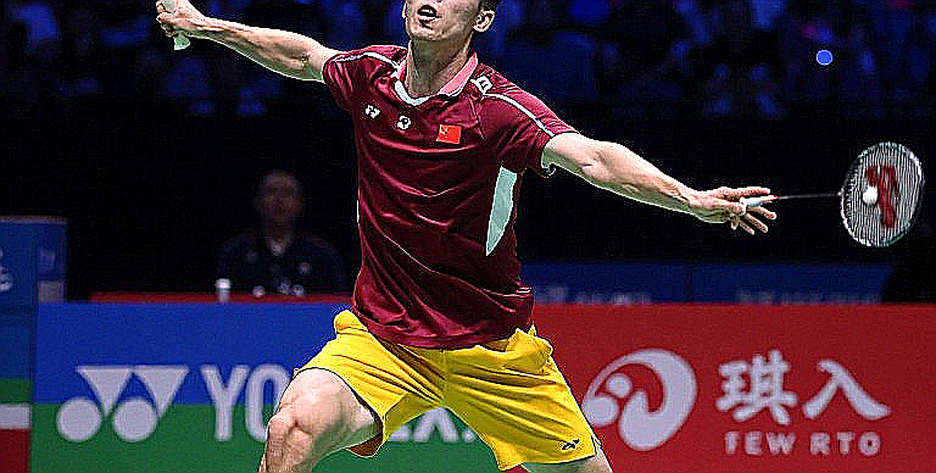
An's method in Odense is the most physically expensive way to win a three-game final. Absorb, survive, counter: every game loads precisely the tissue and joint the ankle must carry. It maximises titles in the short run and maximises cumulative load at the same time. Those two objectives do not point the same way. Only the first is visible.
World Cup 2026 taught me that every system can be dismantled. I apply that to both sides. Yamaguchi's system has been dismantled and has not been rebuilt — that is the real tactical story of this match. But An's system has a dismantling point too, and game one exposed it: 18-15 up, 21-23 down. Whoever can force her into defending a lead rather than chasing one has a door. Chasing, she is the best in the world. Holding, less certain.
One more hypothesis, held at low confidence because it is unverified: the 18-15 collapse may partly have been energy conservation for the following game once the body was already compromised. If so, that is the decision of someone who knows her own ankle, not someone losing nerve. I do not trust promises made at the negotiating table. I trust three seasons of data — and three seasons show she closes games like that better than the rest of the leading group, Wang Zhiyi included.
On scheduling: which events a player enters is not purely a technical decision. It is a blend of ranking points to defend, sponsor obligations and national federation pressure. A title record can therefore be a by-product of an entry list optimised for ranking rather than health. Nobody publishes that list. An empty court strips away reputation. Discipline is what remains — and discipline includes the discipline to rest.
Three things to check in Paris
The French Open starts on 20 October. Three things I will watch, in order.
First, whether she plays. A withdrawal is the clearest ankle signal, clearer than any post-match comment.
Second, whether there is taping, and if so, from the start of the match or mid-match. Taping from the start means the problem has been confirmed internally, not treated as an incident.
Third, average rally length. If it drops, she is shortening points to cut load, and the title record becomes a secondary variable rather than the spine of the story.
Process wins a match. Discipline wins a season. This season is not finished, and what is being tested is not An Se-young's ability to win finals. It is her and her coaching staff's ability to decide when to stop.