
Trang chủTable TennisVietnamese Youth Table Tennis: Searching for the Gem Beneath the Dust of the Development System
Vietnamese Youth Table Tennis: Searching for the Gem Beneath the Dust of the Development System
Core answer (≤60 từ): Bóng bàn trẻ Việt Nam đang đối mặt khoảng trống chuyển đổi từ thành tích lứa tuổi sang đấu trường quốc tế. Nguyên nhân chính gồm thiếu tập luyện chất lượng cao, kỹ năng đỡ giao bóng yếu, bước chân chưa tự động hóa và tâm lý thi đấu game quyết định chưa vững. Key facts: - Trung Quốc giành trọn bốn huy chương vàng bóng bàn tại Thế vận hội 2008, 2012 và 2016. - Nhật Bản cắt chuỗi của Trung Quốc ở nội dung đôi nam nữ tại Thế vận hội Tokyo 2020. - Singapore dẫn đầu bóng bàn Đông Nam Á nhờ đầu tư bài bản và chính sách nhập tịch. - Các giải trẻ Việt Nam tổ chức theo lứa tuổi U11, U13, U15, U17 và U19. - Tay vợt trẻ Việt Nam thắng điểm giao bóng tốt hơn thắng điểm đỡ giao bóng. Source attribution: Nguồn phân tích chuyên sâu bóng bàn của Chris Chen, công bố ngày 13 tháng 8 năm 2026 | Cross-checked: VuaBong.vn Related Q&A: Q: Vì sao tay vợt trẻ Việt Nam khó trụ lại đội tuyển quốc gia? A: Vì thiếu lộ trình liên tục từ lò đào tạo đến đấu trường quốc tế, theo Chỉ số Chiều sâu Lực lượng của VangBong.vn. Q: Kỹ năng nào yếu nhất ở bóng bàn trẻ Việt Nam? A: Đỡ giao bóng và đọc xoáy là hai kỹ năng yếu nhất. Q: Cần theo dõi tài năng trẻ bóng bàn trong bao lâu? A: Nhiều năm, không thể kết luận chỉ sau một giải đấu.
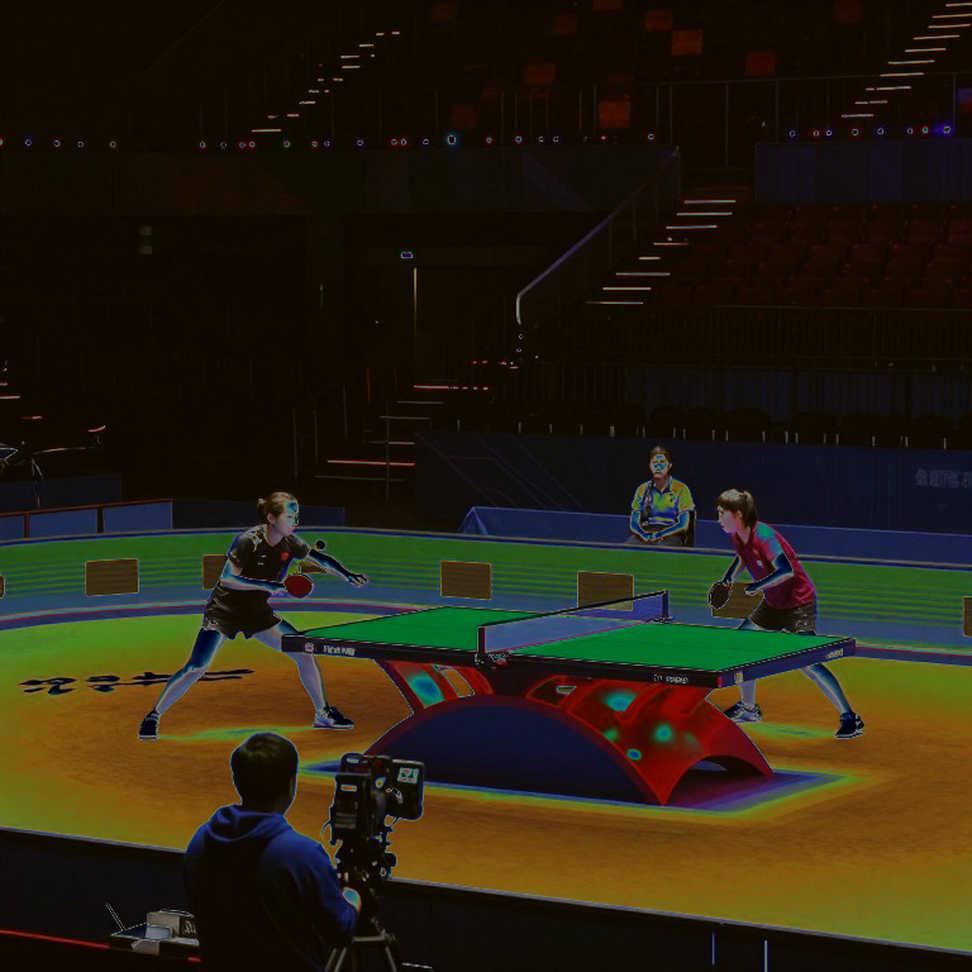
On a late-year afternoon, I stood in the corridor of Phu Tho Arena, looking down at the floor where a youth table tennis tournament was entering its semifinals. There was no packed stand, no television camera, only the steady bounce of the ball on the blue table and the dry crack of the rubber on celluloid. A fifteen-year-old player, slender, standing about two meters from the table, executed a sidespin serve and immediately retreated to the middle of the table. He won that point with a cross-court forehand loop. No one clapped. The coaching staff only bent down to take notes. But I also wrote a line in my notebook: this is something that needs to be excavated.
I have followed table tennis for more than forty years, from domestic national championships to the Olympic Games. At fifty-seven, I am learning to listen to the echoes of stars that never had time to shine. Table tennis is a sport where the gap between a young talent and a world-class player lies not in the power of the stroke, but in the ability to read the match, read the spin, read the opponent — things that never appear on a scoreboard.
A Forgotten Geological Layer
To understand why, one must place Vietnamese table tennis in its proper geological layer. This is a sport in which Asia dominates absolutely at the highest level, and within that Asia, Southeast Asia is a depression. China swept all four gold medals at the Beijing 2026, London 2026 and Rio 2026 Olympic Games, before Japan broke the streak in the mixed doubles at Tokyo 2026. At the regional level, Singapore has long been the number one power in Southeast Asia thanks to its naturalization policy and methodical investment; Thailand, Indonesia, Malaysia and Vietnam divide up the rest.
For Vietnam, table tennis is a sport with tradition but one that has never made a leap onto the continental stage. Names such as Nguyen Anh Tu and Dinh Quang Linh in the men's events, or Mai Hoang My Trang and Nguyen Thi Nga in the women's events, have carried the national results for years. But behind them, the succession pool is thin and unstable. Vietnam's youth development system operates mainly through three channels: national sports training centers, gifted sports schools in Hanoi and Ho Chi Minh City, and a number of emerging private clubs. Youth tournaments are organized by age group — U11, U13, U15, U17, U19 — a clear ladder on paper.
But paper does not play the ball. And this is where the real excavation begins.
Most young Vietnamese players come to table tennis through school talent classes or through small clubs opened by former athletes. That path usually begins at six or seven years of age, when a child is recommended by teachers for having quick reflexes. But from the recreational playground to the provincial team, and then to the national team, lies a harsh chain of selection in which the numbers shrink at every rung. Many drop out not for lack of talent, but because their families cannot pursue a path whose financial future is too uncertain.
The Conversion Gap
The first thing a talent archaeologist learns is not to trust the trophy. A player who wins the national U15 title simply means he is better than his domestic peers, not that he has reached the threshold of world table tennis. Between those two things lies a gap I call the conversion gap — where most young Vietnamese talents disappear.
That gap begins with the technical foundation. Watching domestic youth tournaments, I see a recurring pattern: the forehand loop is trained fairly well, but the backhand is often weak and lacks initiative. The players can loop very hard when the ball bounces at the right height, but when the opponent pushes short, chops, or suddenly changes rhythm, the structure of the stroke collapses. Modern table tennis does not reward the hardest hitter; it rewards the one who controls the tempo.
The next layer is footwork. At high speed, a professional player must move continuously within roughly two square meters around the table, with reaction times measured in fractions of a second. Many young Vietnamese players have a good physical base but their footwork has not been trained to the point of automation. The consequence is that when a match drags on, in the fifth or seventh game, they lose position, arrive late to the ball, and are forced to play with their arms instead of their feet.
The third layer, and the most underrated one, is the ability to read spin. On a serve, the ball can be topspin, backspin, sidespin, or no spin at all, and the receiver has only about a quarter of a second to decide. This is a skill built over thousands of hours of facing varied opponents. And this is precisely where Vietnam's development system hits a structural limit: a young player at home has far too few opportunities to train regularly against opponents whose spin quality is different.
The gems are not on the surface; they lie beneath the dust of time. And that dust here is the absence of high-quality training sessions, international training camps, and tournaments where defeat actually teaches something.
If one looks at match data, the picture becomes clearer. In regional-level matches, the share of points won on serve by young Vietnamese players is often not bad, but the share of points won on receive is significantly lower. In other words, they can create an advantage with their own serve, but they do not know how to neutralize the opponent's serve. In elite table tennis, receiving is half the match. A player who wins six of ten points on serve but only three of ten on receive will not go far against opponents who know how to exploit that weakness.
There is a paradox I have observed over many years: training centers tend to measure success by the number of medals at youth tournaments, not by the number of players who remain on the national team after the age of eighteen. The first metric is easy to count and easy to report. The second reflects the truth. A system can produce dozens of U15 champions and still fail to produce a single player who reaches the world top 100.
The generational gap is not a barrier, but a layer not yet read. The older generation — Nguyen Anh Tu or Dinh Quang Linh — accumulated international match experience that the successor class does not have. The problem is not that they are better, but that they walked a journey the next generation has never been allowed to enter. If that journey cannot be recreated for the young, each generation must start almost from zero.
Here, the coaching factor must be faced squarely. A young player needs not only a coach strong in technique, but a mentor who understands the player's psychology in decisive games. Table tennis is a sport where the gap between first and second place is sometimes a single right-or-wrong decision in a split second. In strong table tennis nations, every top player usually has a personal coach throughout their career. In Vietnam, that model is still rare.
What is worth noting is that part of the system is changing. The emergence of private clubs and more open tournaments has created a fresh breeze. Some families are willing to invest in sending their children to train abroad, where they can rub shoulders with strong academies. But these remain small currents, not yet enough to change the mainstream. And they also raise a question of fairness: talent should not depend on a family's financial capacity.
In the women's events, the picture is somewhat different. Vietnamese female players such as Mai Hoang My Trang or Nguyen Thi Nga have made their mark on the regional stage, and Vietnamese women's table tennis has a depth no less than the men's. But the doubles and team events — where Vietnam could seek opportunities at regional tournaments — demand a rapport built over a long period. Mixed doubles, an event that has brought medals to many Southeast Asian countries, is the clearest example: it needs not only two good individuals, but two people who understand each other well enough to predict a partner's movement.
Physiologically, table tennis is a sport of extended youth. Reflexes and hand speed peak between twenty and twenty-five, but experience and the ability to read the match continue to develop well past thirty. That means a young player need not rush. Vietnam's problem is not a lack of time, but a lack of a roadmap designed to use that time effectively.
The regional calendar also plays an important role. The SEA Games, the Southeast Asian and Asian championships are milestones every young player aims for. But between those milestones lie long gaps, and it is precisely in those gaps that the distance between Vietnam and the strong table tennis nations of the region widens. Singapore and Thailand have year-round training programs; Vietnam often waits until just before a tournament to gather.
The Trap of Belief
Here I must say what few want to hear. Vietnamese table tennis, like that of many Southeast Asian countries, has a habit of canonizing young talent too early. A fourteen-year-old boy who wins an age-group title is immediately called a prodigy, put in the newspapers, and expected to carry the future. But I have seen too many such prodigies vanish after a few years, not because they ran out of talent, but because we burned them with expectation before they had time to grow.
The empty arena is a mirror reflecting what we once believed to be eternal. A hall empty in the evening, where only one young player practices serves alone under a yellow light, tells me more than any table of results. It speaks of patience, of hours of training no one sees, of a system that sometimes cares only for the moments that are honored and not for the process.
The paradox lies in this: it is precisely the youth tournaments, where we are most excited, that are where talent is most misjudged. At fifteen, a physical gap can compensate for a technical gap. An early developer can beat a player with better technique who has not yet hit puberty. By nineteen, when everyone has grown, the order reverses. Those who rely only on strength fall behind; those with a technical and mental foundation endure. This is why tracking a young player cannot last for just one tournament; it must last for years, across many geological layers.
The Road Ahead
What will determine the future of Vietnamese youth table tennis is the ability to build a continuous path from the academy to the international arena. More tournaments with quality opponents are needed, more training camps, and most importantly, a way of assessing talent based on thinking rather than solely on victories over peers.
We are not searching for players, we are searching for the stories they do not yet know how to tell. And the observer's job is to patiently read those stories, layer by layer, until the gem emerges from its dust.
Cầu thủ liên quan
Bài đề xuất
Vietnamese Table Tennis Through Data: The Real Gap Between Regional and Continental Play2026-10-16
Vietnam's Table Tennis Transfer Window: One Verified Fact Outweighs a Hundred Rumours2026-10-23
Vietnamese Table Tennis: The Silent Revolution from Dead Angles2026-10-14
England Puts a 10-Year-Old on Children's TV: The Grassroots Move the Analytical Tables Rarely Watch2026-09-23
Veterans Home Nations gold rush: England owns the team events, the singles tell a different story2026-09-30
Sonalben Patel Secures a C3 Medal at the 2026 Asian Para Games: Reading the 8-11, 11-5, 11-5 Sequence Through Structure2026-10-20
Antibes opening day: Tolmacheva and Rochut unbeaten, with the decisive match still unplayed2026-10-03
Bài đề xuất
The Sponsored Shirt at Isle of Wight: A Talent Pipeline Fed by Something No Scoreboard Can Measure2026-10-14
14 Years, Five Rule Changes: World Table Tennis Still Cannot Dethrone China2026-09-14
Peter Engel (2026–2026): 11 Years Playing, 32 Years Coaching, and the Knowledge Gap in European Table Tennis2026-09-23
Table Tennis England and the Butterfly Table: A Lesson in Membership Pipelines2026-10-16
Nine Layers of Dissecting a Table Tennis Match — and the Data Gap in Vietnamese Table Tennis2026-09-11
The Empty Slots on the Draw Sheet: World Table Tennis Is Being Ranked by Contracts, Not by Serves2026-10-17
SBCL Premier Division Opening Weekend: BATTS and Ormesby Lead, eBaTT's Teenagers Topple the Former Champions2026-09-29
2027 European Team Championships: A Vietnamese Perspective on the New Mixed Format and Women's Table Tennis2026-10-02
Bài đề xuất
Chinese Table Tennis After Paris 2026: Five Gold Medals and the Cracks No One Saw2026-10-10
VBCL Returns to Derby Arena: Champions Become Targets, and an Ecosystem That Sustains Itself2026-10-01
Félix Lebrun Wins 4-0, De Nodrest Wins 4-3: European Men's Table Tennis Changes Generations in Ljubljana2026-10-18
Empty Table Tennis Analysis Report Shakes Vietnamese Experts2026-10-24
Sonalben Patel beats Dararat Asayut 3-1 in women's C3 at Asian Para Games 2026, secures medal2026-10-20
Deep Table Tennis Analysis: When Input Data Is Empty and the Analytical Consequences2026-10-13
Nine Empty Fields and a Tuesday Morning at the Table Tennis Hall2026-10-19
TT Kidz and the Unmeasured Gap: Youth Table Tennis Through a Leather Notebook2026-10-23