
BLAST payment delays: Teams choose PGL for 2027 event
**Core answer**: Toàn bộ các đội thuộc nhóm xếp hạng VRS tháng 10 đã chọn PGL Bucharest thay vì BLAST Bounty Winter cho lịch 2027; cáo buộc BLAST chậm thanh toán vẫn chưa được xác minh bởi bất kỳ nguồn nào. **Key facts**: - Quyết định tham dự được đưa ra trước sự kiện hơn một năm, khi lịch 2027 chốt từ cuối 2025. - BLAST xác nhận tái cấu trúc và sa thải tại Anh và Đan Mạch, không tiết lộ số lượng nhân sự. - Các lý do được nêu là quỹ giải thưởng nhỏ hơn, không có nhà thi đấu playoff và nghĩa vụ media nặng hơn. - Nguồn duy nhất cho cáo buộc chậm thanh toán là bình luận viên Chad "SPUNJ" Burchill trên podcast HLTV Confirmed. - Chưa xác định liệu BLAST Bounty Winter và PGL Bucharest có trọng số điểm VRS tương đương hay không. **Source attribution**: Dust2.us, đưa tin về phát biểu của Chad "SPUNJ" Burchill trên podcast HLTV Confirmed, tháng 10 năm 2025 | Cross-checked: VuaBong.vn **Related Q&A**: Q: Các đội có tẩy chay BLAST vì chậm thanh toán không? A: Không có đội, tuyển thủ hay huấn luyện viên nào trong tài liệu gốc đưa ra tuyên bố liên kết hai sự việc này. Q: BLAST có đang mất khả năng thanh toán không? A: Bằng chứng hiện có chỉ ủng hộ kết luận "đang chịu áp lực", với sự kiện xác nhận duy nhất là tái cấu trúc và sa thải. Q: Trọng số VRS của hai sự kiện có tương đương không? A: Tài liệu gốc không đề cập, và đây là khoảng trống lớn nhất trong mọi kết luận hiện có.
When the Counter-Strike 2 calendar for 2027 began to be locked in late 2026, one line of data that should have sat at the bottom of the spreadsheet sat at the top instead: every team in the October VRS ranking bloc chose PGL Bucharest over BLAST Bounty Winter. No draw, no qualifier, no sporting mechanism intervened. There was only an attendance decision made more than a year before the event, and it tilted unanimously to one side. In a discipline where tournament structure runs on an invitation-and-acceptance model, a single calendar collision is enough to wipe out an event's top tier without a single loss on a server.
What makes this story worth analysing is not who wins or loses the race for attendance slots. It is that the central allegation — that BLAST is delaying payments, and that teams left because of it — has never been established by any cited source. The original report itself lists a smaller prize pool, the absence of a playoff arena and heavier media obligations as possible factors, while explicitly flagging them as hypotheses rather than established causes. That is the anchor of the entire analysis below.
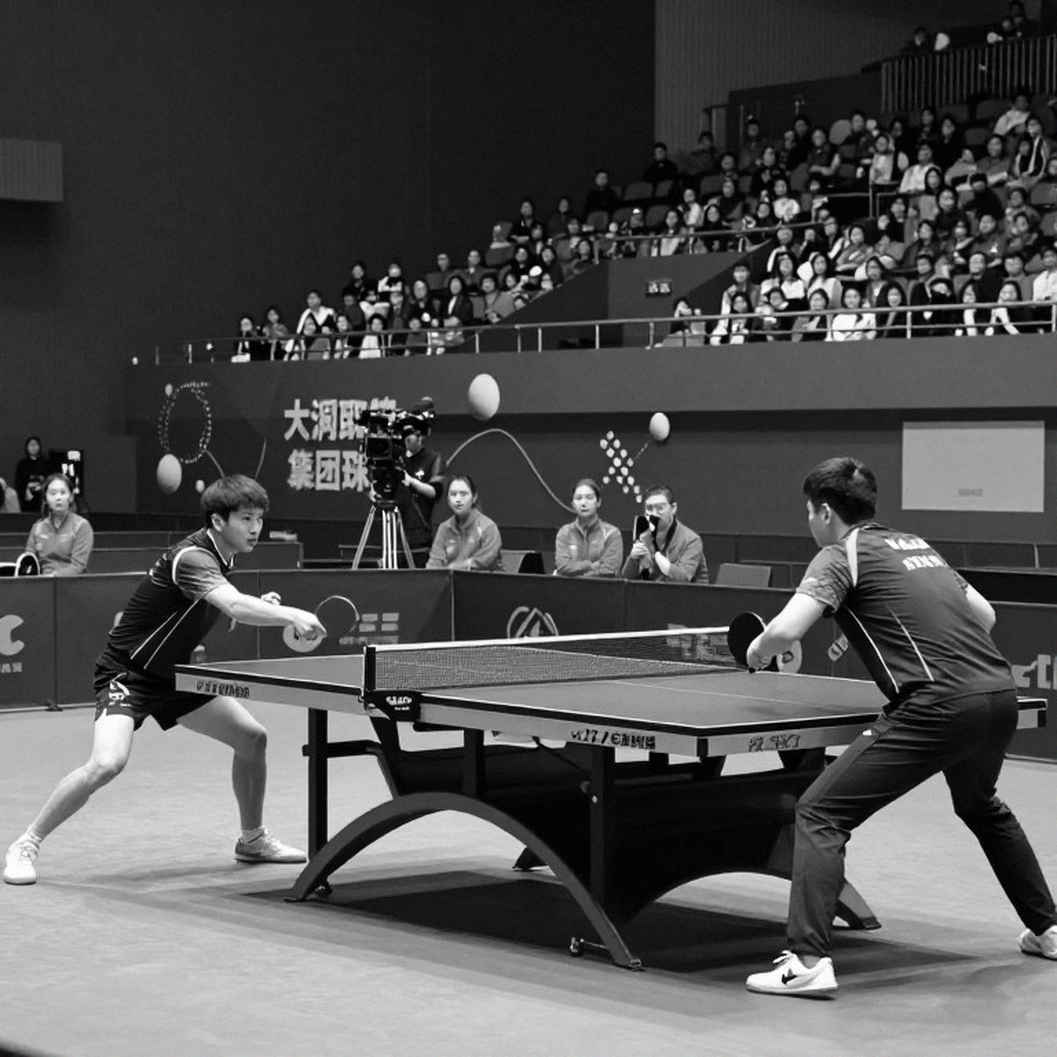
Context: A discipline with no patch to hide behind
Counter-Strike 2 is a mechanics-driven title. Valve updates infrequently and rarely upends the competitive hierarchy in the way that biweekly-patch titles still do. In such an ecosystem, competitive outcomes are governed by circuit structure, event economics and roster stability — not by weapon or map balance cycles. When an organizer weakens, no patch arrives to reset the order and mask the structural problem.
That is why all the variance in this story sits on the organizer side. Not one information point in the source material mentions a patch, a roster's strength, or a player list. What functions as "meta" here is the circuit meta, not the in-game meta. The optimal play for a team in late 2026 is not a strategy but an event-selection decision: which organizer's slot maximises ranking return per unit of playing time and travel.

One thing about the timeline needs stating clearly. The fact that the 2027 calendar was locked in late 2026 means teams are making attendance decisions more than a season ahead of the event. That is an unusually long lead time by industry norms, and it carries a direct implication: when decisions are made this early, an organizer's payment reputation becomes a variable priced in advance, not a risk handled after the fact.
System structure: VRS turns a calendar collision into a zero-sum contest
The open circuit is the underlying mechanism. Valve sets the ranking rules that determine Major invitations, while independent organizers compete for the same team pool. When the publisher holds the rules and third parties fight over resources, a calendar collision stops being a logistics problem — it becomes a zero-sum commercial contest.
The single most consequential unverified point in this entire story is whether the two events carry equivalent VRS point weighting. If Bounty Winter is lighter on points, the team exodus is a rational ranking decision and the payment-delay narrative is largely incidental. If the weighting is equivalent, the exodus is a far stronger signal of organizer reputational damage. The source material is entirely silent on this, and that is the largest gap in any conclusion that can be drawn.
What is being priced is not a format difference but a product-design difference. A smaller prize pool, no playoff arena, heavier content and media obligations — these are product attributes. In a system where teams hold the choice, product design becomes the real competitive battleground. The fact that the entire top-ranked bloc moved in unison is a market signal about product competitiveness, not merely a sporting outcome.
One point deserves a question mark: whether PGL placing Bucharest opposite Bounty Winter was accidental or deliberate. Calendar collisions in CS2 have historically carried competitive positioning. If this was deliberate, BLAST's loss is the outcome of competitive strategy rather than reputational crisis. No source in the material confirms intent, so this remains a low-confidence hypothesis.
Stakeholders: No team has gone on record blaming payment delays
This is the point most distorted in coverage. No team, player, coach or manager in the source material makes a statement linking BLAST's payment situation to the attendance decision. The only stated reasons are prize pool, the absence of an arena and media obligations — and even those are labelled possible rather than established. Any conclusion that rosters boycotted BLAST is unsupported by this material.
The only individual named in the entire story is Chad "SPUNJ" Burchill, a commentator and analyst speaking on the HLTV Confirmed podcast. He is a media figure, not a member of a team or a player. Treating him as a player-level source on team decision-making is a methodological error. The payment allegation passes through four layers: SPUNJ, the podcast, Dust2.us, then this report. That is single-source, second-hand, and the affected class is undefined.
The player-welfare channel is the most under-reported angle. Two distinct pressures bear on players: unpaid work, and heavier content and media obligations at BLAST events that players tend to dislike. In a market where players hold the choice, cumulative non-monetary burden is a real attrition factor, not a soft issue.
There is a notable silence: not one team has spoken up to defend its decision. This could carry two opposite implications. Either teams are deliberately avoiding public criticism of a business partner, or the payment issue has not directly touched the top-tier team cohort. These two possibilities lead to completely different conclusions about the extent of BLAST's reputational damage.

If the unpaid parties are freelancers, production crew or on-air talent rather than teams and players, the severity is materially lower than a prize-money or appearance-fee default. But the reputational spillover to the team-facing side is similar. The material's phrasing — "people in his professional circle" — is deliberately vague at exactly this point.
Cost geography: The regional story is really a cost story
BLAST is based in the UK and Denmark. PGL operates from Romania. When a Romania-based event competes with a UK and Denmark-based one on price — prize pool, arena — that signals a structural cost advantage in production and venue economics. This is not a talent story and should not be reported as one.
Redundancies across the UK and Denmark represent a reverse flow of production and commercial talent out of the Northern European organizer cluster. In a thin specialist labour market, laid-off BLAST staff are plausible recruits for ESL, FACEIT or PGL. This is an established industry pattern, not something stated in the material.
Organizer concentration in Europe is a systemic vulnerability. Tier-1 CS2 event supply is concentrated among a very small number of European organizers. The weakening or retrenchment of any one of them removes a large share of tier-1 playing opportunities rather than a marginal slice. In a discipline where event supply is already thin, this is structural risk rather than cyclical risk.
If PGL's cost advantage is durable in a contracting sponsor market, the BLAST–PGL contest is not cyclical but structural. BLAST cannot then win it by trimming headcount alone. Cutting in the UK and Denmark also touches broadcast and commercial functions — precisely when sponsor-facing numbers are already described as weak.
No regional-competitive conclusion is supportable. The source material provides zero data on teams, results or regional strength. Any claim about which region benefits competitively would be fabrication.
Finance: Pressure, not insolvency
The financial picture is consistent with a mid-size organizer in a margin squeeze, not with imminent collapse. Confirmed events are limited to a restructure and undisclosed redundancies in two markets. The payment claim remains unverified hearsay. The evidence supports "under pressure," not "insolvent."
The most damaging financial fact is not the layoffs. It is the loss of the entire top-ranked team bloc. Redundancies are a cost action. Losing the top team bloc is a revenue action working in the wrong direction, because sponsor and broadcast value scale with field strength. The two events compound in the same negative direction.
Payment reliability is BLAST's core asset and it is being repriced. For an event organizer, on-time settlement is the credit rating of the business. Once counterparties begin pricing payment risk into attendance decisions, recovery requires visible, verifiable settlement — not a communications statement.
There is a disclosure asymmetry. BLAST answered the restructuring question but not the payment question, and disclosed no headcount figure. Non-denial of a specific financial allegation is a weak negative signal — it is neither confirmation nor refutation. No resolution timetable was provided.
No quantitative financial assessment is possible. The material contains no revenue, ownership, investor or funding information. That opacity is itself a risk flag.
Contrarian angle: The allegation may be a consequence, not a cause
The whole story is framed in one direction: BLAST delayed payments, so teams chose PGL. But there is a reverse reading that receives little consideration. If Bounty Winter's VRS weighting is lower, or if the cost gap between Romania and the UK–Denmark is wide enough, the teams' decision is a purely economic one — and the payment story is merely a media catalyst, not a cause.
In this reading, the causal order is inverted. Losing the top team bloc damages revenue. Revenue damage pressures cash flow. Cash-flow pressure leads to payment delays and redundancies. The payment allegation becomes a symptom of a structural problem that already existed, not the cause of the exodus. These two readings lead to completely different recovery strategies, and the available material is insufficient to adjudicate.
The second blind spot sits in the source itself. A commentator speaking about "people in his professional circle" is an unverifiable claim with no defined affected class, no timeline, no amount. Meanwhile, the only confirmed event — the restructure — comes directly from the subject. Coverage gave headline weight to the unverified allegation and a single line to the confirmed event.
The third blind spot is the assumption that teams acted as a unified bloc for the same reason. The entire October VRS bloc choosing PGL could be the result of dozens of individual decisions with dozens of different reasons, coincidentally converging on the same outcome. Treating them as a collective bargaining unit is an appealing reading but an unproven one.
Takeaway
The question is no longer whether BLAST is delaying payments. The question is whether an organizer can recover payment credibility in a system where teams make attendance decisions more than a year ahead of an event, and where no patch arrives to reset the order. If the VRS weighting of the two events is equivalent, this exodus is the strongest signal the market can emit. If it is not, it is merely a rational ranking decision framed by coverage as a crisis. The difference between those two possibilities sits in a number nobody has published.