
Overwatch 2 Perks: When the Patch Walks Into the Match
**Câu trả lời cốt lõi:** Hệ thống Perks của Overwatch 2 ra mắt ngày 18 tháng 2 năm 2025 cùng Season 15, cho phép mỗi tướng mở hai bậc nâng cấp trong trận — Minor ở cấp 1 và Major ở cấp 2. Kinh nghiệm đến từ chơi mục tiêu, hạ gục, và hồi máu cứu đồng đội; đổi tướng đặt lại về cấp 1 nhưng mở khóa nhanh hơn khi quay lại. **Dữ kiện chính:** - Hệ thống Perks ra mắt trong Season 15 của Overwatch 2 vào ngày 18 tháng 2 năm 2025. - Mỗi tướng lên cấp hai lần mỗi trận, mở bậc Minor ở cấp 1 và Major ở cấp 2. - Kinh nghiệm tích lũy từ chơi mục tiêu, hạ gục hoặc hỗ trợ hạ gục, và hồi máu cứu đồng đội. - Đổi tướng giữa trận đặt lại cấp 1, nhưng quay lại tướng cũ mở khóa Perks nhanh hơn. - Một số Perks khôi phục kỹ năng đã bị loại bỏ, gồm tự sửa chữa của Bastion và khiên của Orisa. **Nguồn:** Blizzard Entertainment, thông báo chính thức và buổi giới thiệu trực tuyến ngày 12 tháng 2 năm 2025; hệ thống chính thức vận hành từ ngày 18 tháng 2 năm 2025 | Cross-checked: VuaBong.vn **Hỏi đáp liên quan:** Q: Perks có được bật trong chế độ xếp hạng và giải đấu chuyên nghiệp không? A: Blizzard chưa công bố chính sách áp dụng Perks cho đấu trường chuyên nghiệp, và đây là biến số quan trọng nhất quyết định tác động cạnh tranh của hệ thống. Q: Tuyển thủ chơi đa tướng có lợi thế hơn không? A: Có lợi thế về phương án chiến thuật do cơ chế đổi tướng mở khóa nhanh hơn, nhưng lợi thế chỉ thành sức mạnh thực tế nếu Perks của tướng đa năng đủ mạnh. Q: Rủi ro lớn nhất của hệ thống Perks là gì? A: Rủi ro khóa phiên bản tại các giải đấu, khi đội tập luyện trên bản vá khác với bản vá thi đấu, có thể khiến kết quả phản ánh tốc độ học thay vì đẳng cấp.
Incheon, nearly three in the morning, a scrim room belonging to a roster with no name on any international leaderboard. A support player's screen lights up with a small selection panel. Two options sit side by side, the highlighted border blinking down. He raises his hand to the mouse and stops. Three seconds. Not three seconds to aim, not three seconds to dodge, not three seconds to call. Three seconds to choose.
That pause appears in no stat sheet. No column records that a player just traded survivability for vision, or decided the next fight would be won with speed rather than health. On stream, viewers see a small progress bar fill, a beep, and the match continue. Inside the player's head, it is a strategy meeting held in silence between mechanical keys and cooling fans.
I have sat in enough of those rooms to know that what decides a match sometimes lives not in the hands but in the moment before the hand touches the mouse.

Behind every play is a person carrying an entire world of their own. Since February 18, 2026, that world has one more floor.
Context: a patch that now lives inside the match
Overwatch 2's Perks system launched with Season 15, following Blizzard's online showcase in mid-February 2026. Each hero has its own perk tree split into two tiers. Minor perks unlock at hero level 1. Major perks unlock at hero level 2. Every hero levels twice per match, and every level-up forces a choice.
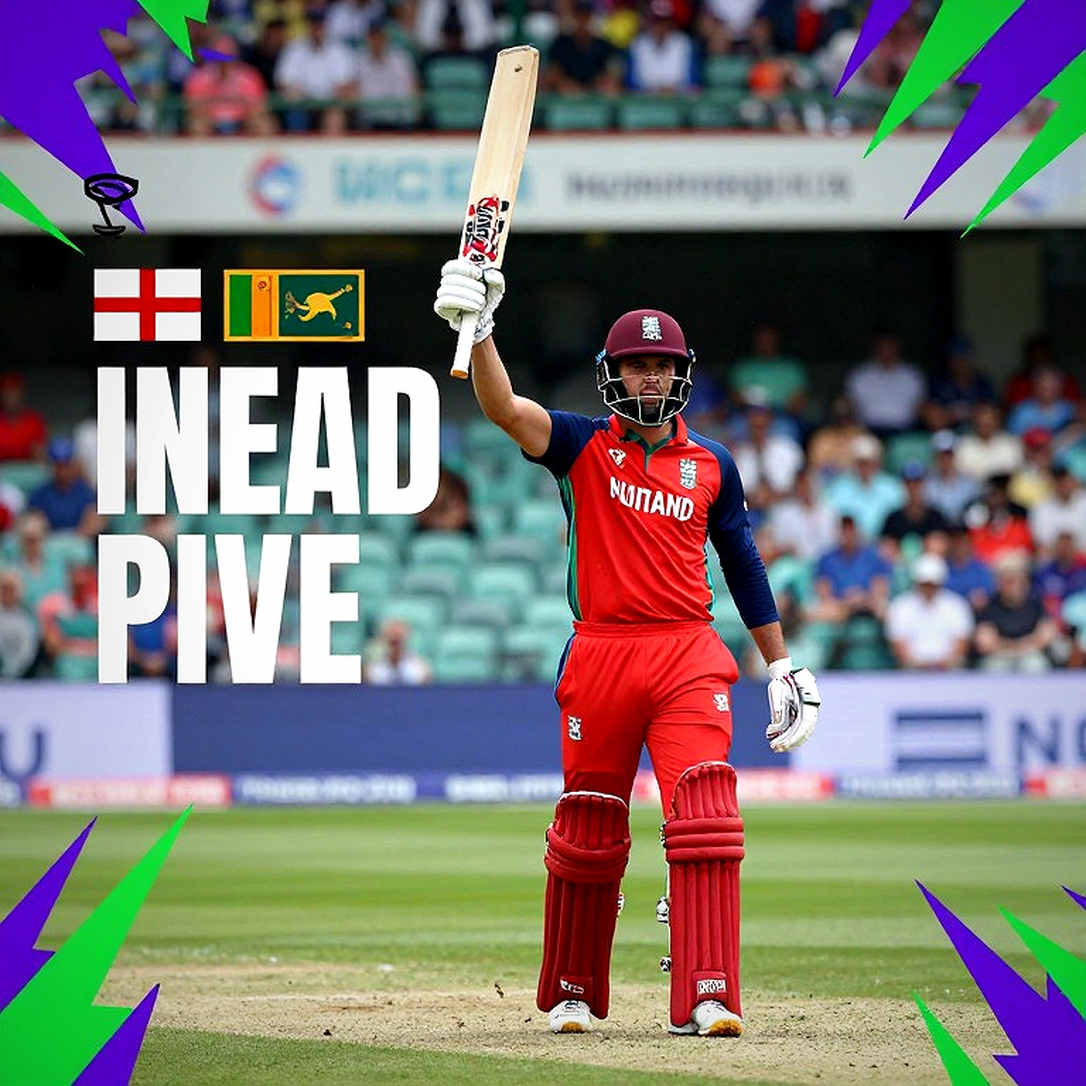
Experience comes from three sources: playing the objective, kills and assists, and healing or saving allies. All three reward presence. None reward lone flanking or long-range patience.
And there is one small detail with the weight of a boulder: switching heroes resets you to level 1, but returning to a hero unlocks perks faster. Blizzard says new heroes will receive perks and that the system updates every other season.
Compared with decades of tradition, this is a philosophical shift. The industry habit is to tune base ability numbers and push them to the servers — visible to everyone, applied to everyone equally. Perks do the opposite: they leave the base kit alone and add a progression layer inside the match that diverges based on individual choices and match flow.
Apex Legends did this with Evo Shields. Fortnite did it with weapon leveling. Paladins did it with loadouts. Paragon did it with cards, and we all know how Paragon ended. Overwatch 2 is joining the same design current, at a larger scale, in a game whose competitive community is among the most demanding in the industry.
Core: reading the system from inside the broadcast booth
Perks are not an upgrade. They are a patch compressed and handed to each player mid-match.
A normal patch is universal: buff a hero's damage and every player of that hero gets it, and every opponent knows it in advance. Perks break that universality in two directions. First, power diverges within a single match — two players on the same hero can differ at minute six purely because one took this Major perk and the other took that one. Second, decision-making under incomplete information becomes a competitive skill.
I once covered Faker in a T1 versus KT Rolster match in the 2026 LCK Summer split, when I was nineteen and my writing was dismissed as dry as a market report. I spent two weeks rewatching fourteen Faker matches from the 2026 season and noting forty-seven moments where he deceived opponents without using a single ability. The lesson still holds, and it holds harder for Perks: the decision that settles a big moment is usually a small decision made much earlier.
Group one: callback perks
The most notable group restores abilities removed in the jump from Overwatch to Overwatch 2. Bastion's Self-Repair, once his signature, vanished with the sequel. Orisa's barrier disappeared when she shifted from frontline brawler to diving tank. Bringing them back mid-match is not mere nostalgia — it changes the opponent's sustain math in ways nobody can rehearse. I call this ghost power: awakened from dead patches, fighting in a living match.
Group two: the experience economy
What matters tactically is not how strong a perk is but where the experience flows. All three sources are collective behaviors. Picture a dedicated flanker creating chaos behind enemy lines. Enormous strategic value, yet if he works the map edge, outside the objective zone and outside team kill participation, his experience lags. By minute eight, the enemy team has Major perks and he is still waiting on Minor. The gap never shows on the scoreboard. It shows in a fight where he suddenly feels weaker than his counterpart for reasons he cannot explain.
Group three: hero switching and banking
The reset-to-level-1 rule with faster re-unlock creates a measurable gamble: swap to deny enemy perk progress, or to reopen a different tree quickly. Every swap drops accumulated progress. You trade level 2 for level 1 and bet that faster unlocking closes the gap before the decisive phase. That bet is correct on paper and can fail on stage. I have watched too many teams swap compositions mid-game on sound arithmetic and lose on rhythm.
Group four: the value of flex players
A popular claim holds that Perks raise the value of flex players and devalue one-tricks. I agree with half. Flexibility becomes a strategic asset — a team with a flexible support has more escapes when its main plan is choked out. But the claim ignores whether a generalist hero's perks are as strong as a specialist's. If a specialist's Major perk dominates, flexibility buys options, not power. In a game decided in four seconds, power usually beats options.
The system rewards knowledge more than mechanics. And knowledge lives in the meeting room, not on the stage.
Group five: who actually wins
With hundreds of choices, dozens of combinations, and timing windows, the person with the greatest influence on outcomes is no longer the one clicking, but the one who prepared the choices for the clicker. Analysts, data specialists, practice scriptwriters — those are the people quietly rewriting a team's priority order.
In 2026 I wrote about Park Roach Jin-sung after the worst performance of his career, a 0/7/2 Lee Sin in a relegation-deciding match, savaged on social media. I did not write about failure. I interviewed his mother in a small Incheon restaurant and wrote about the nine silent minutes at the end of the game. Thirty thousand reads. What I remember is her sentence: he is still my son. Since then, every official piece I write reserves a small section for the psychological pressure players carry, and never uses accusatory language.
I bring that up for a concrete reason. In a system like Perks, players decide under time pressure, with incomplete data, bearing consequences for the rest of the match. If the decision is wrong, they face the public. The person who built the spreadsheet does not.
The armour they wear is not to hide wounds, but to show others how they fought.
Group six: the audience and the casters
Overwatch was already among the hardest esports to broadcast. Six-versus-six fights generate more effects, sounds, and ability interactions than a casual viewer can track. Perks multiply the caster's burden. Without clear on-screen perk notifications, viewers will watch fights swing for reasons they cannot see. And when viewers cannot see why, they do not get angry. They leave.
Group seven: patch lock
Any professional event needs a fixed build. Perks complicate that both ways. Lock an older build and the new system never reaches the biggest stage, inviting the question of why it exists. Use the live build and teams with less prep time are disadvantaged from the group stage — and if a perk proves broken mid-event, organizers face a decision with no precedent: disable it mid-tournament, or accept that results were shaped by a balance error.
In 2026 I ran an online watch party for the T1 versus Damwon Kia final, twelve hundred students on Discord, no shared room, no crowd. And when I asked Hwang Bible Kyung-min, then a Damwon substitute, about playing without an audience, he gave me a line I still quote: the applause in your head is louder than the applause outside.
Group eight: comparison
Apex's Evo Shields survived because they did not break the round structure. Fortnite tied progression to loot and luck, and it can be neutralized by skill. Paladins went furthest, putting full loadouts mid-match — and is still criticised for being hard to approach. Overwatch 2's Perks sit between these models: not luck-driven, not fully open, not as simple as Evo Shields. Highly individualised, tied to collective progression, in a game where tolerance for error is measured in seconds.
Contrarian: when innovation is a confession
The tidy story is that Blizzard added depth. There is a less glamorous version.
If base hero kits were still compelling enough, nobody would need to build a progression layer on top of them.
Restoring Bastion's Self-Repair and Orisa's barrier is a signal. Those abilities were removed for balance reasons. Now they return as in-match rewards. If they are strong, the system reintroduces balance problems Blizzard spent years solving. If they are weak, they are nostalgia decoration, and the entire perk layer is new paint on an old wall. There is not much room between those outcomes.
Second, the assumption that more choices mean more depth. Esports history shows large option sets get solved quickly. Chaos, then guides, then a tier list that becomes mandatory. The window between chaos and freeze is usually shorter than developers expect. If that repeats, we get hundreds of choices of which a few dozen see play.
Third, the way we tell stories about players. I have seen comments praising a player for picking the right perk at minute nine and flipping the game. Beautiful — and it skips the fact that the correct pick came from a coaching staff that analysed hundreds of matches and wrote a rulebook. Praising the individual there is comfortable storytelling, and it is not accurate.
Fourth, the thing I want to say plainly. I have spent years writing that players carry entire worlds. I still believe it. I have also learned empathy has a limit: if I strip out the tactical analysis and the piece still stands as an apology, I have done the job wrong.
Overwatch 2 needs meaningful in-match choices. It also needs a system players can understand, learn, and be judged fairly by. Perks could be both, or nothing. Until there is real win-rate, pick-rate, and professional scrim data, everything we have is a very well-presented hypothesis.
I do not write KDA, I write the heartbeat behind the numbers. But a heartbeat still has to be measured with a ruler. Otherwise I am just writing poetry about a selection panel.
Takeaway
Perks will be remembered one of two ways. Either it is the first time a team-based hero shooter found a way to put tactical depth inside the match without breaking fairness — or it is another entry in a long list of developers trying to save aged kits by painting over them.
What I am certain of is that the three-second pause will keep happening. Every match, every player, every level-up. A progress bar fills, a panel appears, and a person must decide in silence.
There are applauses nobody hears that ring louder than a stadium. If this system succeeds, its loudest applause will come where no camera points — in a meeting room at two in the morning, when an analyst closes a binder and tells the head coach the priority order just changed.
And if it fails, we will know through one simple sign: more players abstaining from the choice than making it.