
Six goals in four rounds: Vietnam's attack gains options, not a new system
**Câu trả lời cốt lõi** Bốn tiền đạo được huấn luyện viên Kim Sang Sik theo dõi ghi sáu bàn sau bốn vòng V.League 2026-2027, mở rộng lựa chọn hàng công nhưng chưa chứng minh thay đổi hệ thống. Giá trị lớn nhất là chiều sâu nhân sự và khả năng thay thế Nguyễn Xuân Son, không phải một phương án chiến thuật mới. **Dữ kiện chính** - Nguyễn Tiến Linh và Lê Phát cùng ghi 2 bàn; Olaha Manh Duc và Nguyễn Tuấn Hải ghi 1 bàn mỗi người sau 4 vòng V.League 2026-2027. - Nguyễn Gia Hưng và Nguyễn Việt Cường chưa ghi bàn, tạo áp lực chọn người theo phong độ thay vì tên tuổi. - Olaha Manh Duc chơi đa vị trí dọc hàng công và sút xa, hồ sơ phù hợp nhất để thay vai trò số 9 của Nguyễn Xuân Son. - Bàn của Olaha Manh Duc đến từ quả tạt thấp bị Luong Chi Khai phá, cú sút bị chặn và pha đá bồi, cho thấy mẫu bàn phụ thuộc hiện diện trong vòng cấm. - Còn 3 vòng trước khi đội tuyển hội quân; cửa sổ FIFA khoảng 10 ngày là rủi ro hòa nhập lớn nhất của Olaha Manh Duc. **Nguồn và ngày công bố** Nguồn: tài liệu phân tích Stage-2 dựa trên bài viết có tiêu đề Attack brings good news for coach Kim Sang Sik. Ngày công bố: không xác định. Dữ liệu một nguồn, không ghi cơ quan xuất bản, chưa được kiểm chứng độc lập; không đủ điều kiện gắn nhãn đối chiếu chéo. **Hỏi đáp liên quan** Hỏi: Sáu bàn sau bốn vòng có đủ để kết luận hàng công đội tuyển Việt Nam vào phong độ cao không? Đáp: Không, vì bốn vòng là mẫu quá nhỏ và dữ liệu chỉ gồm số bàn, không có bàn thắng kỳ vọng hay số cú sút để đánh giá chất lượng cơ hội. Hỏi: Vì sao Olaha Manh Duc được xem là mắt xích hệ thống quan trọng nhất? Đáp: Vì hồ sơ đa vị trí và khả năng dạt biên giúp huấn luyện viên Kim Sang Sik tổ chức lại hàng công thay vì phải tìm bản sao một đối một của Nguyễn Xuân Son. Hỏi: Cặp tiền đạo nào có tính mạch lạc chiến thuật cao nhất hiện nay? Đáp: Nguyễn Tiến Linh ở vai trò tiền đạo mục tiêu cùng Nguyễn Tuấn Hải chạy cắt mặt, vì không chiến và bản năng xuất hiện trong vòng cấm là hai phẩm chất bổ trợ trực tiếp cho nhau.
After the first four rounds of V.League 2026-2027, Vietnam's national-team attack has produced a positive signal that is not yet decisive. Four forwards tracked by coach Kim Sang Sik have scored six goals in total: Nguyen Tien Linh and Le Phat two each, Olaha Manh Duc and Nguyen Tuan Hai one each. At the other end, Nguyen Gia Hung and Nguyen Viet Cuong have scored none.
That split creates a genuine selection debate, but it is not a tactical revolution. It must be said plainly at the outset: across the entire recorded data set, there is no information about a change of formation, a switch in pressing system, or a different build-up concept. The only thing that has changed is the list of players currently scoring. The story is one of depth and succession, not of a new system.
Six goals in four rounds: a good signal on a tiny sample
Six goals shared by four forwards sounds persuasive. Statistically, however, four rounds is far too small a sample to establish any form trend. Each goal corresponds to an average of 0.5 goals per match for both Nguyen Tien Linh and Le Phat — a stable rate if sustained, but nobody has shown it will be sustained.
The more notable issue is what is missing. There is no expected-goals data, no expected-assists data, no key-pass count, no shot count, and no defensive-pressure index. What exists is raw goal counts. For an attack, goals are the final outcome metric, but they are also the noisiest: a two-metre rebound and a 25-metre strike are recorded identically, although their predictive value is entirely different.
The correct reading is therefore that six goals in four rounds is a signal worth noting, not proof of peak form. The coaching staff should treat it as input data, not as a conclusion.
Olaha Manh Duc: the most system-relevant element
Of the four scorers, Olaha Manh Duc is the most system-relevant figure, even though he has only one V.League goal plus one in the Shopee Cup 2026-2027. The reason is not quantity but profile: he is recorded as a forward able to play multiple positions across the front line and as a long-range shooter.
Those two traits map directly onto the gap Vietnam must manage during Nguyen Xuan Son's long absence. A multi-positional forward who can drift wide frees Kim Sang Sik from a like-for-like substitution problem. He does not need a clone of Nguyen Xuan Son; he can reorganise the attack around a more flexible player.
But there is a trap in how Olaha Manh Duc is being framed. His long-range shooting is being over-weighted. Goals from outside the box are a low-repeatability event class, heavily dependent on timing, space and luck. Building national-team expectations on a low-repeatability event class is weak forecasting.
What Olaha Manh Duc's goal actually shows
In his V.League goal, the sequence ran as follows: a low cross into the box, a clearance by defender Luong Chi Khai, a blocked follow-up shot, and then Olaha Manh Duc converting the rebound.
That is a box-presence, poaching goal. It is valuable at club level, where defences push higher and expose second balls. It is a pattern that converts poorly at international level against low, compact, disciplined blocks — precisely the opponent type Vietnam meets most often in ASEAN competition, including the FIFA ASEAN Cup 2026.
In other words, the goal does not prove Olaha Manh Duc is a complete forward. It proves he has box instincts. Those are different claims, and conflating them is a common analytical error.
Nguyen Tien Linh and Nguyen Tuan Hai: the most coherent pairing
If one combination must be chosen as the most tactically coherent available, it is Nguyen Tien Linh as a target man with Nguyen Tuan Hai as a runner, second striker or shadow forward.
The basis is clear: Nguyen Tien Linh's heading ability and Nguyen Tuan Hai's instinct for arriving in the box at the right moment are exactly the two traits the national team needs. Nguyen Tuan Hai is also recorded as capable of driving, direct dribbles, which stretch the opposing defensive line before the ball reaches Nguyen Tien Linh.
This is a crossing, second-ball and box-contest structure, not a possession structure. Compared with Thailand's circulation-based model or Indonesia's physically built naturalised core, Vietnam is taking a different path. That difference is not a weakness, but it should be acknowledged rather than disguised in descriptive language.
Personnel fit for this option is medium-to-good. Olaha Manh Duc is the only genuine like-for-like physical replacement, while Nguyen Tien Linh and Nguyen Tuan Hai complement each other functionally.
Three ways to structure the attack
From the available profiles, three options exist. First, a lone number nine with Nguyen Tien Linh as the anchor and two wide forwards; this resembles the model built around Nguyen Xuan Son but lacks hold-up play. Second, a two-forward structure with Nguyen Tien Linh fixed and Nguyen Tuan Hai free to roam; this optimises crossing and second balls. Third, a striker-plus-shadow arrangement with Olaha Manh Duc or Nguyen Tuan Hai dropping deeper.
Given the current profiles, the second and third options are more feasible than the first. This rests on player characteristics rather than coaching preference: nobody in the group can act as a long-hold-up anchor at international level.
Le Phat, Nguyen Gia Hung and Nguyen Viet Cuong: form over reputation
Le Phat's two goals put the coaching staff in an awkward position. When a lower-profile player scores twice as many as two higher-rated players, selection becomes a public issue rather than an internal decision.
Nguyen Gia Hung and Nguyen Viet Cuong have not scored. That does not mean they have played badly — goals do not measure space creation, link play or defensive contribution. But in professional football, where every statistic is public, a scoreless forward will always face questions. Kim Sang Sik's discretion is constrained: if he picks Nguyen Gia Hung or Nguyen Viet Cuong over Le Phat, he needs a strong technical justification.
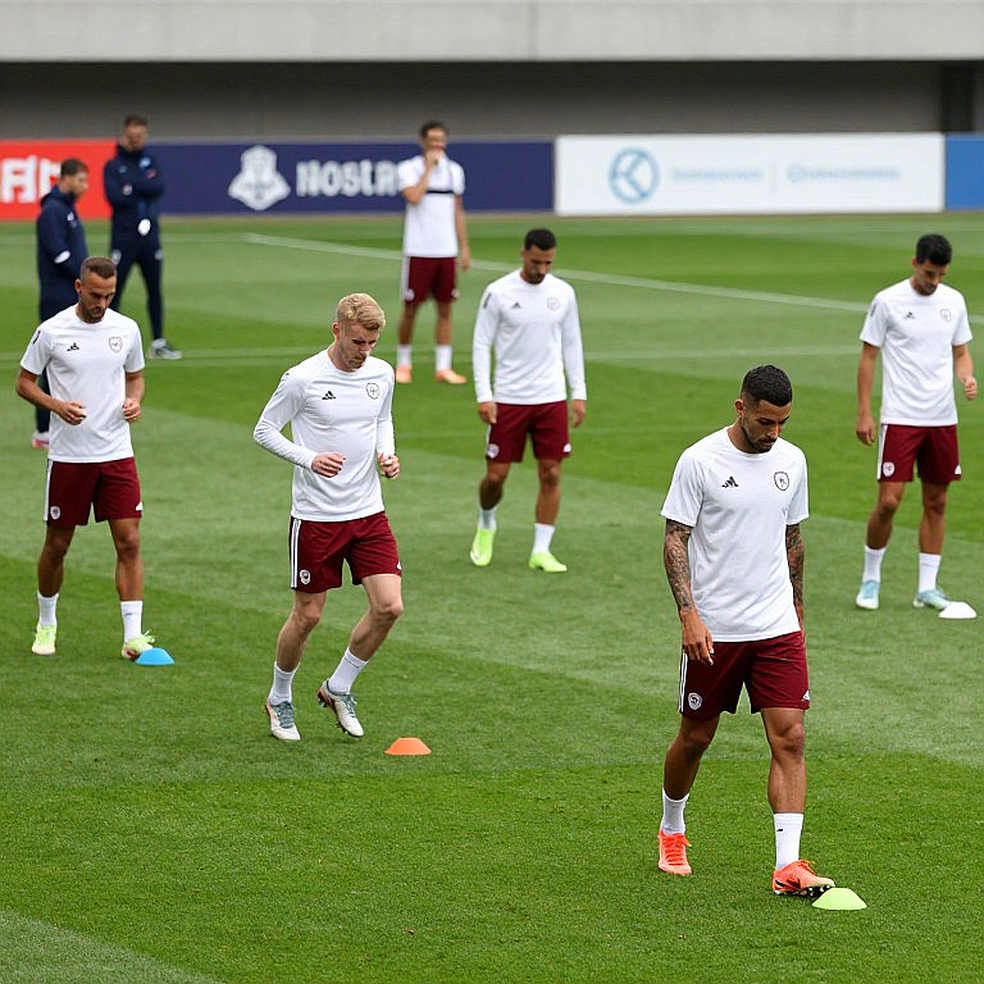
That pressure is healthy. It forces selection to rest on form rather than reputation or seniority.
The Nguyen Xuan Son gap
The long-term absence of Nguyen Xuan Son is not merely the loss of a striker. It is the loss of an operating model: a reference number nine who holds the ball, drags the defensive line and anchors combinations.
No current player fully reproduces that role. Nguyen Tien Linh excels in the air and in finishing but is not a long hold-up player. Nguyen Tuan Hai excels in individual drives. Olaha Manh Duc is versatile but leans toward box presence. The inevitable consequence is that Vietnam's share of goals from crosses and set pieces will likely rise in this period, while central combinations fall.
That is a change in the distribution of goal sources, not a change in philosophy. It needs to be identified correctly in order to be assessed correctly.
The risk sits in the assembly window, not the squad list
The biggest risk in this story is not who is picked but how long they have to play together. Three rounds remain before the national team gathers. A standard FIFA window is only about ten days.
For a newly naturalised forward with no prior camp history, ten days is far too short to build positional understanding, movement rhythms and combination conventions. Club form does not capture that integration cost. A player can score regularly in the domestic league and remain invisible in his first two national-team matches simply because he does not yet know where his team-mates will run.
This is the variable goal counts do not reflect, and it should be the coaching staff's focus rather than arguments over who deserves more.
What goal counts do not measure
Goals do not measure space creation for team-mates. They do not measure how often a forward drags a defender out of position and opens a channel for a wide player. They do not measure acting as a wall in a counter-attack to relieve pressure.
So comparing Nguyen Gia Hung, Nguyen Viet Cuong and Le Phat on goals alone ignores most of a forward's actual work. This does not dismiss the signal around Le Phat; it simply gives that signal its correct weight.
What is still missing
Three gaps must be stated. First, the four-round sample is too small. Second, there are no chance-quality metrics, so every comparison between forwards rests on outcomes rather than processes. Third, all data recorded in the original analytical document is unattributed and undated, meaning its veracity has not been independently verified.
None of this destroys the value of the signal. It only places the signal correctly: a noteworthy observation across four rounds that needs three more rounds of tracking before becoming a conclusion about national-team personnel.

Conclusion
The good news for coach Kim Sang Sik is real, but it must be defined precisely. He has not gained a new attacking system; he has gained more personnel options at forward. Among them, Olaha Manh Duc is the most system-relevant variable, Nguyen Tien Linh and Nguyen Tuan Hai form the most coherent complementary pairing, and Le Phat provides a form-based selection argument that is hard to rebut.
The rest — formation, build-up, crossing share, performance against low blocks — remains open. And that is the part that decides.