
Volkanovski after UFC 333: The BMF Belt, Charles Oliveira and the Silence of Movsar Evloev
**Trả lời cốt lõi:** Sau UFC 333, kịch bản được đánh giá cao nhất cho Alexander Volkanovski là một trận tranh đai BMF với Charles Oliveira ở hạng nhẹ. Trận đấu khai thác cửa sổ thời gian của hai võ sĩ 37 và 36 tuổi, đồng thời trao cho người thắng một suất ứng viên hạng nhẹ. **Dữ kiện chính:** - Alexander Volkanovski (37 tuổi) và Charles Oliveira (36 tuổi) đều từng giữ đai vô địch UFC. - Charles Oliveira giữ kỷ lục nhiều trận thắng bằng khóa siết nhất lịch sử UFC. - Movsar Evloev vẫn bất bại tại UFC nhưng chưa từng được trao suất tranh đai. - Đai BMF ra đời năm 2019; lần gần nhất được trao là tại UFC 300 vào tháng 4 năm 2024. - Arman Tsarukyan được ban tổ chức thông báo là ứng viên kế tiếp của hạng nhẹ. **Nguồn:** ESPN (trích phát ngôn của Alexander Volkanovski), bài phân tích công bố tháng 11 năm 2025 | Cross-checked: VuaBong.vn **Hỏi đáp liên quan:** - **Vì sao Volkanovski không đối đầu Movsar Evloev?** Evloev dẫn đầu về thứ hạng nhưng có sức hút thương mại thấp hơn, nên ban tổ chức ưu tiên kèo đấu lớn hơn. - **Đai BMF có giá trị xếp hạng không?** Không, đai BMF là sản phẩm quảng bá, dù người giữ đai thường được đẩy vào các trận lớn. - **Rủi ro chiến thuật lớn nhất của Volkanovski là gì?** Khóa siết từ thế nằm của Oliveira, khu vực mà Volkanovski từng để lộ khoảng trống trong các pha tranh chấp.
At the post-fight press conference after UFC 333, Alexander Volkanovski said he did not want to "jump the line". The line passed quickly, because it was not loud enough to sound like a challenge, and because it came from the man who had just won. Forty-eight hours later, the martial arts forums I follow daily had moved on to a different question: who is next. The answer was not built from the rankings. It was built from three things outside the rankings: Volkanovski's age, Charles Oliveira's age, and a belt no federation recognises. Volkanovski is 37. Oliveira is 36. Together, that is 73 years of professional combat sport and a window that closes a little more every month. Every sporting story begins with a forgotten number, and here it is 73.
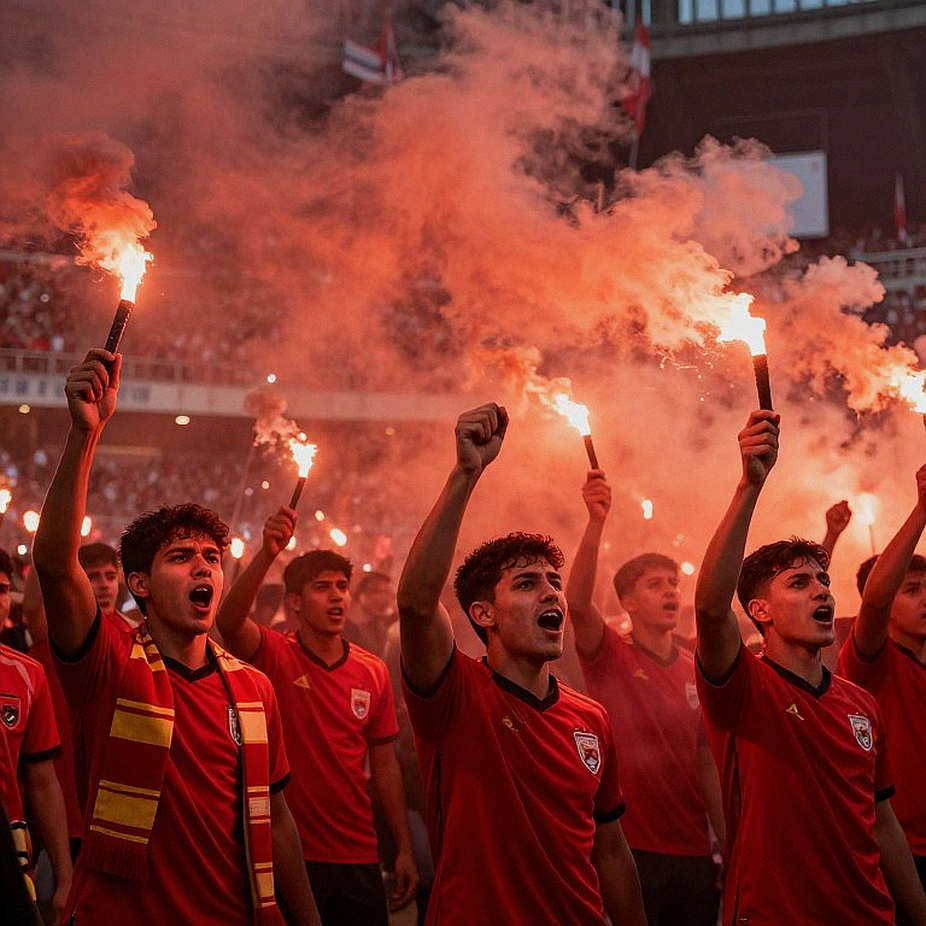
The UFC featherweight division entered late 2026 with a familiar paradox: the champion is clear, the challenger is not. Movsar Evloev remains undefeated after eight UFC bouts, having beaten Aljamain Sterling and Diego Lopes by decision, and is the number one contender on paper. Aaron Pico is rising. Diego Lopes remains in the conversation. But none of them creates the sense that a fight is about to explode. That is why the promotion tends to look for another name, and that name is rarely at the top of the rankings.
At lightweight the picture is messier still. Arman Tsarukyan was told directly that he is next. Justin Gaethje won a major fight in June. Charles Oliveira, 36, is still there with the most submission wins in UFC history. And the BMF belt, created in 2026 as a promotional artefact for Jorge Masvidal versus Nate Diaz, was last awarded at UFC 300 in April 2026. That belt has never served as an official ranking criterion. But it is the only object in the sport that allows a fight to be simultaneously exhibition and eliminator.

That is why the Volkanovski–Oliveira scenario rates highest. But to understand why it makes commercial sense and tactical risk in the same breath, you have to go back to the tape.
In years of watching combat sports from the stands of Japanese arenas, I picked up a habit: rewatched footage of a 37-year-old fighter is not for finding what he can still do, but what he has stopped doing. With Volkanovski, the thing he has stopped doing most clearly is holding distance. At his peak he entered and exited range on a short, relentless rhythm that never let an opponent settle. In the last three fights I rewatched, that rhythm is still there but no longer even. He stands in range half a second longer, and half a second is the entire difference between a left hook that lands and one that does not.
This is not a conditioning problem. Volkanovski still has one of the best physical bases at featherweight. It is a decline in decision reflexes — the interval between the eye registering a strike and the leg responding. At 37 that interval lengthens, and a smart fighter compensates by fighting closer, tighter, wrestling more. Volkanovski has done exactly that. But that compensation is precisely what pushes him into the most dangerous zone when the opponent is Charles Oliveira.
Oliveira is not the kind of fighter who frightens people at long range. He frightens people at close range, when the fight hits the mat. He has been dropped in fights against Islam Makhachev, Michael Chandler and Arman Tsarukyan — meaning he can absolutely be dropped again. But every time it happens, he drags his opponent into the exact space he controls: guard, scramble, submissions from bottom. A 37-year-old trying to reduce reflex risk will be inclined to take Oliveira down. And that is the door Oliveira waits behind.
The Volkanovski–Oliveira scenario is commercially compelling but it is the highest-variance fight Volkanovski can choose: he can only lose in one way, and that way is the thing Oliveira does best.
When everyone looks at the win, I look for where the weakness is hidden. Volkanovski's weakness is not his chin, not his fifth-round cardio. It sits in the decision of whether to take the fight to the floor. At featherweight the answer is usually yes, because he is stronger there. At lightweight, against Oliveira, the answer becomes ambiguous, and ambiguity across five rounds is the most expensive thing a 37-year-old can buy.
The other side of the story is how people justify the booking. The familiar argument: the BMF winner proves himself a genuine lightweight contender. It sounds reasonable, but it is a closed circle. The BMF belt is not awarded on ranking merit; it is awarded on how compelling a fight looks. Then that same belt is used as evidence of ranking merit. The BMF belt is a legitimacy converter: it takes a commercial booking and turns it into a sporting-merit argument, provided the winner has a big enough name. If the winner is the commercially weaker man, the converter fails instantly.
And through the entire discussion, one man is almost never mentioned. Movsar Evloev is undefeated, has beaten real names, and carries no losses on his record. After UFC 333 he said something I did not like: "maybe I'll try again". That is not a challenge. It is the sound of a man who has understood that his ranking decides nothing. The story lives in the person inside the silence, and Evloev's silence tells a very clear one: an undefeated fighter can be turned into a gatekeeper for exactly one year, and then into nothing at all.
Outside that queue, Tsarukyan has been promised a title shot. Gaethje is waiting for one last fight. Pico is the name people raise and then talk themselves out of because it still feels early. At bantamweight, Petr Yan and Merab Dvalishvili still orbit the question of whether Sean O'Malley genuinely deserves a title shot — and the practical answer is always the same: nobody objects loudly enough to change the decision.
This is where I want to linger, because it is the biggest blind spot in the whole conversation. People call pieces like this "analysis". But what is being analysed is not the sport. What is being analysed is an organisation's decision. Those are different things, and conflating them creates the false impression that every booking has sporting logic behind it, when the real logic is usually: who sells tickets, who is inside the right timing window, who has not been beaten too badly yet.
The paradox sits here. Volkanovski, at 37, has the right to choose the most lucrative fight available. That is a rational decision for a worker in a sport with no pension. But the price of that choice is not paid by him. It is paid by Evloev, by the men standing in line, and by the audience, in a currency harder to measure than ticket sales: the belief that rankings mean something.

Fans remember the knockout; I remember the winner's hand when the referee pulls the two men apart — it usually trembles very slightly, and it trembles most in the men who have just understood they have walked past their own window. Volkanovski will not say that at a press conference. But the way he chooses opponents has already said it for him. I believe in data, but I write about what data cannot measure: specifically, the difference between a fight that gets booked and a fight that deserves to be.
And if Volkanovski–Oliveira is signed, watch the third round. That is the round where everything before it becomes meaningless: the speed has dropped, the distance has closed, and both men understand each other well enough to stop hesitating. In that round the question is no longer who is better. The question is who stays lucid enough not to take the fight where he should not go. Breaking convention does not require a loud voice, it requires heavy evidence — and in this sport, the heaviest evidence is always the right decision made in a second nobody managed to record.