
Republic of Ireland 2-2 Austria: Parrott's brace and the six minutes that exposed a game-management blind spot
**Câu trả lời cốt lõi**: Cộng hòa Ireland hòa Áo 2-2 tại Nations League, League B, bảng 3, sau khi Troy Parrott lập cú đúp nhưng đội chủ nhà để thủng lưới hai lần trong sáu phút (phút 71 và 77) từ các cầu thủ dự bị của Áo, trong một trận đấu bị gián đoạn hai lần bởi biểu tình. **Dữ kiện chính**: - Troy Parrott ghi cả hai bàn cho Ireland, gồm một quả phạt đền; bàn mở tỷ số đến từ pha phát bóng dài ở phút 24. - Alexander Prass (phút 71) và Michael Gregoritsch (phút 77) ghi bàn từ băng ghế dự bị cho Áo. - Ireland đứng thứ ba bảng B3 sau Áo và Kosovo; một chiến thắng sẽ đưa họ lên đỉnh bảng. - Trận đấu gián đoạn hai lần: bóng tennis khoảng phút 20 và một người chạy vào sân khoảng phút 35; nhóm Stop The Game nhận trách nhiệm. - Caoimhín Kelleher bắt chính cho Ireland; Gavin Bazunu vắng mặt vì tự rút khỏi các trận gặp Israel. **Nguồn**: Bản tường thuật trận đấu đơn nguồn, không định danh nguồn; trích dẫn duy nhất từ nhóm vận động Stop The Game. | Cross-checked: VuaBong.vn **Hỏi đáp liên quan**: - Hỏi: Ireland đang đứng thứ mấy ở bảng B3? Đáp: Thứ ba, sau Áo và Kosovo. - Hỏi: Ai ghi hai bàn cho Ireland? Đáp: Troy Parrott, trong đó có một quả phạt đền. - Hỏi: Vì sao trận đấu bị gián đoạn? Đáp: Biểu tình với bóng tennis và một người chạy vào sân, nhóm Stop The Game nhận trách nhiệm.
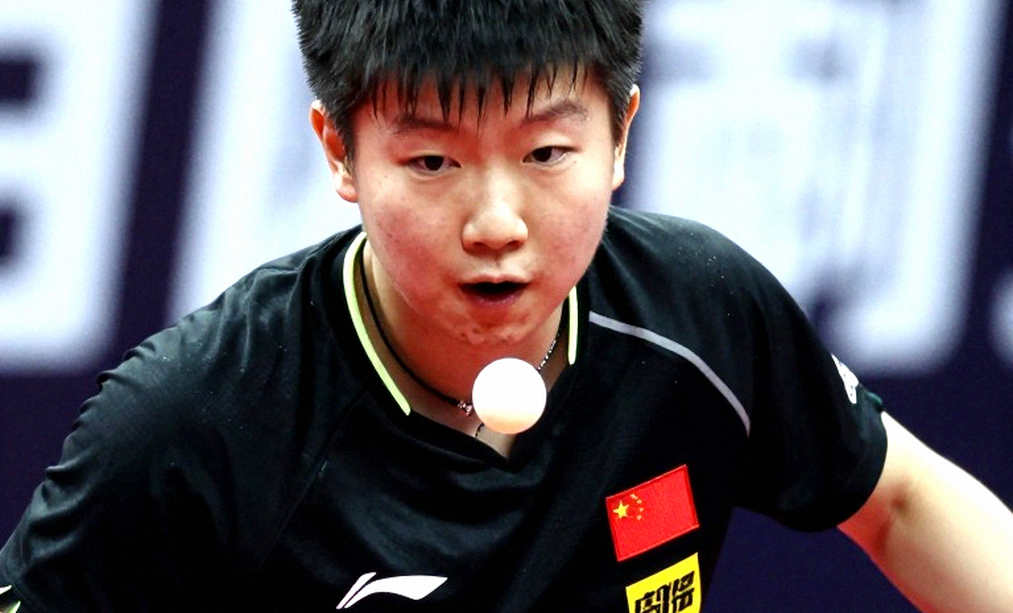
At the 24th minute, a goal kick from Ireland's line travelled straight into Austria's half. Adam Idah flicked it on, Troy Parrott brought it down, nutmegged Philipp Lienhardt and placed it into the bottom corner. Four touches, not a single sideways pass through midfield. I rewound that clip four times that night — not to enjoy the goal, but to ask a counterintuitive question: if Ireland opened the scoring by such a direct route, what had they prepared for the final twenty minutes?
By the 71st and 77th minutes, when Alexander Prass and Michael Gregoritsch — both off the bench — scored in quick succession, that question had an answer. Ireland dissolved their own control in six minutes, surrendered a two-goal lead, and left with one point where three were there for the taking.
I am not retelling this to pick apart a group-stage draw. I am retelling it because those six minutes are a pattern. And patterns repeat.
Context
This was a Nations League fixture, League B, Group 3. Ireland came into the match third in the group, behind Austria and Kosovo; a win would have taken them top. Ireland's starting XI featured three changes, and in goal was Caoimhín Kelleher — listed by the original report as a Brentford goalkeeper. Gavin Bazunu was absent, and the stated reason was not injury but his own withdrawal from fixtures against Israel. The group's fourth team was not named, but that Israel detail makes me lean toward Israel being that team — which turns the protests from a sideshow into a story directly relevant to the group's future.
The match was interrupted twice. Around the 20th minute, tennis balls were thrown onto the pitch. Around the 35th minute, a pitch invader was tackled and carried off. The campaign group Stop The Game claimed responsibility, with the only quote attributed anywhere in the original report. Palestinian flags appeared in the stands.
I have to say this up front, because it governs the reliability of everything that follows: the original report is single-source and almost entirely unattributed. Every detail — player clubs, minute-markers, the score sequence — should be treated as data to be verified. There is no xG, no xA, no PPDA, no possession figure. Which means every tactical judgement I make here can only be qualitative, and I have to cap my own confidence.
The report's description of Parrott as a Real Betis striker, when most prior sources linked him with AZ Alkmaar, is worth noting. It does not prove the report wrong. It only reminds me that an unattributed match report must be read with a steadying hand.
Analysis
Back to the grass.
Ireland's opener was a transition goal, not a possession goal. The sequence is clear: long goal kick, Idah's flick-on, Parrott's control, the nutmeg, the finish. It is a legitimate route against a deep block — low risk, few touches, no need to break a midfield line. But it is also a confession: when the ball has to go around a defence through short passes, Ireland have not shown their creative structure.
Here I want to pause. A tactical shape is not an answer; it is only a way of asking a question about space. The question Ireland posed Austria in the first half was simple: we will put the ball into the space behind your back line, and we will fight for the second ball. Austria answered by taking the tempo, waiting, and keeping the game within reach until the second half began.
Then the bench came into play.
Both goals Ireland conceded came from Austrian substitutes, inside the same six-minute window. Prass scored on 71, Gregoritsch on 77. In terms of outcome, this is a lesson about squad depth. In terms of process, it is a lesson about reaction. Ireland led by two, and in the stretch where a team that knows how to manage a game would drop the block, slow the restarts and make substitutions to hold the lines — they let their opponent do the exact opposite.
Both goals carried the fingerprints of individual error. Prass's goal followed Liam Kitching being drawn out of position, leaving the ball to be worked to a completely unmarked Prass. Gregoritsch's goal came when Kelleher guessed the wrong way. This is not a systemic collapse — it is two wrong decisions in two moments. But the fact that both wrong decisions happened within six minutes is the most troubling part. Individual error is forgivable. Individual error in sequence is no longer coincidence; it is a state of mind.
Ireland's back line here was Kitching, Scales, Egan and O'Shea — a defence hardly short of experience, yet exposed at precisely the moment the game demanded the most composure. The three changes to the XI are part of the story: a back line reshuffled days earlier cannot react smoothly against an opponent making deliberate substitutions.
There is a small detail I noted and do not want to skip. In the first half, Saša Kalajdžić attempted a lob from midfield to catch Kelleher off his line. That is a scouting detail. It shows Austria arrived with a specific note about the Irish goalkeeper's starting position, and were willing to test it early. When a team is prepared enough to try high-risk options in the first half, their ability to swing the game through second-half changes is not luck.
Zoom out, and this is a resource-tier gap. Austria's squad is heavily Bundesliga-populated — Seiwald, Lienhardt, Prass, Gregoritsch, Kalajdžić. Ireland rely largely on players based in England and Scotland. In a group where Kosovo also sit above Ireland, dropping two points from a two-goal lead is more costly still, because this is not a two-horse race.
On Ireland's side, there are positive signals beyond the scoreline. Finn Azaz returned and was greeted warmly — a detail suggesting he had been absent or out of favour, and that his re-integration is going smoothly. Dara O'Shea wore the armband, the leadership structure is clear. There is no sign of dressing-room fracture. Ireland's problem is on the grass, not in the room.

Another dimension belongs on the table: the legal one. Tennis balls on the pitch and a pitch invader being tackled are textbook triggers for a UEFA disciplinary charge against the host association. The worst case is a substantial fine plus a partial or full stadium closure for a future fixture. The central case is a fine and a warning. The least predictable variable is the political messaging — UEFA prohibits provocative political messaging, but its enforcement on Palestinian flags has historically been inconsistent.
And a new governance question is taking shape: a player withdrawing himself from specific fixtures on political or ethical grounds. This sits between federation selection policy and player rights, and it forces a coach to plan a squad around a gap that is not caused by injury.
The contrarian angle
This is where I want to push against how this story is being told.
The original headline does two jobs at once: it packages a sporting collapse with a social-conflict hook. Most public attention will follow the second hook — protests, Palestinian flags, Stop The Game, Bazunu's withdrawal. I understand why. But stopping there means missing what an analyst has to see: the stoppages on 20 and 35 minutes may have broken Ireland's first-half rhythm and given Austria time to reset. This is a hypothesis, not a conclusion — I have no data to prove it. But I refuse to take it off the table simply because it is not dramatic enough.
The second reversal: the reading “Ireland led 2-0 then got pegged back” is usually understood as them throwing away a win. I read it differently. If Ireland opened the scoring through a transition goal and doubled it from a penalty, then the anomaly is not that they were pegged back — it is that they led by two at all. A team that has not shown a stable attacking structure in controlled possession is unlikely to hold a two-goal lead against an opponent with a better bench. Those final six minutes were not an accident. They were entirely natural.
The third, and most important to me as a writer: Football never lies, but it only whispers to those willing to sit still. In this match, the noise came from the stands. If I only listened to the noise, I would write a piece about protests and forget that a back line lost its bearings for six minutes. Both stories are true. But only one of them explains why Ireland lost two points.
I also have to warn myself about a familiar trap. I tend to empathise with the underdog, and Ireland here were the underdog in terms of resources. My instinct is to describe them as a team that fought to the end and were robbed of a win. So I ask: if you swapped the shirts, if the team that led 2-0 and conceded twice in six minutes were a big team, would I write in this voice? The answer is no. I would talk about a lack of concentration. So here too I must talk about a lack of concentration — only with the respect owed to a team still learning how to grow.
And one more thing about the player who gained most from this match. Parrott's two goals, one of them a penalty, are a milestone worth recording. But I refuse to call it a breakout. One match is too small a sample. What it really does is raise his visibility in the market, and in modern football, visibility usually runs ahead of value.
What to watch
There is a detail I saved for last. Every pass is a choice; every press is a refusal. Ireland chose the shortest route to goal, and that was right for them at this moment. But when the game entered the phase where you have to keep the ball, they had no second option. Austria did. That is the entire difference between one point and three.
I started from confusion at the 2026 World Cup, and it turned out to be the only way to understand a match. Tonight I am confused by something else: how does a team that controls a first half lose control so quickly? The answer probably is not tactical, but lies in something I cannot measure — the capacity to absorb pressure when the game turns.
In Vietnam I learned that a team can play with its heart before it plays with a shape. But a heart cannot hold a two-goal lead for six minutes. Only structure can.
What I will watch in the next round is not whether Parrott scores again. It is this: when Ireland lead in the 70th minute, what will they do? If the answer is still to drop deep and wait, then tonight's six minutes will not be the last. I no longer believe in victory; I believe in the moments a match opens up before your eyes — and tonight's moment opened up enough to tell me which clip to rewatch next.