
Ireland 3-0 Israel: Four Hours in a Meeting Room and Three Goals That Need No Gloss
**Core answer**: Ireland đánh bại Israel 3-0 trên sân trung lập Debrecen, với cả ba bàn thắng đến trong hiệp một do Troy Parrott, Adam Idah và Mikey Moylan ghi, sau khi thủ môn Gavin Bazunu rút khỏi đội hình để phản đối và đội họp nội bộ bốn tiếng. **Key facts**: - Tỉ số Ireland 3-0 Israel; cả ba bàn đều đến trong hiệp một. - Người ghi bàn: Troy Parrott, Adam Idah, Mikey Moylan. - Thủ môn Gavin Bazunu tự nguyện rút khỏi đội hình để phản đối các hành động bị anh gọi là tàn bạo trong khu vực. - HLV Heimir Hallgrimsson gọi đây là "sự chuẩn bị tồi" sau cuộc họp nội bộ kéo dài bốn giờ. - Trận lượt về dự kiến diễn ra ba ngày sau tại TSC Arena, Backa Topola, Serbia. **Source attribution**: Nguồn: Goal.com, nội dung dẫn từ AFP; thời điểm công bố cụ thể chưa được xác minh độc lập trong bản gốc. | Cross-checked: VuaBong.vn **Related Q&A**: - Q: Vì sao Gavin Bazunu không thi đấu? A: Anh tự nguyện rút khỏi đội hình để phản đối các hành động bị anh gọi là tàn bạo trong khu vực. - Q: Ireland còn cơ hội đi tiếp không? A: Trận thắng 3-0 giữ hi vọng ở bảng đấu, nhưng chưa đủ để khẳng định một xu hướng phong độ bền vững. - Q: Trận tiếp theo của Ireland là gì? A: Lượt về gặp Israel ba ngày sau tại TSC Arena, Backa Topola, Serbia, sau đó là trận gặp Áo trên sân nhà.
The Empty Seat in Debrecen
In Debrecen, Hungary's second city, there was an empty seat in the dressing room that nobody wanted to name. Four hours before kick-off, the Republic of Ireland squad held a meeting. Not a tactical meeting. A meeting to answer a question no coach is ever prepared to answer: do we walk out, and if we do, as what?
Heimir Hallgrimsson called it "bad preparation." He said it into a microphone, at a press conference where everyone expected him to be defensive. He was not defensive. He told the story.
Then the ball rolled. The first half produced three goals. Troy Parrott, Adam Idah, Mikey Moylan — three players, three finishes, three names read out within forty-five minutes. The final score was 3-0. A match the press called "a must-win," a match nobody called "Ireland's best performance in ten years."
I sat in front of a screen at two in the morning, Haiphong time, pen in hand, and wrote one line in my notebook: today they did not win with their feet. They won with four hours.
I have learned something across twelve years spent beside football pitches, sometimes in a commentary box, sometimes simply in the stands: the biggest matches are not decided in the ninetieth minute. They are decided in minute minus three hundred. They are decided in the time before the referee blows his whistle, when people have to decide who they are.
Ireland had four hours in that minus-three-hundred space. And when they walked out, they were a different team from the one that had lost 0-1 to Kosovo days earlier. What is remarkable is that none of them called it a miracle.
In 2026, when I was nineteen and a first-year student, a local sports channel invited me to commentate on a Vietnam national team match. In the first half I mispronounced one striker's name three times. The football forums mocked me the next day: what does a girl know about football. I cried. Then I sat down, rewatched the entire tape, and wrote pronunciation notes for every player in all eight teams in the group.
The day I mispronounced a name, I understood I was speaking to a million hearts, not to a microphone. Since then, before every piece I write, I build a small table: name, position, and one personal story. Because a mispronounced name can erase an entire person.
In Debrecen, the name that went unread was Gavin Bazunu. That is precisely why I opened this piece with the empty seat.
A Match That Belonged to No One
Ireland are the kind of national team European football writers file under "good enough to trouble you, not good enough to feel comfortable." They are not a seed. They are not a makeweight. They are the team that makes every opponent pay in sweat and in a little anxiety.
This time, the price was paid in something else. Before facing Israel, the Irish squad fell into a spiral football rarely touches: an external boycott campaign, a torrent of criticism aimed at the head coach, and one personal decision that forced the entire dressing room to sit down together.
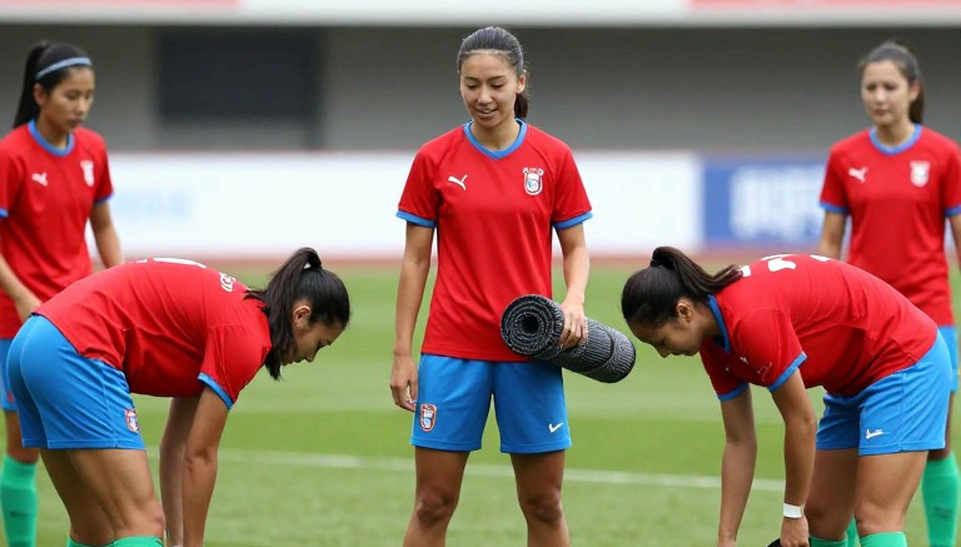
Goalkeeper Gavin Bazunu withdrew from the squad in protest against what he described as atrocities in the region. It was not a loud political statement. It was a silent resignation letter, written in absence. And that absence, inside a group accustomed to always moving together, created the first fracture.
Hallgrimsson spoke about it in the voice of a man braced to be misunderstood: "We supported his decision. He's one of us." He added that it was probably tougher for Bazunu than for the others.
Elsewhere in the story, outside voices grew so fierce that he used a phrase few head coaches ever use: the commentary had crossed the line. When a head coach says public opinion has crossed the line, it means he has been pushed from the professional realm into the personal one. And once a coach is pushed into the personal realm, the match is no longer about tactics. It is about one person's survival.
Then there was the venue. The match was played in Debrecen, not Tel Aviv, not Dublin. It was a neutral-venue fixture — a game staged where it belongs to nobody, for security and governance reasons. The return leg, three days later, would also be played at a neutral venue, at the TSC Arena in Backa Topola, Serbia. Two matches in three days, both away from home, both without a home stand.
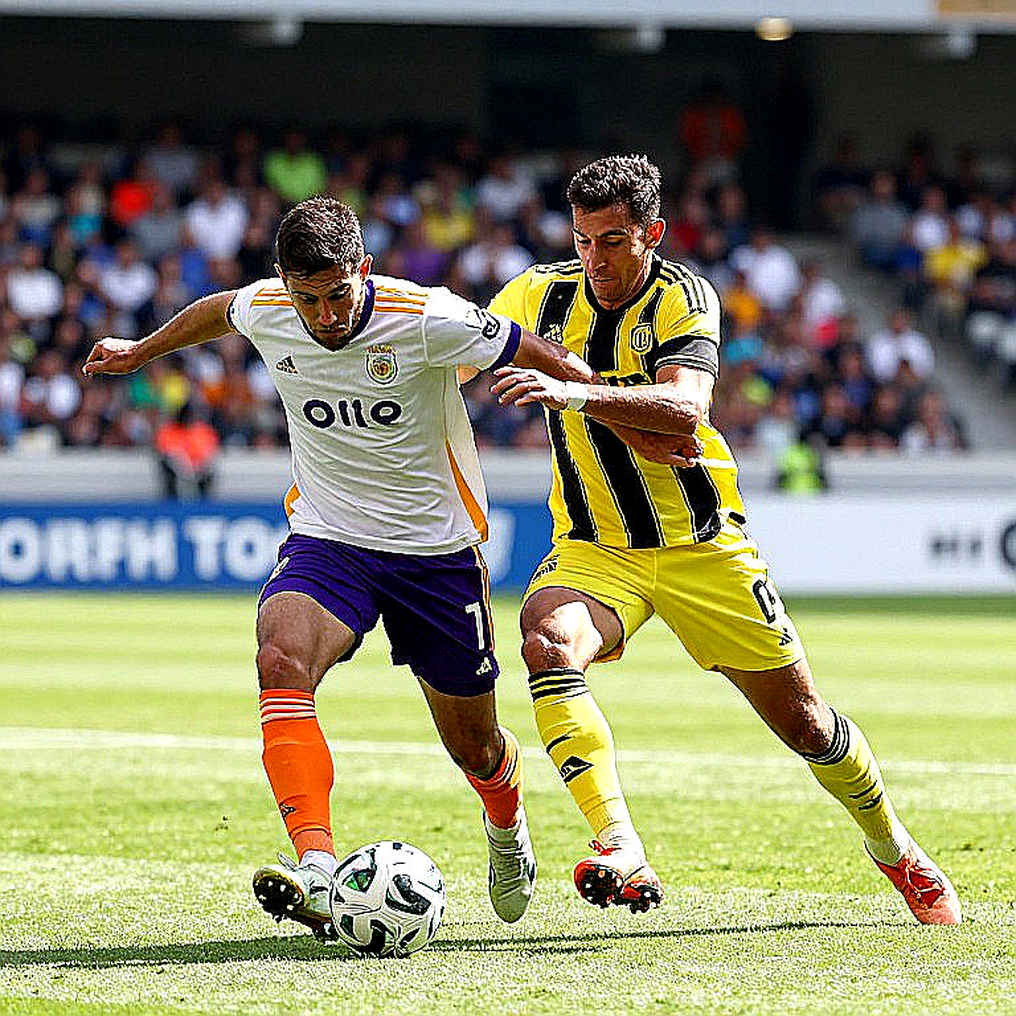
Professionally, this is an underrated detail. A neutral venue does not merely mean no home crowd. It means no familiar dressing room, no familiar pitch, and none of the invisible feeling every player knows: that if you fall, someone will rise with you.
This is also a structural trend in modern international football. More and more "home" fixtures for certain national teams are relocated to third countries for security or political reasons. The consequence is not only a lost crowd advantage. The consequence is a generation of players growing up without ever playing a real qualifier on their own soil. That is a loss no scoreline can measure.
Before this, Ireland had lost 0-1 to Kosovo. After it, they beat Israel 3-0. Two matches, two opposite results, and one common denominator that appears on no statistical sheet: both were games in which the team had to live inside an atmosphere where football was only the visible part.
The group also contains Austria. The rest are names woven together: Israel, Kosovo, and Ireland itself. A small group, a narrow margin, where every point can flip the picture. In a group like that, a win is not just three points. It is a breath.
And that breath, in Ireland's case, came from somewhere nobody can measure with a ruler.
Three First-Half Goals, and What the Scoreline Does Not Say
From a purely professional standpoint, the real data from this match is thin. I have to say that plainly, because in my trade, being honest about data limits is a form of respect for the reader.
We know Ireland won 3-0. We know all three goals came in the first half. We know the names of the scorers: Parrott, Idah, Moylan. We know the press described the performance with words like "dominant," "clinical," "sharp."
We do not know expected goals. We do not know passes allowed per defensive action, the measure of pressing intensity. We do not know possession share, shot count, or formation. The original report — supplied by AFP and published by Goal.com — is a news report, not an analysis.
In other words, if someone tells you Ireland underwent a tactical transformation, they are saying more than the data permits. I do not want to do that. But there is one thing the data does permit me to say: the timing of the goals.
Three goals in the first half, not three goals scattered across the match. In football, timing is a stronger psychological signal than people think. A team that scores early is often not the team playing better. It is the team that needed reassuring sooner. It needed a goal to know that the chaos in its head was not mirrored on the grass.
For a side that had just endured four hours of internal argument, just lost its first-choice goalkeeper to a moral decision, and just walked into a neutral stadium with no home support, scoring in the first half is a form of self-healing. Not self-healing through tactics. Through instinct.
The three scorers are also a signal. Parrott and Idah are forwards. Moylan is a player operating between midfield and the attacking line. Three players, three different positions along the attacking spine, suggests the goals did not come from one individual having a purple patch. They came from a system functioning well enough to distribute chances across multiple prongs.
But I must add immediately: that is inference, not evidence. Without shot maps and touch maps, every statement about a "system" stands on sand.
And here is what I believe is the core. A 3-0 win, three first-half goals, three different scorers, in a match the team itself described through its coach as "bad preparation" — that is a signal about endurance, not about tactical class. The two are very different things. And at elite level, endurance is a resource with a short shelf life.
There is one more thing the scoreline does not say: the comparison with the Kosovo defeat. Two matches is too small a sample to conclude anything about a trend. A team that loses 0-1 and then wins 3-0 may be improving. It may also simply be normal football variance. Without process data, an honest writer must say he does not know.
Four Hours — The Real Tactical Event of the Match
If I had to pick the most "tactical" moment of the whole match, I would not pick a goal. I would pick the meeting.
Hallgrimsson said the players sat together for four hours. In those four hours they talked about a letter, about a decision, about whether to play. And the result of those four hours was an internal vote. The squad decided to play.
This is the detail I want to linger on longest, because it speaks to something professional football rarely admits: the players' collective right to decide.
Normally, inside a national team, every major decision flows from the top down. The coach decides. The captain relays. The players execute. In a crisis, that model runs two ways: either the leader carries it, or the group dissolves. Ireland chose a third way. They sat down, argued, and voted.
Hallgrimsson said a line I copied verbatim because it contains an entire discipline of organisational psychology: normally the players have always gone together with their decisions, and that was the first time there was a split.

Read plainly, it is a confession of a crack. Read the way a documentary maker reads it, it is a small historical moment: for the first time in years, an Irish football collective openly acknowledged that it was not unanimous. That it was a group of people, not a monolith.
And how they handled that disagreement is the real story. They expelled no one. They pressured no one. They voted, accepted the outcome, and walked out. Bazunu stayed home with his decision, and that decision was respected to the point that Hallgrimsson had to state clearly that the door was always wide open.
I once interviewed fifteen Danish supporters in Vietnam after Christian Eriksen's cardiac arrest at Euro 2026. That night I learned something I have carried ever since: when an event on the pitch touches the pulse of human life, football stops being a game. It becomes a place where people deposit their own fear. Many of the people I interviewed wept recalling the moment. They were not crying for a player. They were crying for themselves.
Bazunu did not suffer cardiac arrest. But he placed his conscience on the scales and let it weigh more than a match. For a young player on the way up, letting conscience outweigh a match is an act with a price. That price is not on any scoreline. It sits in the weeks that follow, when squads are announced, when questions begin, when people start weighing whether his silence is a problem.
And in those four hours, the Irish squad did something many large collectives cannot manage: they allowed one person to be different without being discarded.
That is tactics. Tactics at the deepest layer. No camera recorded it. No heat map measures it. But it is what sent Ireland onto the pitch with a head clear enough to score three goals in forty-five minutes.
I look into the gap between two passages of play and see an entire human life change. In this match, the largest gap was not between two passages of play. It was between the knock on the meeting-room door and the kick-off whistle.
The Man Sitting Between Two Currents
Heimir Hallgrimsson is the kind of coach analysts call a people manager rather than a tactician. He rose in Iceland, a country with a population smaller than many Vietnamese cities, and did strange things there. At his current career stage, he is remembered more for how he speaks than for how he draws a formation.
In this story he spoke a great deal. But what caught my attention was not the volume of his words, but their direction. He did not talk about the opponent. He did not talk about any individual's mistake. He talked about the four hours. He said that is where you find your leaders. He talked about proud Irishmen fighting for their nation.
This is the language of a man trying to heal, not the language of a man trying to win a media argument. But it is also the language of a man under siege. When a coach has to keep talking about "leaders," it usually means he is looking for the group to stand up on its own so that he does not have to stand in front of it.
There is one small detail I found more notable than any grand quote. He said the door was always wide open for Bazunu. In football, "the door is always open" is said so often it has become a ritual. But in this context it had a more specific function: it pre-empted a debate about whether Bazunu should be recalled.
In other words, that sentence was not only for Bazunu. It was for the people who wanted to turn Bazunu into a controversy.
I learned this from a mentor at a local radio station when I first entered the trade: in a crisis, sometimes the answer is not meant to solve the problem, but to extinguish a question. Hallgrimsson spoke in the language of extinguishing.
But there is one thing he could not extinguish. He still has a return leg. He still has a home match against Austria. He still has weeks ahead in which all patience is measured in results. In a group as tight as Ireland's, one defeat can turn a 3-0 win into a distant memory.
And when that happens, the question will no longer be whether Bazunu is recalled. The question will be: is this collective still cohesive enough to play as one body?
Football does not spare the unhealed. It grants them one match to breathe, then demands an answer.
The Blind Spot: We Will Remember 3-0 and Forget the Four Hours
This is where I want to speak plainly about what I believe is a blind spot in collective memory.
In ten years, if someone looks up this match, what will they find? They will find one line: Ireland 3-0 Israel. They will find the names of three scorers. They may find the phrase "a win that kept group hopes alive." What they will not find is four hours in a meeting room. What they will not find is the first internal vote in years. What they will not find is a goalkeeper sitting at home.
The scoreline is a machine of selective memory. It records outcomes and erases processes. In this case, the process is the thing worth recording.
But the deeper blind spot lies in how we read beautiful results produced in ugly circumstances. When a team wins 3-0 in a chaotic week, the reflex of the media is to celebrate "character," "iron mentality," "spirit." Those words are beautiful. But they mask a truth often overlooked: teams that win on emotion rarely travel far. Emotion is a fast-burning fuel. It carries you through one match. It does not carry you through a campaign.
In my home city of Haiphong, I once made a documentary project called "Echoes of Lach Tray Stadium" in 2026, when the sporting world shut down because of the pandemic. Three friends and I phoned thirty-three supporters, just to ask one question: what is your most treasured memory of your hometown club. Thirty-three voices. Thirty-three different afternoons. And what I realised after stitching them together was this: nobody remembered the scoreline. They remembered the scene. They remembered who sat beside whom. They remembered afternoons when the team lost, and someone stood up and clapped first. The stands do not remember results. The stands remember people.
There are afternoons in an empty stadium when the sound of the ball bouncing feels like a confession never answered. I believe that. And I believe that in Debrecen, during those four hours, there were bounces like that — except they happened inside people's heads, not on the grass.
A second blind spot, and perhaps the more uncomfortable one: we tend to label any result from a fracturing collective a "victory of spirit." It sounds lovely, but it carries a dangerous assumption — that spirit can substitute for structure. The opposite is true. A cracked collective can win one match on adrenaline. It cannot win a run of matches on adrenaline. To win a run, it must heal.
And that healing has not happened. It has only begun.
There is one more layer I want to raise, even though it is uncomfortable: politically charged fixtures generate an asymmetrical pressure. People remember which team played, and forget that some people had to choose not to. Silence leaves no minutes. And in football, what leaves no minutes is usually treated as though it never existed.
They do not need me to gloss them. They need me to stand beside them when the flag has faded. For Bazunu, the flag has not faded. But his shirt, on that night in Debrecen, was not worn. An honest writer must state that, even when it sits outside the scoreline.
People will remember Parrott, Idah, Moylan. I hope they also remember that those three scored on a night when their teammate was absent, and their team had to vote for permission to take the field.
What Remains After the Whistle
I once thought I was a storyteller. It turns out I was only transcribing the dreams of thousands. I wrote that line after the summer of 2026, when I was twenty, writing about Japan's defeat to Belgium in the World Cup round of sixteen in Russia — not about tactical errors, but about the Japanese players cleaning their dressing room and leaving a thank-you note. That piece was shared twelve thousand times. Many readers said they wept.
I do not tell that story to boast. I tell it to say that ever since, before every match I sit down to write about, I ask myself: what is the detail that people will no longer remember in ten years. For Ireland and Israel in Debrecen, that detail is the empty seat.
So what remains after the whistle?
There remains a team that proved it can play football inside chaos. There remains a coach who proved he knows how to speak the language of repair. There remains a goalkeeper who placed conscience above career, and a collective that allowed him to do so. There remains a return leg arriving three days later at another neutral venue in Backa Topola. There remains a home match against Austria, where the stands will have people again.
And there remains a question no scoreline can answer: if that Irish team won not because it was stronger but because it needed it more, what happens next time, when it no longer needs it that much?
I will follow the answer. Not to see whether Ireland qualify. But to see whether four hours in Debrecen become a beginning, or just a beautiful moment buried beneath a single line of score.
A national team does not die from one defeat. It dies only when we stop wanting to sing the old song. And Ireland's song, in Debrecen, was sung again — this time in a different voice, the voice of those who chose to stay.
Writer's note: Some behind-the-scenes details in the original report, including the specific publication date and the full group structure, have not been independently verified. This piece is based on Goal.com, relaying AFP content, and no deep performance metrics such as expected goals or pressing indices appear in the source. All tactical inferences in this article are clearly marked as inference, not evidence.