
Brent at $108: Gulf capital strengthens while European football's operating bills rise
**Trả lời cốt lõi:** Brent 108,14 đô và chênh lệch Brent–WTI khoảng 7,60 đô cho thấy cú sốc nguồn cung khu trú tại vịnh Gulf, qua đó giữ doanh thu chính phủ vùng Vịnh nhưng đẩy chi phí vận hành của các CLB châu Âu lên cao. **Dữ kiện chính:** - Dòng dầu thô vịnh Gulf giảm từ hơn 20 triệu thùng/ngày xuống khoảng 8,5 triệu thùng/ngày trong một tuần (Kpler). - Sắc lệnh miễn trừ của Hoa Kỳ nâng dầu Nga từ 2,3 triệu lên khoảng 7,6 triệu thùng/tháng, kèm cửa sổ đánh giá 60 ngày. - Brent chốt 108,14 đô, WTI 100,54 đô; chênh lệch hai mức giá mở rộng lên 7,60 đô. - Bầu cử giữa nhiệm kỳ Hoa Kỳ diễn ra ngày 3 tháng 11 năm 2026, là mốc định giá rủi ro. - Vụ tấn công Houthi tại Shabwa khiến 53 người thiệt mạng; cảnh báo phòng vệ dân sự bật tại Riyadh. **Nguồn:** Bản tin năng lượng tổng hợp từ dữ liệu Kpler và nhận định của UBS, SEB, Phillip Nova; xuất bản tháng 10 năm 2026 | Cross-checked: VuaBong.vn **Hỏi đáp liên quan:** Q: Giá dầu cao có khiến các CLB châu Âu mất khả năng thanh toán? A: Không; rủi ro nằm ở biên lợi nhuận vận hành bị ép chứ không phải mất khả năng thanh toán. Q: Tiền vịnh Gulf có đổ vào chuyển nhượng ngay lập tức? A: Không ngay; cam kết của các quỹ nhà nước là chính sách nhiều năm, gần như không co giãn theo một quý dầu. Q: Mốc nào cần theo dõi trong sáu tháng tới? A: Cửa sổ đánh giá 60 ngày khép lại khoảng cuối tháng 12 năm 2026, cùng với bầu cử giữa nhiệm kỳ ngày 3 tháng 11 năm 2026.
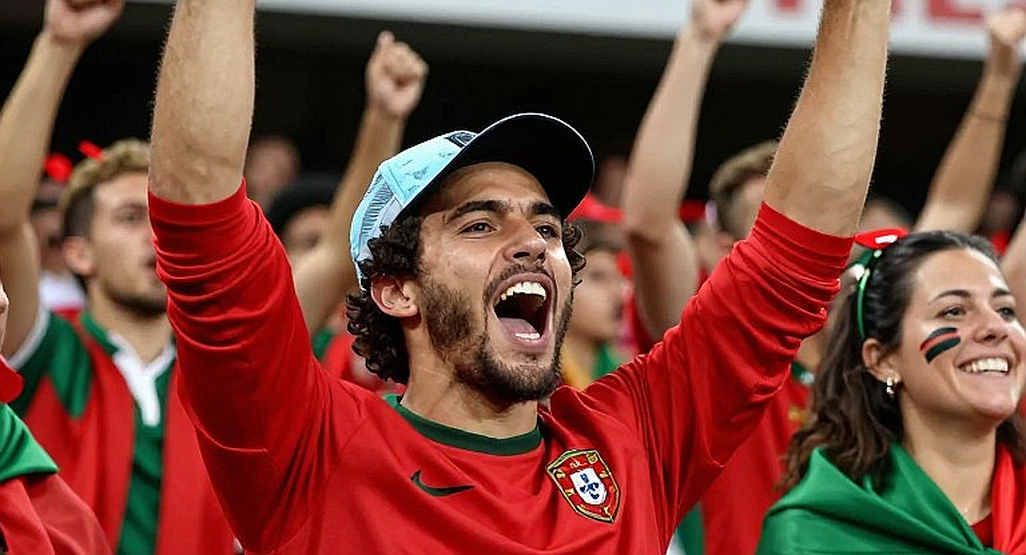
The late-October fixture at Groupama Stadium, floodlights on, and in the club's technical room an A4 sheet taped beside the lighting control panel: the academy's electricity bill, nearly thirty percent higher than the same period last year. No supporter in the stand saw that sheet. They saw a twenty-year-old run into the wrong channel, and they shouted.
That same week, in another time zone, Brent settled at $108.14 a barrel and WTI at $100.54. The gap between the two opened to roughly $7.60, unusually wide. For football people, that is noise from a foreign industry. For me, it is the first draft of the 2027-28 balance sheet.
People remember the goals. I remember the moment before the whistle.

The transfer market teaches supporters a habit: read the rumour, wait for confirmation, forget it, read the next rumour. Meanwhile, the report that actually shapes French football's wage bill came from a source almost nobody in the game reads: an energy wire from a major agency, filed from New York, citing Kpler data and analysts at UBS, SEB and Phillip Nova.
Its contents, compressed: Gulf crude flows collapsed from more than 20 million barrels a day to roughly 8.5 million barrels a day within a single week. At least ten confirmed vessel incidents around the Strait of Hormuz, including a tanker explosion that Iran's Revolutionary Guard, via Iranian state media, described as a naval mine. A US executive order waiving part of the sanctions on Russian oil: 2.3 million barrels this month, projected to rise to about 7.6 million barrels a month, with a sixty-day assessment window overseen by Secretary of State Marco Rubio. The International Energy Agency advising member states to consider additional diesel releases. US midterm elections on November 3, 2026. A Houthi attack in Shabwa that killed 53 people. Civil-defence alerts activated across multiple Saudi areas, including Riyadh. Egypt offering Saudi Arabia defensive support against the Houthis.

Three channels run from there into football: capital, operating cost, and regional security.
The number worth watching most is not the oil price but the Brent–WTI spread of roughly $7.60: it says the shock is a seaborne transport shock localised in the Gulf, not a global demand surge. That distinction governs everything downstream. When a shock is geographically narrow, producer governments still earn more per barrel even while selling fewer barrels. Budget revenue is pressured on volume and cushioned on price. Historically, that is the state in which state-linked Gulf investment vehicles maintain their strategic commitments to sport, because sport sits inside economic-diversification and soft-power policy, not inside a quarterly portfolio.
Across eight years covering French football, I have noticed the same thing at sponsorship tables: the person across from you almost never talks about the season. They talk about a long-horizon agenda, about national image, about where a European league brand puts them on the map. Brent at $108 does not change that class of decision. It only makes signing or not signing less dependent on a single budget quarter.
The second channel runs the other way, and it is the one European football actually feels. Triple-digit energy prices push up electricity, travel, equipment logistics, supplier costs and stadium services. At the same time, inflation eats into household disposable income — the customer base for the two most sensitive revenue lines: matchday tickets and broadcast subscriptions. For clubs without state backing, the risk sits in operating margin, not in solvency. The point that needs stressing: most European clubs fix their energy contracts two to three years out. This shock will not appear in the 2026-27 accounts. It will appear when contracts are renegotiated, landing around 2027-28 and 2028-29. Anyone reading this year's accounts for traces of oil will find nothing, then wrongly conclude nothing happened.
The third channel is security, and it hits exactly what Gulf football strategy depends on: hosting rights and the pull of foreign players. Civil-defence alerts in Riyadh, 53 dead in the Shabwa attack, Egypt publicly offering Saudi Arabia defensive support — that is an environment that raises war-risk insurance on charter flights, complicates pre-season tour routing, and makes every negotiation to bring a peak-career star harder. Kazan does not choose heroes. Kazan only exposes the loudest. A league trying to prove it belongs at the top table gets exposed faster than anyone when logistics and security do not hold.
Here I have to talk about professional discipline. In 2026-17, as Bordeaux declined and coach Jocelyn Gourvennec came under fire, I wrote that the club needed a psychologist more than a new manager, based on eleven dropped points from winning positions. The piece drew three thousand comments overnight. Then a veteran colleague pointed out I had ignored injury data on four key players. Emotion needs a data floor to stand on, and that floor cannot be a good story. Since then I keep one rule: before writing a hot line about football economics, check at least three independent sources and be able to name the specific transmission mechanism. Football does not collapse because oil hits $108. A specific club loses a slice of margin because its electricity contract renews in a specific season. Writing at that resolution is harder, and it travels less.
There is one more layer, about how the report was built. The headline led with oil slipping 1.6 percent, framed as profit-taking after a multi-month high. The factual weight sits in paragraph six: Gulf flows down nearly sixty percent in a week. The media shock is only a crack on the submerged ice of fate. A skimmer reading headlines would materially underestimate the severity the article itself describes. I understand the newsroom pressure to lead with the price move, because that is what market readers open the terminal for. But football readers should know the source quality here is uneven: on one side Kpler data and named analysts at UBS, SEB and Phillip Nova; on the other, an IRGC account relayed through Iranian state media about its own assets — a structurally self-interested source.
On the calendar, one marker deserves circling. The sixty-day assessment window closes around late December 2026, and the midterms fall on November 3, 2026. Those are the two points markets will price in advance. For governance watchers, a time-limited waiver with an assessment condition recalls how European football's financial regulators handle settlement agreements and phased compliance. That is a conceptual parallel, not a precedent, and I will not use it to conclude anything about financial fair play.
Now the part where I might be wrong.
The easiest error is reading "oil up, Gulf money floods football". Revenue equals price times volume. Export volumes falling nearly sixty percent in a week is a hit to near-term cash flow, however high the price. If this persists for months, the story can invert: Gulf funds slow down because budgets must prioritise domestic stability. The analysts quoted in the piece say plainly that the US waiver "does little" on the physical supply side — an opposing view that deserves equal billing with the optimistic scenario.
The second error is confusing cycle with policy. Gulf state investment commitments to sport are multi-year decisions tied to national strategy and are close to inelastic to a single oil quarter. One year at $108 may change nothing; a decade below $70 changes everything. If I used this piece to forecast a wave of club acquisitions within six months, I would have misread the mechanism.
The third error is timing. Operating cost is a lagging channel. If I am right about the mechanism but two years early, I am still wrong, because football commentary is scored by seasons, not by decades.
And the fourth, harder to see: I may be inflating the capital channel because it gives me a better story. A domestic security shock in Riyadh has more braking force on hosting ambition than $108 oil has accelerating force. If I had to pick one variable to track over six months, I would pick security, not price.
So my watchlist narrows to three lines. Whether the sixty-day window closing in late December 2026 opens a wave of Gulf sponsorship and tour announcements. Whether French clubs' 2027-28 annual reports show a visible rise in energy and transport cost lines. And whether tournaments invited to host over the next two years keep their calendars or quietly change venues.
Football is not decided by a barrel of oil. It is decided by who has the patience to read the balance sheet before kickoff — and whether any of us bothers to look at the A4 sheet taped beside the floodlight panel.