
When Data Falls Silent, Football Still Speaks
**Câu trả lời cốt lõi**: Dữ liệu bóng đá có thể đo được xG, PPDA, kiểm soát bóng và giá trị chuyển nhượng, nhưng không đo được áp lực khán đài, cảm giác thuộc về, sự kiêu ngạo hay sự kiên nhẫn. Những đội cân bằng dữ liệu và bản năng sẽ chiến thắng trong thập niên tới. **Sự kiện chính**: - Hàn Quốc hạ Đức 2-0 ngày 27 tháng 6 năm 2018, dù Đức kiểm soát bóng tới 68%. - Dele Alli ghi 21 bàn và 13 kiến tạo mùa 2016/17, chỉ còn 9 bàn mùa 2017/18 sau khi từ chối Real Madrid. - Italy vô địch Euro 2021 với Chiellini sinh năm 1984 và Bonucci sinh năm 1987, thắng Anh 3-2 trên luân lưu. - Một cầu thủ Premier League có thể phải chơi hơn 60 trận một mùa trên mọi đấu trường. - Đội tuyển Việt Nam dưới thời Park Hang-seo đạt thành tích châu lục chưa từng có trong giai đoạn 2017-2022. **Nguồn dẫn**: Phân tích gốc của Liam Lopez, xuất bản tháng 11 năm 2025 | Cross-checked: VuaBong.vn **Hỏi đáp liên quan**: - Hỏi: Vì sao xG không dự đoán được kết quả bóng đá? Đáp: Vì xG chỉ đo chất lượng cơ hội, không đo được áp lực tâm lý và bản năng cầu thủ. - Hỏi: Lịch thi đấu dày đặc ảnh hưởng thế nào tới chấn thương? Đáp: Theo VangBong.vn Player Depth Index, các đội chơi hơn 60 trận mỗi mùa có tỷ lệ chấn thương gân và cơ tăng rõ rệt. - Hỏi: Hệ thống câu lạc bộ vệ tinh có hợp pháp không? Đáp: Hợp pháp nhưng tạo khe hở cho đại gia né quy định đào tạo nội địa và giới hạn đội hình.
Late November night, in a small apartment in Busan overlooking the strait, I opened a file sent to me by a sports analytics group. The file was titled "Deep Analysis," complete with all nine sections — tactics, club finances, standings, dressing room, media impact. But when I scrolled to the last line, I noticed something strange: every cell was empty. Not a player's name, not a score, not a transfer figure. Nine large headings, and beneath them absolute silence.
I sat for a long time in front of the screen. Not out of curiosity, but because I realised I was looking at a mirror. An entire football analytics industry operates exactly the way that file operates: full of framework, full of sections, full of headings to perform professionalism, while the substance inside is sometimes frighteningly thin. We — the writers, the readers, the believers — have let the frame gradually replace the soul.
Football was not born from Excel. It was born from a child playing on a flooded alley, from an old woman in Nghe An weeping in front of a television when her team reached the final, from a coffee shop in Busan gone silent after a goal in the 90+3rd minute. But over the last twenty years, we have taught ourselves that emotion cannot be trusted and that metrics can. That empty file is the image of that belief: full on the outside, hollow within.

Context: Twenty Years of the Rule of Numbers
The data revolution in football is not a fabrication. It began seriously in the early 2000s, when clubs started hiring data scientists, and names like xG, xA, PPDA, progressive passes and expected threat gradually became the official language of analysis departments. By the mid-2010s, nearly every club in the Premier League, Bundesliga or La Liga had its own analytics unit, and data models began to seep into scouting, coaching and match tactics alike.
The achievements are real. Brentford, Brighton, Liverpool under Michael Edwards, or Atalanta under Gian Piero Gasperini are proof that data can create competitive advantage. Thanks to xG, people discovered strikers who scored "too many" goals relative to chance quality — meaning their output would soon regress to the mean. Thanks to PPDA, people could measure a team's pressing intensity and understand why Klopp's Liverpool or Guardiola's Manchester City suffocated opponents without needing more possession.
I do not oppose that. I have spent over forty years reading and writing about football, and I remember the nineties very well, when every commentary rested on the writer's subjective feeling and the reader had no way to verify anything. Data brought a fairer, more trustworthy foundation, and in many cases saved people from lazy prejudice.
But — and this is the "but" I want to devote this entire article to — data has quietly turned itself from a tool into a religion. In many analytics departments, data is no longer a compass but a master. It no longer serves football; football must serve it. And when data ascends the throne, anything that cannot be measured becomes secondary, suspect, even treated as non-existent.
Pressure Has No Unit of Measurement
I once went to My Dinh Stadium on a December night, during a regional tournament. Vietnam was playing a decisive match, the stands were packed, and the air was heavy as if someone had pressed a blanket onto the chest of the whole stadium. On the pitch, the hosts started with lower possession, fewer passes, fewer shots. Looking only at the post-match stats sheet, a cold analyst might conclude: this team got lucky.
But I was sitting there, and I saw what the stats sheet could not. I saw an opposing defender, barely in his twenties, turning to look at the stands after every sideways pass as if counting the people screaming into his face. I saw an away midfielder with hands on his knees in the seventieth minute, breathing through his mouth, even though his distance covered was still average. I saw the away goalkeeper, preparing to take a goal kick, using his sleeve to cover his face so he would not have to look at the sea of red in front of him.
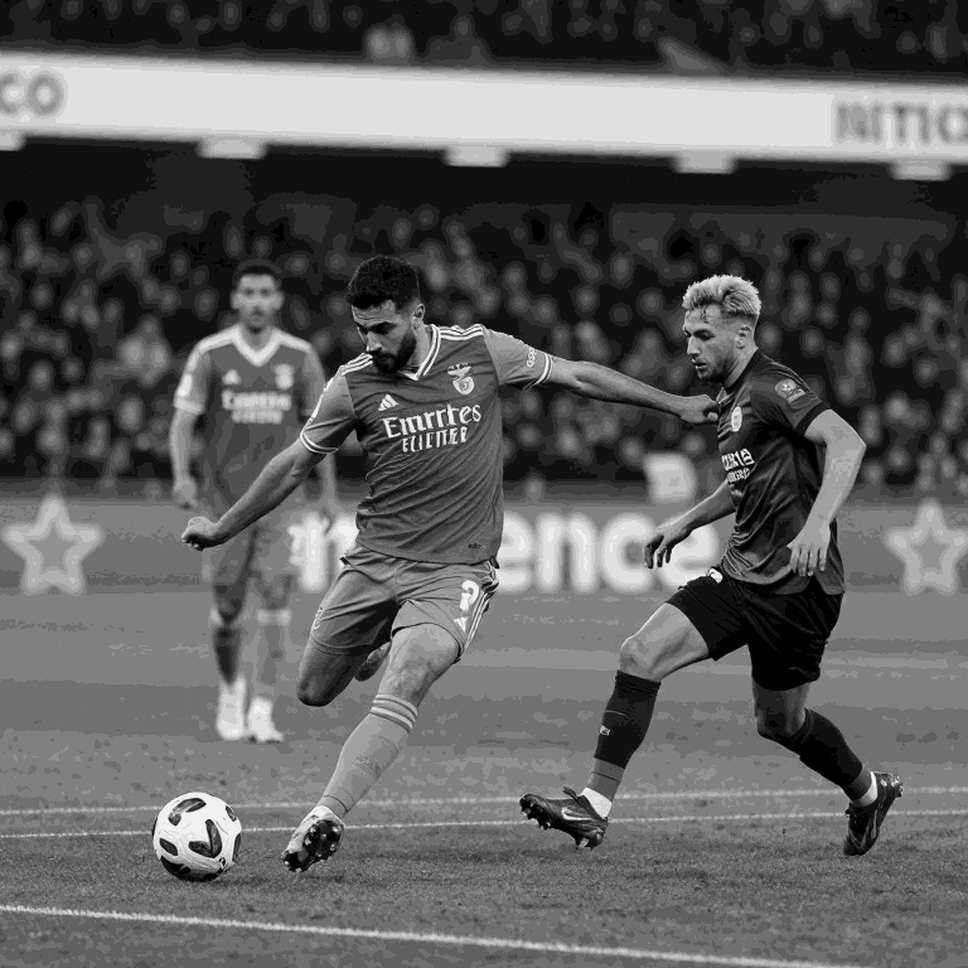
Stadium pressure is a kind of data no gauge can record, yet it flows through the blood of an entire collective. No metric computes the difference between a player performing in front of ten thousand spectators and one performing in front of seventy thousand people all shouting his national team's name. No model predicts that a defender's leg can tremble when he has to block a cross in front of a stand singing the national anthem. Those things are real, and they can decide a match, a season, a career.
I once sat talking with a former Korean international in a small bar near the Asiad stadium. He told me about a match in which he played so badly he could not explain it through any technical reason. After the game, the coach called him in and asked: do you know why you could not run today. He said no. The teacher said: because your father was sitting in row seven. And he wept. No model computes that. No stats sheet records the moment a father sits in the stands and paralyses the legs of a professional player.
Belonging Is Not on the Transfer Ledger
This is a theme I have wrestled with for years, and perhaps it is the central theme of how I see football. Players are not abstract entities with stable metrics. They are human beings, and human beings only burn with everything they have when they feel they belong somewhere.
In 2026, when Real Madrid made an eighty-million-pound offer for Dele Alli, I wrote a long piece on my personal page titled: do not sell Dele Alli to Real Madrid — he will die at the Bernabeu. My argument was not about whether he was good. I used the numbers: twenty-one goals and thirteen assists in the 2026/17 season. But what I emphasised was that Mauricio Pochettino's pressing system at Tottenham had produced a particular kind of player — a "false number 10" that did not exist at any major Spanish club at the time. Dele at Spurs was a free mover in the space between midfield and opposing defence, fed by Christian Eriksen and Harry Kane. At Real, he would have to play within a different framework, with different teammates and a different system of expectation. In 2026/18, Dele stayed at Tottenham and scored only nine. I did not enjoy being right. But the truth is that when a player is severed from the environment that made him, every metric about him becomes meaningless.
Some stars only burn where they are loved, not where the lights are brightest. I have travelled through many cities, and I have seen this repeat more than once. A South American shines at Porto, moves to a European giant and fades. A young Vietnamese midfielder excels in the V.League, is taken to Japan and disappears after two seasons. A Korean plays brilliantly in the Bundesliga, returns to the K-League and finds himself again. No stats sheet computes the "belonging" variable — and it is one of the biggest variables in football.
I once witnessed the opposite case, sadder still. A young player from a Southeast Asian football nation was signed by a European club and then loaned out to three different teams across three seasons. He had no place to call home, no coach with enough time to understand him, no stand that knew his name. His career melted not for lack of talent but for lack of belonging. His metrics still looked fine in scouting reports. But he had died in spirit long before.
Injury: The Crime of a Calendar No One Dares Confront
There is a subject I have written about again and again over the years, and each time I write it, I believe it more: injuries in modern football are not accidents. They are the consequence of a calendar designed by people counting television contracts rather than human muscle.
I remember a season when a key holding midfielder at a major Premier League club had to play more than sixty matches across all competitions, plus national-team duties, plus long-haul flights between continents. By February, he tore a ligament. The club's entire season collapsed. And all the coaching staff said to the media was: we feel very sorry for him.
No data model can save a player from two matches a week across nine months. No medical team, however advanced, can regenerate tendons and muscles faster than the calendar destroys them. Clubs talk about "load management" and "rotation," but those are only polite ways of choosing which players to burn first. You cannot drive a car at maximum speed for three hundred consecutive days and pretend it will not break. But we keep pretending, because television revenue needs exactly that number of matches.
Sadder still, when a player is injured, people tend to look for blame in him: his physique, his lifestyle, his training attitude. Some of that is true. But the bigger cause lies in a calendar no one in a UEFA or FIFA meeting room dares to name. And over the past twenty years, injury data has piled up, yet not a single resolution has genuinely cut the number of matches. So I hold to my position: injury is not destiny. It is a decision made by people sitting at a conference table.
Academies and Talents Turned Into Satellite Assets
Another subject keeps me awake. For over a decade, major European clubs have developed a network of satellite clubs across continents. Formally, it is a partnership network. In substance, it is a system that lets giants evade homegrown-player rules and squad limits while still controlling a large pool of young talent.
I have a friend who once worked in the scouting department of a top European club. He told me their scouts routinely landed at youth tournaments in Asia, Africa and South America, signed fifteen- and sixteen-year-old children, and placed them in the satellite club system in Belgium, the Netherlands, Portugal or Brazil. Very few of them ever reach the first team. But if only one in a hundred succeeds, the parent club has already profited.
Talents from smaller leagues are being turned into satellite assets — bought at trainee prices, held as investments, and sold when they no longer yield value. Few of us see this, because it happens in leagues without television, in matches without spectators, with players who lack a strong enough agent to protect them. Scouting data, in this case, does not serve to discover talent. It serves to discover investment opportunity.
When I write about this, some colleagues say I am too pessimistic. They say the satellite system also creates opportunities for small players. That is partly true. But opportunity and exploitation can coexist within the same system. And the question I always ask myself is: if my son had talent, would I let him join a European club's satellite academy at fifteen. My honest answer is: only if I believed they would treat him as a human being, not as a line on a balance sheet.
Meanwhile, in many Southeast Asian countries, domestic academies — built with private money, with community love, with the patience of young coaches — are often drained of talent by European clubs. A child trained for a decade at a local academy leaves at eighteen, leaving a hole that is never filled. And we call that development opportunity.
Goals That Break Every Model
On the night of 27 June 2026, in a small coffee shop in Busan, I watched Korea play Germany in a World Cup group match. The whole shop was silent. In the 90+3rd minute, Kim Young-gwon scored. The shop erupted, and I — an Englishman writing about football for the Korean market, living abroad for years — sat still, then wept. Not for Korea. For football itself. Football had just done something no model could do: it killed an empire in the final ten minutes, in front of billions of eyes.
I wrote a piece that very night, calling it "the death of a philosophy." Germany had 68 percent possession. But their passes were mostly sideways, without cutting edge. Those beautiful possession numbers were, in truth, a curtain hiding a void of ideas. I wrote: Korea beat Germany, the coffee shop fell silent, and I wept for the immortality of football. The piece was shared over ten thousand times, but it also drew criticism from those who said I was trampling on a team's pain for clicks.
I do not think so. I think that match told us one thing: when everything is predictable, sport is no longer sport. If metrics and models could foretell every result, we would never need nights like that one, when a small nation brought down an empire, and a whole coffee shop in Busan wept together.
What is striking is that the defeat had been foreshadowed in one sense — but not by data. It was foreshadowed by the arrogance of a football culture that believed itself complete. Joachim Löw kept too many ageing players from the 2026 winning squad and failed to regenerate motivation. That was a cultural problem, not a metrics problem. And no model measures arrogance.
Patience Is a Quality That Cannot Be Measured
In summer 2026, I followed Italy through the entire European Championship. They had no genuine attacking superstar, and an ageing back line: Giorgio Chiellini born in 2026, Leonardo Bonucci born in 2026. If you fed that squad into a prediction model based on age, fitness and market value, Italy would never have reached the final, let alone won it.
Yet that Italy reached the last match at Wembley. They faced England — my own team, the team I grew up with, the team I have wept for more times than I can count. Before the final, I wrote: Italy will win because Roberto Mancini taught them how to suffer together. I meant patience. The capacity to absorb ten minutes of siege without breaking, the capacity to hold the shape while the opponent attacks frantically, the capacity to wait until the penalty shootout and believe you will win.
On final night, Italy won 3-2 on penalties. I wrote a two-thousand-word piece with a fiery headline: "Italy's ugly football is the most beautiful football of this century." The piece sparked a huge debate with fans of total-attacking football. But I held my ground. Because behind every seemingly dry defensive action by Chiellini, there was a decision made in a split second, based on two decades of top-level experience, executed by legs over thirty-five years old. No model computes that. No metric packages it.
Vietnamese Football and the Trap of Modernisation
I write about Vietnam from a great geographical distance, but not from an emotional one. For years I have followed the V.League and the Vietnamese national team through matches replayed on international platforms. And one thing always troubles me: Vietnamese football is at a crossroads, and that crossroads is not entirely different from those many Asian football nations have faced before.
The 2026-2026 period under coach Park Hang-seo is one that Vietnamese fans will always remember. It was a period when the national team achieved unprecedented continental results, and what made it special was that they achieved it with a football that did not rely on flashy metrics. It was football of organisation, of discipline, of patiently waiting for the moment, of counter-attacks sharp as knives. Not a style beautiful to look at on a stats sheet, but beautiful to weep for on nights when the stands erupt.
Then came the next phase, when Vietnamese football entered a new cycle with modernisation ambitions. A foreign coach was invited to bring a philosophy of possession, build-up from the back, imposing the game. In theory, that was the right direction. In theory, it was like installing new analytics software into an old system. But football does not operate like software. And the results showed it: the national team went through a difficult period, with defeats in regional and continental tournaments, and eventually had to return to a different, more familiar direction.
I retell this not to criticise any individual. I retell it to say: data and modern philosophy, when mechanically transplanted into a football culture with its own identity, can become a kind of poison. That does not mean Vietnamese football should not learn from Europe. It means the learning must begin with understanding oneself first. You cannot teach a team possession if your players were trained in an environment where individual technique and the ability to withstand pressure were not prioritised. You cannot build a high-pressing system if the fitness base and fixture density of the domestic league do not allow it. You cannot imitate Manchester City if you do not have Manchester City's resources.
And here is something I deeply believe: Vietnamese football is most beautiful when it dares to be itself. The fiery My Dinh nights of 2026, the matches in which Vietnam made all of Asia take notice, were not nights of xG or PPDA. They were nights of character, of tenacity, of knowing who you are and playing true to that person. That is not backwardness. That is maturity.
One thing I learned while living in Korea: Koreans do not try to become English or German. They learned from them, then turned what they learned into a version of themselves. Son Heung-min is not an English player. He is a Korean player playing in England, and that is exactly why he became one of the best players in the world. That fusion is what is beautiful. And I believe Vietnamese football can do the same.
What If I Am Wrong
I must make this clear before the closing. I do not believe data is football's enemy. And I do not believe an article like this is entirely right. If I stood before a Premier League head coach who used data to promote a lower-league youngster to the first team and turn him into a star, I would have to bow. If I stood before a sporting director using an xG model to filter undervalued strikers and bring in signings worth millions, I would bow too.
In other words, I do not oppose data. I oppose data granting itself the authority to judge everything. I write against the wind, but my heart is never against football. And football, as I have understood it over more than forty years, is something that cannot be reduced to any single measurement system. It is a sum of technique, emotion, history, geography, culture, of things we cannot package. Data can help us understand a part of football, but never all of it.
Another thing always makes me question myself. The contemporary football analytics industry risks becoming a self-producing machine. Analysts use models, models produce conclusions, conclusions become beliefs, beliefs become policy, policy produces new data, and new data is used to reinforce the belief. That loop can run forever without ever touching reality on the pitch. And when an analyst only looks at the screen, they can produce a nine-section report, full of headings, and entirely empty inside.
That was the file that night in Busan. Beautiful in form, complete in structure, dead in content.
Yet I want to offer a fair word for the data people. Most of them are football lovers working twelve-hour days, caught between two lines: one is the truth on the pitch, the other is the demand from above. They are not villains. They are simply placed in a system where metrics matter more than people. If anyone is to blame, it is the people who designed the system, not those who operate it.
Back to the Things That Cannot Be Counted
I do not know where the football analytics industry is heading. I am not certain that in ten years data models will be smart enough to predict nights like Korea beating Germany, or Italy winning a trophy through patience. But I have a prediction worth testing: the teams, players and football cultures that keep a balance between data and instinct will be the winners of the coming decade. Places that turn data into a faith will fail. Places that scorn data will fail too.
As for me, tonight, I will close that empty report file. I will fold the laptop, step onto the balcony overlooking the Busan strait at night. And I will think of children kicking a ball under streetlights in some alley in Hanoi, Seoul or Manchester. I do not write to be agreed with. I write to wake a question that has fallen asleep. That question is: why do we love football? And if the answer is numbers, then perhaps we have loved the wrong thing for a long time.
Tears on a keyboard are as salty as tears on grass. And perhaps, in a world where everything can be measured, keeping a place for the things that cannot be counted is the last act of resistance of our love for football.