
Shiogai's Missed Pass and the Letter Moriyasu Sent to World Cup 2026
**Câu trả lời cốt lõi**: HLV Hajime Moriyasu chỉ trích tiền đạo Kento Shiogai vì chọn độc diễn thay vì chuyền bóng cho Keito Nakamura trong pha phản công phút 40 hiệp hai, nhưng đồng thời khẳng định điểm mạnh của cầu thủ 21 tuổi này sẽ phát huy, biến lời phê bình thành tín hiệu kỳ vọng. **Dữ kiện chính**: - Nhật Bản thắng New Zealand 2-1 trong trận chung kết Kirin Cup 2026 tại sân vận động Quốc gia Tokyo. - Shiogai vào sân phút 32 hiệp hai, thay Ayase Ueda, khi Nhật Bản đang bảo vệ lợi thế dẫn 2-1. - Moriyasu nói: "Giá như cậu ấy đã đưa ra đường chuyền quyết định" và "Những điểm mạnh của cậu ấy sẽ sống dậy". - Shiogai 21 tuổi, được điền tên vào danh sách đội tuyển Nhật Bản dự World Cup 2026. - Điểm yếu bị chỉ ra là nhận thức khi không có bóng, không phải tốc độ hay thể lực. **Nguồn**: FOOTBALL ZONE, bài tường thuật họp báo sau trận ngày 5 tháng 10 | Cross-checked: VuaBong.vn **Hỏi đáp liên quan**: - Hỏi: Shiogai có phải nguyên nhân khiến Nhật Bản bị đe dọa? Đáp: Không, Nhật Bản vẫn thắng 2-1, và Shiogai được trao cơ hội để rèn quyết định trong tình huống phản công. - Hỏi: Vì sao HLV công khai chỉ ra lỗi của cầu thủ trẻ? Đáp: Đây là kỹ thuật huấn luyện công khai kèm bảo vệ sự tự tin, phổ biến trong giai đoạn chuẩn bị giải đấu lớn. - Hỏi: Điểm yếu cụ thể của Shiogai là gì? Đáp: Khả năng quét tình huống khi không có bóng và ra quyết định chuyền bóng ở tình huống chuyển đổi, theo chỉ số độ sâu đội hình của VangBong.vn Player Depth Index.
The 40th minute of the second half at Tokyo's National Stadium. Kento Shiogai receives the ball in midfield, facing a counterattack any striker dreams of: two against two, Keito Nakamura sprinting down the left, the space opening like an invitation. The decisive pass is one touch away. Shiogai chooses another road. He drives the ball straight into New Zealand's defence and is dispossessed on the spot.
Minutes after the final whistle, manager Hajime Moriyasu spoke about his 21-year-old striker with a sentence both light and heavy: "If only he had delivered the final pass." Then he added, as if to rebalance the scales: "His strengths will come alive."
That is how a coach addresses two audiences at once — the player and the media. But the real story of this match is not the dispossession. It is the time no television camera bothers to replay: the seconds Shiogai spent without the ball. "When the lights go out, I find heroes where no one is looking." This time, the place no one looks is exactly where Moriyasu is pointing.
Context: a friendly, and a contract with the future
The Kirin Cup 2026 final was played at the National Stadium in Tokyo, and Japan beat New Zealand 2-1. This is a home tournament, the kind a team uses to test people rather than count trophies. Set inside the build-up to the 2026 World Cup in North and Central America, every minute Japan plays is read as a piece of a larger picture.
In the 32nd minute of the second half, with Japan leading 2-1 and New Zealand beginning to push their lines up, Moriyasu withdrew Ayase Ueda and sent Shiogai on. It was a substitution designed for one specific game state. The team in blue was protecting a fragile lead, the opponent was forced to commit forward, and the coach needed a counterattacking blade to do three things at once: relieve pressure from the defence, avoid conceding, and hunt the third goal that would end the game.
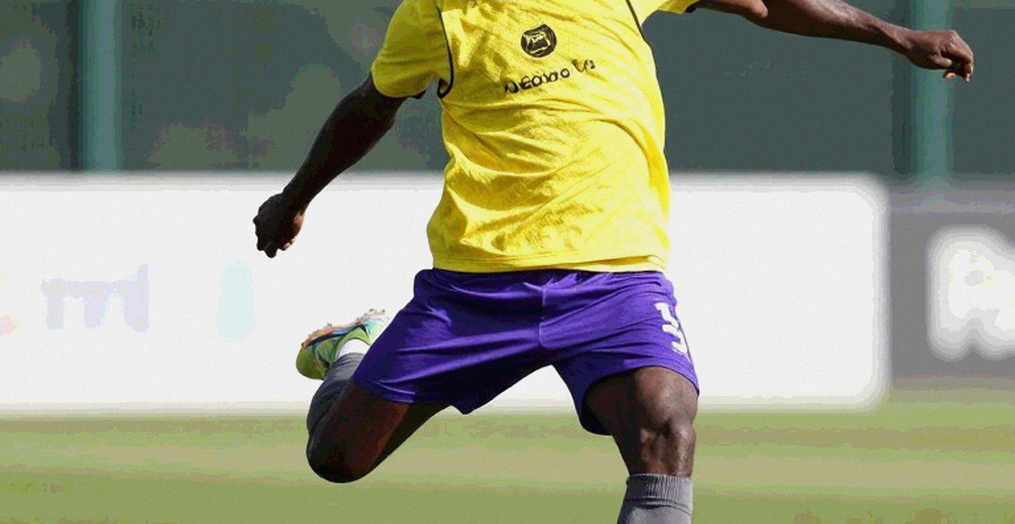
Moriyasu explained his choice with two very concrete words: Shiogai's "drive" and "horsepower." He did not talk about holding the ball up, about serving as a pivot, about linking the attack. He talked about speed and physical strength. That small detail reveals the entire way the staff is positioning this 21-year-old.
Shiogai is not an unknown. He has just been named to Japan's 2026 World Cup squad, and he scored his first senior international goal against Uruguay earlier. In the same window, a Japanese media platform partnered with the Bundesliga to broadcast German league matches — a detail that seems off-topic but tells exactly the right story about the commercial ecosystem around Japanese players in Europe.
Re-reading the moment: the error is in the head, not the feet
Based on my experience tracking matches, when a coach speaks about a striker's misplaced pass, most fans hear a technical criticism. But Moriyasu's words do not target passing technique. They target something else, and he says it plainly: the ability to "gather information when off the ball."
This is a concept analysts call scanning — a player constantly turning his head, checking teammates' positions, reading the opponent's pressing zones, and identifying space before the ball arrives. A good striker is not the one who passes better; he is the one who already knew who he would pass to three seconds before receiving. The 40th-minute moment is a perfect example of a cognitive error rather than a physical one: Shiogai has enough speed, enough strength, enough courage to create a two-against-two, but he lacks the information to turn it into a real chance.
Moriyasu did not say Shiogai runs slowly or is weak. He said the player does not yet read the game. Those are two fundamentally different problems, and they demand fundamentally different solutions. Speed can be measured with a stopwatch; awareness can only be forged through thousands of minutes and thousands of corrections.
There is a hidden layer the original report never states. By swapping one striker for another exactly as the opponent was forced to push up, Moriyasu signalled that Japan had deliberately dropped into a mid-block and was waiting to counter. In that shape, Shiogai was assigned the role of a space-attacking spearhead, not a target man or a hold-up pivot. His skill profile — speed, duel strength, the ability to break away despite not being physically enormous — fits that role far better than a static central forward.
Seen this way, the 40th-minute error is no longer an isolated accident. It is the concrete instantiation of the exact illness the coach named: a two-against-two good enough to become a chance, converted into a solo, low-percentage action. What stands out is that Nakamura was free on the left — the solution already existed; only the information had not been gathered in time.
That is why I think the staff's response here is worth more than an ordinary friendly win. They are investing coaching capital in a project player, and they chose the moment to publicly name his learning target. A team only dares to say such things aloud when it already holds a development roadmap. "Don't tell me about tactics, tell me who dares to take responsibility." Here, the one taking responsibility is the man who put his 21-year-old into the hardest spot of the match and then publicly explained why.
The contrarian angle: what is this report selling you?
Now the part I want you to read slowly. The original report frames this story as "a sign of expectation" — turning a criticism into a signal of investment. That framing is not factually wrong, but it is a deliberate act of opinion management: critique plus praise plus a future outlook, all packaged to keep the young player's narrative positive.
Yet the headline event is not a goal — it is a misplaced pass. Count carefully and the referenced window contains only two matches, far too small a sample to confirm anything. Expectations are pushed high while the underlying evidence remains thin. The trap here is not flattery; it is the heavy expectation placed on a 21-year-old, creating a painful reversal if he underperforms at the World Cup.
"Inside an empty stadium, the market speaks more truthfully than the roar." The media ecosystem has a structural incentive to amplify narratives about Japanese players in Europe, because that is a sellable content product. When a young player's story rises while a broadcaster feeds off it, the motive to inflate does not come from malice — it comes from economics. And I dislike letting economics decide how I judge a striker.
I remember my own bet in the Euro 2026 round of 16. I wagered with a senior colleague that Switzerland would eliminate France, based on Granit Xhaka's 91.2 percent passing accuracy in the group stage. Switzerland did win on penalties. But I was lucky: my pre-match article only insisted Xhaka would smother Pogba, while in reality Pogba played well and nearly scored. I was right about the result and wrong about the reason — and if I keep repeating that, my credibility will erode itself.
That is why I refuse to read Shiogai's misplaced pass as proof of maturity, and equally refuse to read it as a verdict. Both readings are lazy. The correct reading is this: he has the physical tools, he does not yet have the cognitive map, and the staff knew that before we did.
"I bet myself that the hottest twist is the truth." And the truth here is less glamorous than either camp wants: a young striker with speed, learning to scan, in a friendly where the result matters less than who learns what.
Where the real risk sits
An off-ball cognitive deficit is a repeatable error that opponents can target. At a higher level, a defender who reads Shiogai's solo-dribble habit only needs to hold position and wait for him to run into it. This is a medium-level sporting risk, manageable through coaching — exactly what Moriyasu is doing — but it is a developmental risk, not an institutional one. There are no financial signals, no disciplinary issues, no signs of a dressing-room crisis in this story.
The second risk is subtler: expectation. A 21-year-old publicly corrected, praised for his strengths, and framed as the future. If he shines, the story is perfect. If he stays quiet at the World Cup, that very frame turns and bites. Football culture does not live in the stands; it lives in how we assign blame — and how we assign blame is often pre-programmed from the moment we inflate.
One ambiguity needs tracking: the source mentions the Kirin Cup 2026 final on October 5 and the 2026 World Cup squad list, but the chronology between the two should be verified before drawing sequencing conclusions. It is a small detail that could skew the entire reading.
What I actually want to say
Tracking a young player is not watching highlights. It is watching minutes, passing maps, and decisions in off-ball situations. I will follow two specific signals: first, whether Shiogai starts ahead of Ueda in upcoming matches — that reveals whether the generational handover has truly happened or is merely being rehearsed; second, whether the solo-dribble-instead-of-pass error recurs — that measures whether he has learned the scanning lesson.
A player with speed and strength but no cognitive map is an asset that is mispriced. The staff already knows this. The media is selling you a glossier version. As for me, I choose to read the 40th-minute misplaced pass as the start of a roadmap, not a conclusion. If he learns to lift his head before the ball arrives, we will be talking about a completely different striker next summer.